


The Department of Economic Planning and Development (DEPDev) released its year-end assessment, highlighting the Philippine economy’s strong performance and significant progress on the administration’s governance and structural reform agenda, despite global uncertainties and domestic challenges.
The report underscores that sustained economic momentum and decisive government action to address accountability concerns have solidified the country’s foundation for long-term, inclusive growth.
In 2025, the Philippine economy maintained its strong trajectory, demonstrating crucial resilience in the face of volatility:
- Growth: The economy expanded robustly, with growth averaging 5.0 percent across the first three quarters of the year.
- Inflation Eases: Headline inflation significantly eased, averaging 1.7 percent and comfortably settling within the 2 to 4 percent target range, largely due to successful measures in stabilizing commodity prices, particularly rice.
- Labor Market: Labor conditions remain robust, with unemployment averaging 4.5 percent and underemployment at 14.2 percent, keeping the government broadly on track to meet long-term targets.
- Fiscal Prudence: The fiscal deficit narrowed to 5.0 percent of GDP, aligning with the government’s fiscal consolidation roadmap.
- Financial Stability: The banking system remains healthy, ensuring continued support for consumption and investment.
DEPDev emphasized that these strong macroeconomic fundamentals have provided the critical buffers necessary for policymakers to respond flexibly and decisively to emerging global and domestic risks.
President Ferdinand R. Marcos, Jr. initiated wide-ranging efforts this year to scrutinize and clean up major government projects, directly responding to the public’s consistent call for accountability and good governance.
In line with this commitment, DEPDev intensified project monitoring through the Rapid On-Site Verification Report (ROVeR) initiative. As of November 30, the Regional Project Monitoring Committees (RPMC) validated over 9,290 flood control projects, with reports submitted directly to the Office of the President to guide immediate accountability actions and reinforce public trust.
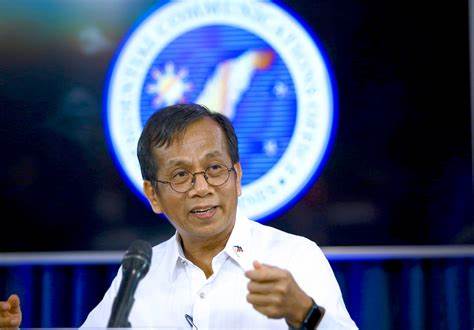
“While we pursue full transparency and accountability, we must protect and deepen the economic gains reaped over the years,” said DEPDev Secretary Arsenio Balisacan. “Maintaining our growth momentum through sound economic policies and steadfast commitment to uplifting the lives of ordinary Filipinos is how we earn and maintain the people’s trust.”
2025 marked a significant institutional achievement with the formalization of DEPDev as a full Cabinet department, serving as the primary policy, planning, and coordinating arm of the Executive Branch.
Major planning and policy actions included:
- Philippine Development Plan 2023-2028 Midterm Update: Strategically aligned national development priorities with emerging global risks and technological shifts.
- Trabaho Para sa Bayan Plan 2025-2034: Advanced workforce development by expanding training pipelines and strengthening linkages between industry and academia to raise the quality of employment.
- Food Security Measures: Implementation of Executive Order Nos. 93 and 102 (suspending rice importation during peak harvest) and the introduction of a trigger-based tariff mechanism (EO 105, effective Jan 2026) to balance stability for consumers and fairness for domestic producers.
Infrastructure remains the cornerstone of the national development strategy. The Economy and Development Council, chaired by the President, approved several strategic projects:
| Sector | Project Highlight | Value |
|---|---|---|
| Water Security | Metro Manila Water Concession Extension (to 2047) | Projected PHP50.3 Billion in Revenues |
| Agriculture | Tumauini River Multipurpose Project | PHP13.9 Billion (Irrigation for 8,200 hectares) |
| Connectivity | Farm-to-Market Bridges Development Program | PHP27.7 Billion (300 climate-resilient bridges) |
| Human Capital | Project for Learning Upgrade Support and Decentralization (PLUS-D) | PHP38.27 Billion (Improved literacy/numeracy) |
| Social Protection | Panahon ng Pagkilos Project | PHP56.7 Billion (Resilience planning for 4.13M households) |
The government also updated guidelines for Infrastructure Flagship Projects (IFPs), ensuring alignment with the Philippine Development Plan (PDP) and reinforcing the PHP19.7 trillion Public Investment Program (PIP).
The Philippines’ innovation ecosystem gained international recognition, rising to 50th place in the Global Innovation Index, surpassing the year’s target. This progress is being institutionalized through the new Presidential Filipinnovation Awards.
Further underscoring its role on the global stage, the Philippines assumed the role of co-chair of the OECD Southeast Asia Regional Programme (2025-2028) alongside Canada, signaling a strong commitment to inclusive and innovation-led regional growth.
DEPDev is currently finalizing an Executive Report for the President and the Cabinet, featuring strategic analysis, policy options, and proposals for institutional strengthening to ensure sustained growth and inclusion in 2026. The report is intended for public release following its discussion with the leadership.
The administration affirms that maintaining the country’s positive economic trajectory hinges on transparent governance and credible institutions—because trust is not just an outcome of development, but its necessary precondition.

