


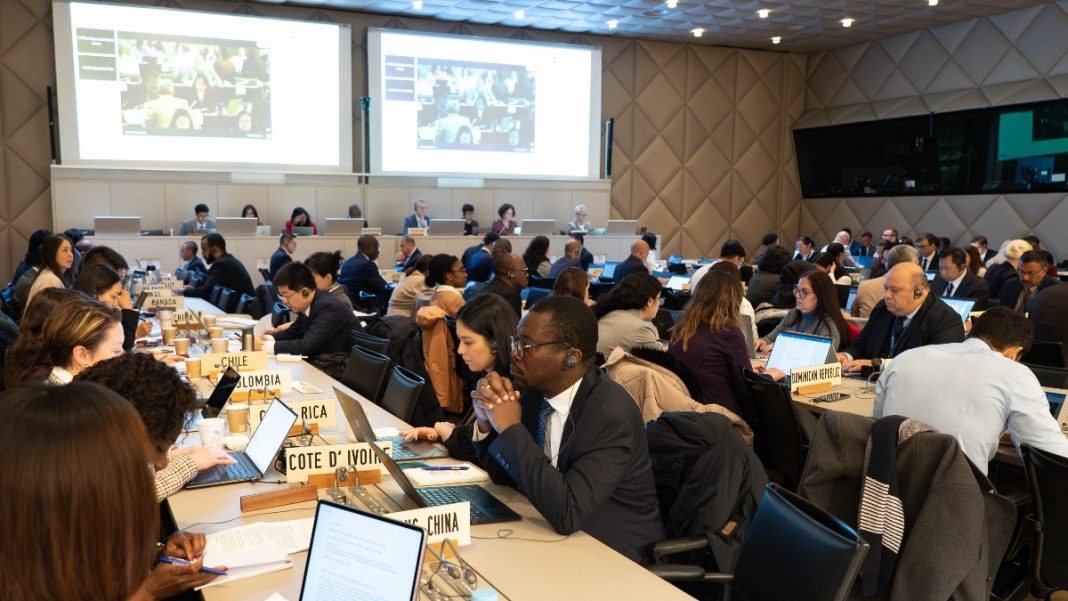
World Trade Organization (WTO) members have reported significant progress in implementing the Trade Facilitation Agreement (TFA), with nearly 81 per cent of provisions implemented by developing and least-developed country (LDC) members, according to data presented at the Committee on Trade Facilitation meeting held on 1-3 December 2025.
The Committee’s meeting marked a critical step in preparing for the second review of the TFA, scheduled for 2026, while addressing challenges and focusing on capacity-building and digitalization efforts. The TFA, which aims to expedite the movement, release, and clearance of goods, is unique in allowing developing and LDC members to self-determine their implementation schedules based on national capacities.
Members underscored that the upcoming 2026 review must be open, transparent, and evidence-based. The focus will be on evaluating both successes and difficulties encountered since the first review in 2021. Key areas of inquiry will include analyzing notification data for implementation trends, assessing the status and effectiveness of technical assistance, and identifying which specific TFA provisions continue to pose challenges.
The WTO Secretariat reported that the number of TFA ratifications now stands at 161 following the Democratic Republic of the Congo’s ratification in July 2025, signaling near-universal commitment to the agreement.
The Committee noted that 2025 marked a peak implementation period, with 159 Category C measures—provisions requiring a transitional period and technical assistance—due this year. The annual dedicated session on Technical Assistance and Capacity Building (TACB) highlighted global efforts, featuring experiences from eight members and organizations, including the European Union, Japan, Norway, and Zambia.
In a move to improve transparency and coordination, the WTO Secretariat launched a new technical assistance tracker on the TFA database, providing more detailed information on notified donor arrangements. The Trade Facilitation Agreement Facility (TFAF) presented findings recommending that geographic imbalances in TACB support distribution must be addressed to ensure equitable assistance.
Experience-sharing sessions concentrated on leveraging technology to enhance trade efficiency. Presentations covered advanced topics such as the development and sequencing of national Single Window systems—a provision consistently cited as posing the greatest difficulty for members—and the application of smart customs practices to boost compliance and user experience.
The most challenging provisions for members, frequently requiring extension requests, remain:
Single Window systems
Border Agency Cooperation
Advance Rulings
Authorized Economic Operators (AEOs)
Risk Management
The Chair of the Committee, Mr. Edem Kossi of Togo, will conduct further consultations to define the specific themes for experience sharing in 2026.

