


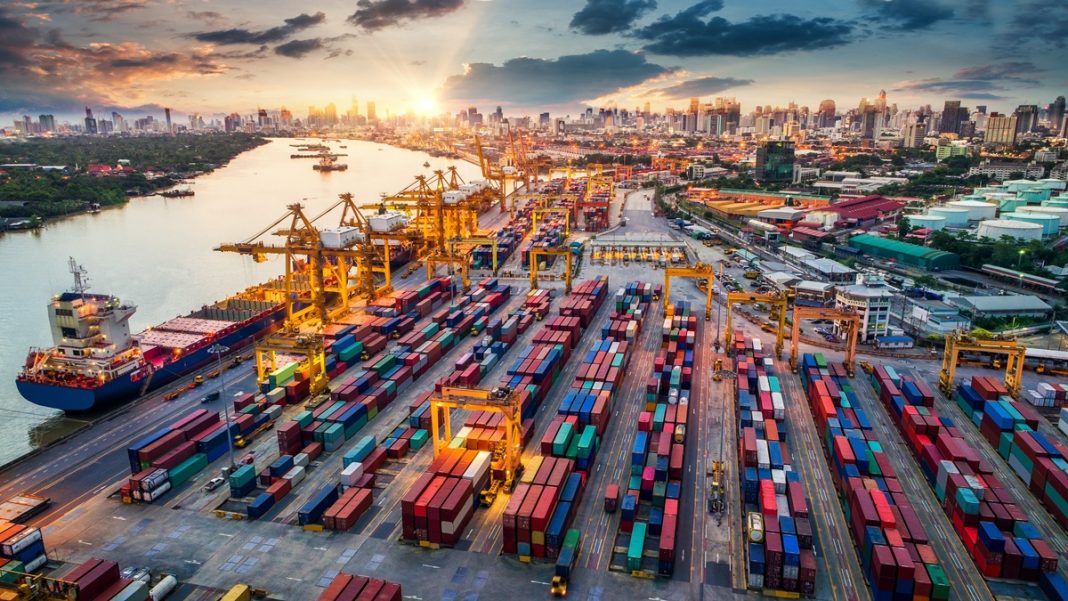
A new report from UN Trade and Development (UNCTAD) warns that the deep reliance of global trade on financial channels makes it highly vulnerable to volatility in international financial markets. The report argues that comprehensive reforms to the global financial system are essential to reduce this vulnerability, improve predictability, and better align trade, finance, and development goals, especially for developing economies.
The report highlights that financial conditions increasingly dictate the direction of global trade, moving beyond the simple movement of goods. UNCTAD Secretary-General Rebeca Grynspan emphasized this interconnectedness: “Trade is not just a chain of suppliers. It is also a chain of credit lines, payment systems, currency markets, and capital flows.”
Nearly 90% of global trade depends on trade finance, and critical components like dollar liquidity and cross-border payment systems solidify this deep link. As a result, shifts in interest rates or investor sentiment in major financial centers can affect trade volumes worldwide. For developing countries with limited access to affordable credit, these financial pressures can undermine otherwise viable trade transactions.
Underlying global trade growth is estimated at between 2.5% and 3% and is expected to ease as financial conditions exert a stronger influence on production and investment decisions. Structural shifts, such as the faster expansion of services (driven by the digital economy and AI) and rising South–South trade, are key drivers beneath the surface.
Despite developing economies being forecast to grow significantly faster (4.3%) than advanced economies, their progress is constrained by an unfavorable financial landscape.
The global South accounts for over 40% of world output, nearly half of global merchandise trade, and more than half of global investment inflows.
However, its role in global financial markets is disproportionately small, limiting its ability to raise affordable long-term finance.
Developing economies commonly face borrowing rates of 7% to 11%, significantly higher than the 1% to 4% seen in major advanced economies. These elevated costs often reflect structural issues in the international financial architecture rather than economic fundamentals.
The report also underscores the rising financialization of commodity markets and the financial toll of climate change:
For several major food trading companies, over 75% of income now comes from financial operations rather than the physical trade of goods, linking essential food systems to financial market dynamics.
Climate vulnerability adds significant financial burdens. Countries repeatedly exposed to extreme weather pay an estimated $20 billion more each year in interest due to increased risk perception by lenders. Since 2006, these added premiums have cost climate-vulnerable economies about $212 billion.
To achieve lasting stability and sustained growth, UNCTAD outlines a set of practical, coordinated reforms, stressing that “Fundamentally, we cannot understand trade isolated from finance.”
Trade System Reform: Fix the multilateral trade dispute system and update trade rules to include services, digital trade, climate action, and new industrial strategies.
Financial System Reform: Reform the international monetary system to limit harmful swings in currencies and capital flows, and strengthen regional and domestic capital markets to provide affordable long-term finance for developing countries.
Risk Mitigation: Use macroprudential tools to protect trade and investment from negative financial spillovers.
Transparency and Access: Improve transparency in commodity trading and expand access to affordable trade finance, especially for small businesses.
“What does genuine resilience require? Integrated policy frameworks that recognize links between trade, finance and sustainability,” said Ms. Grynspan. “Coordinated reforms can strengthen long-term development prospects.”

