OAG, the world’s leading data platform for the global travel industry, released its 2025 Aviation Year in Review. The data highlights a landmark year for the industry, marked by the busiest day in aviation history and a significant shift in global hub dynamics.
The year 2025 set a new benchmark for global air travel. On Friday, August 1st, global airline seat capacity peaked at 19,833,642, surpassing the 2024 record by more than 555,000 seats. This surge signals a full stabilization of global travel demand and a robust infrastructure capable of handling near-20 million passengers in a single 24-hour window.
U.S. carriers continued to lead the world in sheer volume, though European low-cost giant Ryanair maintained its position as a top-five global player.
| Rank | Airline | Annual Seats |
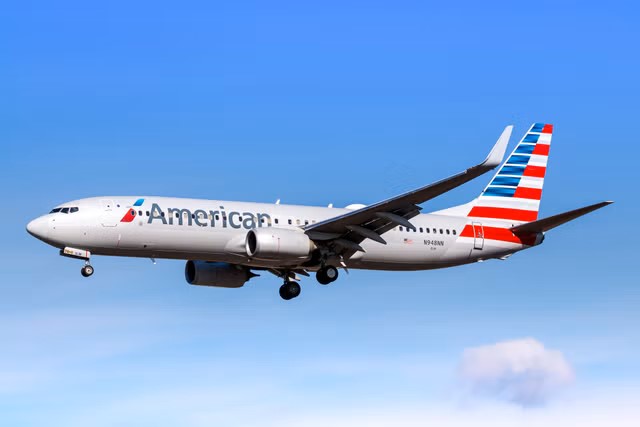
| 1 | American Airlines | 279.6 Million |
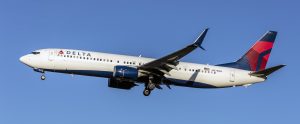
| 2 | Delta Air Lines | 246.9 Million |
| 3 | Southwest Airlines | 229.2 Million |
| 4 | United Airlines | 225.5 Million |
| 5 | Ryanair | 213.1 Million |
While American Airlines took the top spot for total seats and flight frequency (2.3 million flights), United Airlines led the industry in Available Seat Kilometres (ASKs) with 536.5 billion, reflecting a strategic emphasis on long-haul, high-capacity international routes.
-
Hong Kong’s Resurgence: Hong Kong International Airport (HKG) emerged as the year’s most improved hub, adding 24 new routes. This growth was fueled by the landmark transition to a three-runway system, allowing for concurrent operations that significantly boosted capacity.
-
Regional Expansion: Colombia’s Clic Air was named the fastest-growing airline of 2025. The regional carrier grew its capacity by 50%, largely driven by high-frequency shuttle services between Bogota and Medellin.
“The data from 2025 shows an industry that is no longer just recovering, but expanding into new dimensions of efficiency,” said an OAG spokesperson. “As we move into 2026, the focus shifts to how airports like Hong Kong leverage new infrastructure and how major carriers balance domestic frequency with the growing demand for international ASKs.”