


The Philippines and four other economies are the main engines of Southeast Asian energy demand growth as electricity consumption across Asia-Pacific Economic Cooperation (APEC) is projected to increase by up to 96 percent by 2060, according to a new Outlook.
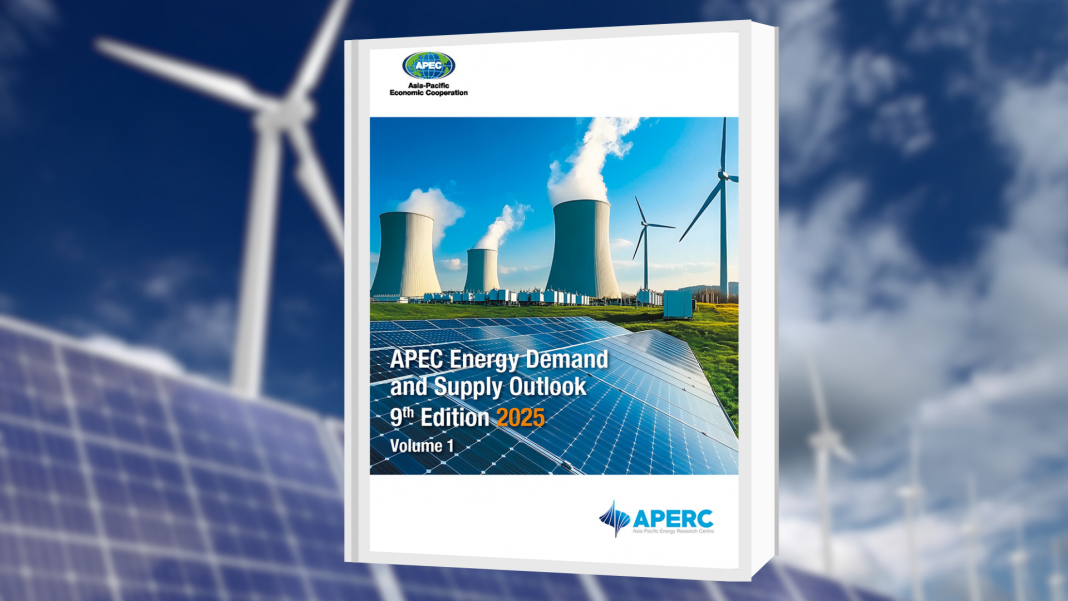
The ninth edition of the APEC Energy Demand and Supply Outlook produced by Asia Pacific Energy Research Centre said Southeast Asia’s share of APEC energy demand is projected to nearly double, rising from 8 percent in 2022 to 15 percent in 2060, both Reference Scenario (REF) and Target Scenario (TGT).
Aside from the Philippines, the Outlook identified Indonesia, Malaysia, Thailand, and Vietnam recording large increases in both scenarios.
“Despite efforts to reduce import dependence in TGT, the increase in energy demand in the Philippines, to continue driving its economic growth, will require more imports. Further efforts are necessary to retain the current import dependence of around half the total primary energy supply,” it said.
The Outlook said Southeast Asia’s natural gas demand is projected to rise significantly in the coming decades, primarily driven by the power sector.
It said domestic gas production in key economies like the Philippines, Thailand and Vietnam is either declining or unable to keep pace with rising consumption.
“Consequently, LNG (liquefied natural gas) imports are becoming increasingly vital to meet this growing energy need. However, several challenges complicate the sustainable expansion of LNG demand across the subregion,” it said.
The Outlook said affordability remains a significant concern while high and volatile global LNG prices have made governments and utilities cautious about entering long-term LNG supply contracts.
With increasing LNG imports, maintaining a secure supply, sufficient regasification capacity, and adequate storage facilities depends on ongoing investment in these sectors, it added.
The APEC Energy Demand and Supply Outlook, updated every three years, projects electricity generation rising from 18,971 terawatt-hours (TWh) in 2022 to 32,690 TWh under current policies, reflecting a structural move away from direct fossil fuel use toward electricity across transport, buildings and parts of industry.
Electrification, data-center expansion and shifts in transport are reshaping energy demand across APEC economies, according to the Outlook.
Transport electrification plays a central role in reshaping energy demand. By 2060, electric vehicles account for 60 percent of the vehicle fleet under current policies and 96 percent if economies meet stated targets, sharply reducing oil consumption while increasing demand for electricity, it said.
In buildings, electricity demand continued to climb, driven largely by the rapid expansion of data centers and artificial intelligence workloads, even as efficiency gains slow growth in other forms of energy use.
On the supply side, renewables account for a growing share of electricity generation, rising from 26 percent in 2022 to 55 percent by 2060 under current policies and 64 percent after economies meet stated targets, the Outlook added.

