


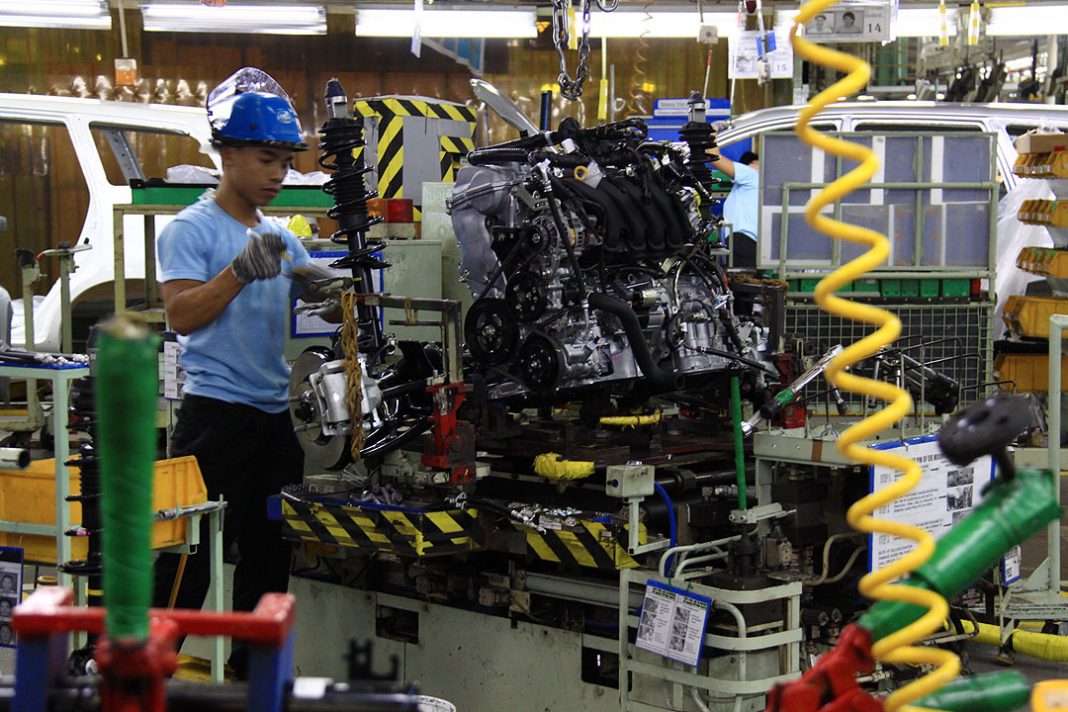
The Philippine Parts Makers Association (PPMA) has called for urgent dialogue with policymakers following the President’s veto of the proposed budget for the Comprehensive Automotive Resurgence Strategy (CARS) and the Revitalizing the Automotive Industry for Competitiveness Enhancement (RACE) programs, warning that the decision places the already struggling local automotive manufacturing industry at greater risk.
The CARS and RACE programs were designed to rebuild vehicle assembly volumes, strengthen local parts manufacturing, and allow the Philippines to regain competitiveness within the ASEAN automotive landscape. For PPMA, these programs are not merely support mechanisms but critical lifelines.
“The Philippine auto parts industry needs CARS and RACE to survive,” said Ferdi Raquelsantos, President of PPMA. “Without sustained and predictable government support, local manufacturers will continue to lose ground, investments will slow, and skilled jobs will disappear.”
Across Southeast Asia, automotive manufacturing consistently ranks among the top manufacturing industries in terms of output, employment, and exports. Countries such as Thailand, Indonesia, and Vietnam have treated automotive manufacturing as a strategic sector, supporting it through long term industrial policies and production scale. Thailand alone produces more than two million vehicles annually, while Indonesia and Vietnam continue to expand both conventional and electric vehicle manufacturing.
By contrast, the Philippines has steadily fallen behind its ASEAN neighbors. Local vehicle production remains limited, and many parts makers now depend on exports or non automotive industries to stay afloat. PPMA notes that this gap continues to widen as other ASEAN countries accelerate investments in new technologies and supply chains.
“The reality is we are already lagging behind ASEAN,” Raquelsantos said. “Automotive manufacturing has always been a cornerstone industry in Southeast Asia. If we allow our ecosystem to weaken further, it will be extremely difficult to recover.”
Industry data shows that Philippine automotive manufacturing reached its peak during the 1990s under the Ramos administration, following the implementation of the Car Development Program. That period saw stronger assembly volumes, higher local content, and a more robust domestic supplier base. While later initiatives under succeeding administrations attempted to revive the sector, the industry has never fully returned to that level of scale and stability.
“We were almost there,” Raquelsantos said. “The factories are here. The suppliers are here. The workforce and technical know how are here. What we need is continuity and confidence from government.”
PPMA emphasized that automotive manufacturing has a powerful multiplier effect, supporting industries such as steel, plastics, electronics, rubber, logistics, and tooling. Each locally assembled vehicle creates demand for thousands of parts, many of which can be produced domestically if volumes are sustained.
In response to the veto, PPMA is calling for constructive dialogue with government leaders, particularly senators and members of Congress, to better explain how automotive industry programs work and why they matter.
“We want to engage, not confront,” Raquelsantos said. “The auto industry is ready to sit down with our legislators to educate them on how CARS and RACE drive jobs, investments, and long term industrial resilience. This is about building a competitive manufacturing base for the country.”
PPMA stressed that time is critical. Without decisive action, the Philippines risks being permanently left behind in one of the region’s most strategic and value generating manufacturing industries.

