


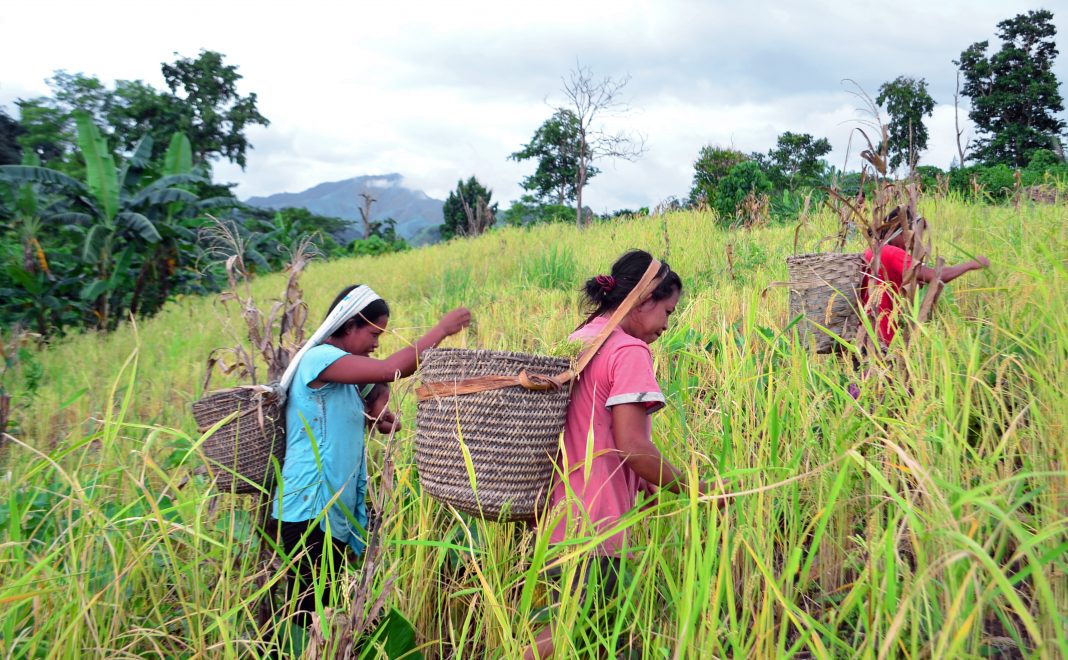
In a landmark effort to protect the country’s shrinking forest cover and preserve its rich biodiversity, the Department of Environment and Natural Resources (DENR) and the Department of Agriculture (DA) have announced a strategic partnership to reform how agricultural subsidies are utilized in upland areas.
The initiative, supported by the United Nations Development Programme’s Biodiversity Finance Initiative (UNDP-BIOFIN), seeks to transition traditional and often destructive farming systems like kaingin (slash-and-burn) toward Biodiversity-friendly Agricultural Practices (BDFAPs).
While often pictured as a land of flat rice fields, 65% of the Philippines is mountainous. These upland areas house the majority of the country’s terrestrial biodiversity and provide essential services such as flood control, carbon sequestration, and clean water. However, satellite imagery reveals that these forests are increasingly “pockmarked” by unregulated agriculture and monocropping.
“The continuous encroachment of unregulated agriculture in our mountains, particularly inside Protected Areas, can drastically reduce the benefits we derive from nature—from clean water to natural flood control,” said Mariglo Rosaida Laririt, Assistant Director of the DENR Biodiversity Management Bureau (DENR-BMB).
A global study by UN agencies found that 87% of the USD 540 billion spent annually on agricultural subsidies is harmful to nature and human health. In the Philippines, where subsidies averaged PHP 3.36 billion yearly between 2010 and 2015, funds have traditionally supported chemical fertilizers and pesticides that can lead to soil erosion and water loss.
The new program aims to reallocate these funds to support:
-
Intercropping and Crop Rotation: Moving away from monocropping (single-crop farming) to restore soil fertility.
-
Heirloom Crop Protection: Supporting the production of unique native grains like Ulikan and Ominio rice, as well as Adlai.
-
Soil Conservation: Implementing measures to prevent the destructive lowland floods caused by upland erosion.
-
Youth & Women Engagement: Making farming a lucrative and modern enterprise to attract a new generation of agricultural leaders.
The initiative emphasizes that sustainable farming is not just about the environment, but also about preserving the engineering mastery of indigenous highlanders, such as those who built the UNESCO World Heritage Rice Terraces in the Cordillera.
“Like biodiversity, indigenous farming skills should be protected,” explains Anabelle Plantilla, National Project Manager for UNDP-BIOFIN Philippines. “Repurposed subsidies can make farming a lucrative enterprise again, encouraging youth to return to the land and ensuring our food security remains intact without sacrificing our mountains.”
The reallocation of subsidies is currently in its planning stages and is a critical component of the Philippine Biodiversity Strategy and Action Plan (PBSAP). By aligning agricultural incentives with ecological standards—such as Organic Agriculture (OA) and Good Agricultural Practices (GAP)—the Philippines aims to feed its 117 million citizens while maintaining the integrity of its natural landscape.
As climate change disrupts traditional seasons, the transition to agroforestry-based livelihood systems is no longer an option, but a necessity for the country’s long-term survival.

