


The Philippine Metalworkers’ Alliance (PMA) warned that the government’s decision to defund the Comprehensive Automotive Resurgence Strategy (CARS) and the Revitalizing the Automotive Industry for Competitiveness Enhancement (RACE) Program undermines the country’s industrial policy, threatens hundreds of thousands of jobs, and further weakens the country’s supply chains.
The defunding followed President Ferdinand Marcos Jr.’s veto of key items in the Unprogrammed Appropriations earlier this month, which included funding for CARS and effectively stalled the RACE Program—despite both having been endorsed by the Department of Trade and Industry (DTI) in its proposed 2026 budget.
“This is not just a budget issue. It is a policy issue,” PMA National President Narciso Lozano, Jr. said in a statement. “Defunding CARS and RACE sends a dangerous signal that the government is retreating from industrial development and decent job creation.”
Industrial policy is strategic, not optional. Placing CARS and RACE under Unprogrammed Appropriations treats long-term industrial development as expendable, when it should be a core, programmed government commitment. Industrial policy depends on credibility and multi-year commitments.
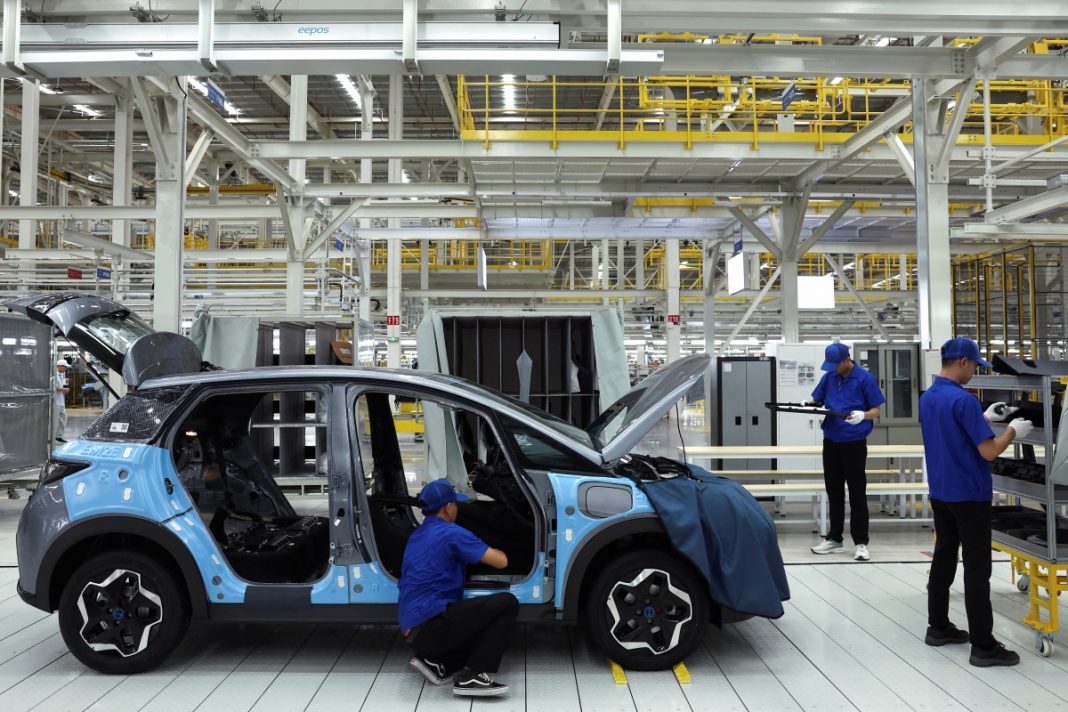
The CARS and RACE Programs are flagship industrial initiatives designed to rebuild domestic automotive manufacturing, strengthen local supply chains, and generate high-quality employment. Together, they form a critical pillar of the country’s broader industrial and manufacturing strategy under the Philippine Development Plan (PDP) 2023–2028.
According to the Board of Investments (BOI), the automotive manufacturing sector directly employs around 8,000 workers, while an estimated 340,000 workers depend on auto parts, metalworking, electronics, logistics, and other supporting industries. PMA warned that the removal of ₱4.32 billion in CARS funding and the scrapping of RACE financing place these jobs at risk.
“These are skilled, productive, and relatively well-paid manufacturing jobs,” Lozano said. “Weakening the automotive industry weakens the entire manufacturing ecosystem.”
The national union also stressed the sector’s economic importance, noting that automotive manufacturing and its supply chain contribute significantly to national output through value-added production, exports, and technology transfer. “You cannot expect stronger growth in 2026 while dismantling one of the country’s major value-producing industries,” Lozano added.
PMA further pointed out the contradiction between defunding domestic manufacturing programs and allowing tariff-free entry of imported electric vehicles and spare parts, which places local producers at a competitive disadvantage. Trade liberalization without industrial support accelerates deindustrialization.
“If the government is serious about inclusive growth and decent work, it must support—not abandon—industries that create them,” Lozano said.
The PMA calls on President Marcos Jr., Congress, the Department of Budget and Management (DBM), and the DTI to immediately restore funding for the CARS and RACE Programs and treat them as core elements of national industrial policy, not discretionary spending.
“Defunding CARS and RACE risks premature de-industrialization,” PMA warned. “Restoring and strengthening these programs is essential to protecting jobs, sustaining growth, and securing the country’s industrial future.”

