


Part of the savings from the 2025 General Appropriations Act (GAA) would be used to settle the arrearages the government owed to CARS (Comprehensive Automotive Resurgence Strategy) Program participants, while the remaining claims may be included under the national budget for 2027.
This was the assurance made by Department of Budget and Management, Department of Trade and Industry, and the Department of Finance following the veto on the CARS Program budget under the 2026 GAA. The CARS Program funding refers to the fiscal incentives granted to its participants – Toyota Motor Philippines Corp., Mitsubishi Motors Philippines Corp. and some automotive parts manufacturers – whose claims are estimated to have reached over PHP4 billion.
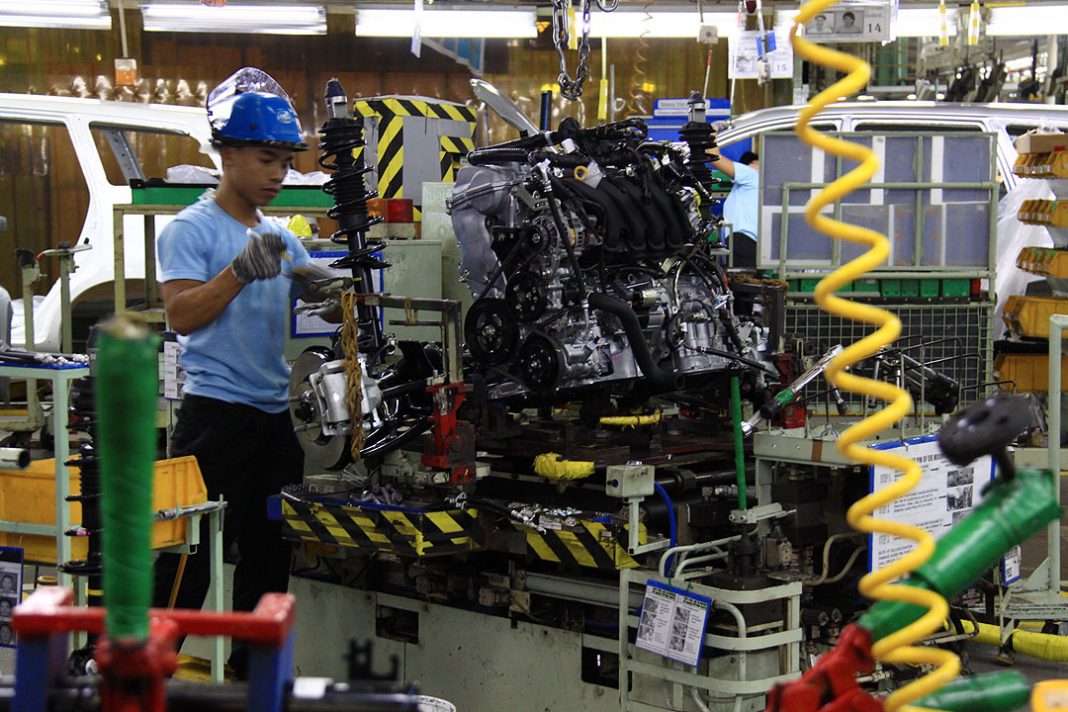
CARS is an incentive driven program where a participant is required to produce 200,000 units locally of its enrolled car model. The six-year program was meant to revive the country’s fledgling automotive manufacturing sector by encouraging car companies to invest in the production of a particular car model, and automotive parts makers to produce some components for the vehicle. As a result, participants are rewarded with fiscal incentives or subsidy to produce the vehicle.
“The government has the capacity to settle dues to participating car manufacturers, including Toyota and Mitsubishi, as well as eligible autoparts makers,” the joint statement of the three agencies stated, noting that the arrearages are based on Tax Payment Certificates (TPCs) already issued and validated.
“These payments will be supported by available FY 2025 savings, subject to the approval of the Office of the President and compliance with all applicable fiscal and legal requirements,” the statement added.
Any remaining validated requirements that have not yet been issued TPCs, and are not covered under the current GAA, may be considered for inclusion in the proposed FY 2027 National Expenditure Program (NEP). Should these be included in the FY 2027 NEP, they will be subjected to cash programming to ensure the orderly, continuous, and fiscally responsible settlement of government obligations, consistent with available fiscal space.
They also clarified that the veto on the CARS Program funding under the 2026 GAA does not reflect a withdrawal of government support for the auto industry, as existing budgetary items under the programmed appropriations of the FY 2025 GAA remain available to ensure the orderly, lawful, and fiscally responsible settlement of valid obligations under the CARS Program—consistent with the administration’s clear and continuing policy that the Philippine automotive industry remains a national priority.
Under the FY 2025 GAA, there are two relevant budgetary items: (1) the operating requirements of the Project Management Office of the CARS Program, and the (2) Fiscal Support Arrearages for the CARS Program. While the fiscal support arrearages item is no longer included in the FY 2026 GAA, the government retains the ability to settle validated obligations through the augmentation of the existing fiscal support arrearages line item under the DTI-BOI Budget in the FY 2025 GAA from the FY 2025 declared and verified savings of the Department of Public Works and Highways, in accordance with the Constitution, existing laws, applicable budgetary rules and regulations, and the approval of the President.
The DBM, DTI, and DOF emphasized that this approach reflects a careful balance between supporting the auto industry, upholding due process, and ensuring responsible stewardship of public funds.
“The government’s position is clear: we will not abandon the auto industry. Obligations supported by issued and validated TPCs will be paid in a legal, orderly, and responsible manner, consistent with our fiscal space and established budgetary rules,” said DBM Secretary Rolly U. Toledo.
Secretary Toledo added that the DBM remains committed to ensuring that fund releases are anchored on clear legal bases, proper timing, and sound fiscal direction, in order to maintain the confidence of both the private sector and the public.
Meanwhile, DTI Secretary Cristina A. Roque underscored the importance of sustained collaboration between government and automotive manufacturers and investors.
“The government recognizes the automotive industry’s vital role in job creation, technology development, and industrial growth. We are committed to ensuring that the incentives under the CARS Program continue to encourage investors to do business in the Philippines. The industry can expect continued partnership to ensure that the program is implemented in line with its intended objectives,” Roque said.
Finance Secretary Frederick D. Go, former Special Assistant to the President on Investments and Economic Affairs, reaffirmed the administration’s commitment to honoring its obligations under the CARS Program.
“President Ferdinand R. Marcos, Jr. has given clear direction that the government must honor the commitments it made to investors who placed their trust in the Philippines. The CARS Program is a key pillar of our strategy to strengthen local manufacturing, and we will ensure that legitimate obligations are paid—consistent with the law and within the capacity of public funds,” Secretary Go said.
“Our message to the auto industry is clear: do not worry—you remain part of the government’s long-term plan for industrial development, jobs creation, and economic growth,” he added.
The agencies also clarified that the validation of TPCs remains ongoing, with the DTI continuing to ensure that all claims are accurate, complete, and compliant with program guidelines prior to any fund release.
Overall, the DBM, DTI, and DOF reiterated that the government remains open to dialogue and firmly committed to practical, lawful, and fiscally responsible solutions that support the auto industry while safeguarding public interest.
“We will ensure that the government maintains a clear and responsible course in settling obligations and supporting the auto industry, always in accordance with the law and the capacity of public funds,” Secretary Toledo concluded.

