


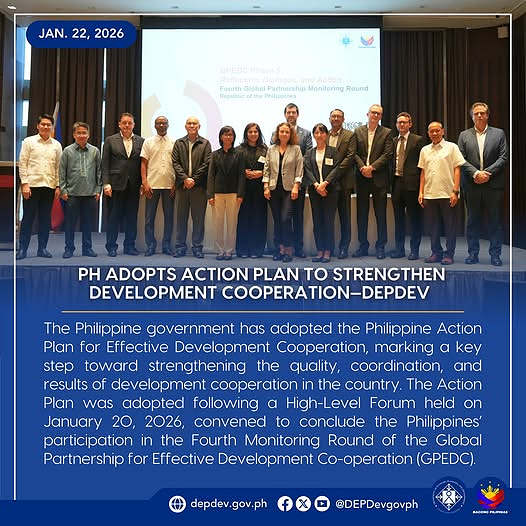
Marking a definitive shift from dialogue to decisive action, the Philippine government officially adopted the Philippine Action Plan for Effective Development Cooperation during the High-Level Forum of the 4th Global Partnership for Effective Development Co-operation (GPEDC) Monitoring Round.
Hosted by the Department of Economy, Planning, and Development (DEPDev), the Forum convened a diverse coalition of national agencies, international development partners, civil society organizations, trade unions, and private sector leaders. The adoption of this Action Plan signifies a unified commitment to enhancing the quality, coordination, and tangible outcomes of development initiatives across the archipelago.
The Action Plan serves as the cornerstone of the “Reflection, Dialogue, and Action Phase” of the Philippines’ Fourth Monitoring Round. It translates extensive data and multi-sectoral consultations held throughout 2025 into a strategic roadmap.
Key pillars of the Action Plan include:
-
Strengthened Coordination: Streamlining efforts between government and external partners to eliminate redundancies.
-
Country System Integration: Prioritizing the use of local national systems for aid and project implementation.
-
Data-Driven Accountability: Enhancing monitoring and evaluation practices to ensure transparency.
-
Inclusive Engagement: Ensuring civil society and the private sector have a seat at the table in development planning.
The Forum underscored that effective development is no longer the sole responsibility of the state, but a collaborative ecosystem.
“The Action Plan reflects a shared understanding of roles,” a representative from DEPDev stated during the Forum. “The government provides the strategic compass; our development partners provide the fuel through financing and capacity-building; civil society ensures no one is left behind; and the private sector drives the innovation and scale necessary for modern challenges. Coordination and trust are our most valuable currencies.”
The Action Plan includes practical, time-bound actions anchored in existing mandates, ensuring that reforms are not just theoretical but integrated into the daily operations of all participating stakeholders. Implementation will begin immediately, with regular progress reviews scheduled to maintain momentum toward the country’s long-term development goals.

