


The Drewry World Container Index (WCI) has reported a 5% decrease in global freight rates, bringing the average cost to $2,107 per 40ft container. This marks the third consecutive week of decline, driven by softening demand on major Transpacific and Asia–Europe trade routes ahead of the Chinese New Year.
As manufacturing prepares for the annual factory closures in China, spot rates have seen significant downward pressure across key global corridors:
Transpacific Routes: Rates from Shanghai to New York dropped 7% ($2,969), while Shanghai to Los Angeles fell 4% ($2,442).
Asia–Europe Routes: Shanghai to Rotterdam rates decreased 5% ($2,379), and Shanghai to Genoa saw a 6% decline ($3,293).
To combat this weakening demand, carriers have aggressively increased “blank sailings” (canceled voyages). According to Container Capacity Insight, 63 blank sailings are scheduled for February, a sharp rise from the 27 recorded in January.
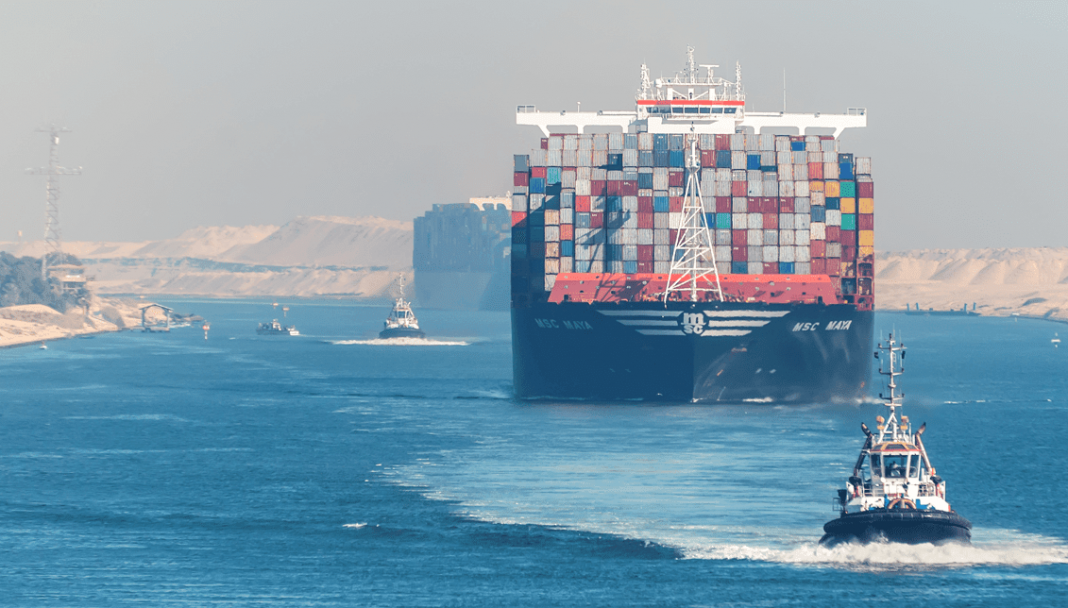
The report highlights a growing divide in how major carriers are navigating geopolitical risks in the Suez Canal. These conflicting operational decisions are creating a “drip-feed” of capacity back into the market:
CMA CGM: Moving to withdraw Asia–Europe services from the Suez region to mitigate risk.
Maersk: Planning to resume scheduled services from India to the U.S. East Coast via the canal.
By reintroducing capacity gradually rather than all at once, carriers are attempting to avoid a “catastrophic collapse” in spot rates. This cautious approach allows for real-time risk assessment while balancing the current surplus of available containers. Drewry expects spot rates to continue their downward trajectory in the coming weeks as the market recalibrates.
“The ‘drip-feed’ approach to capacity allows carriers to carefully assess risk and adjust their future networks, preventing a sudden destabilization of the market,” the report notes.

