


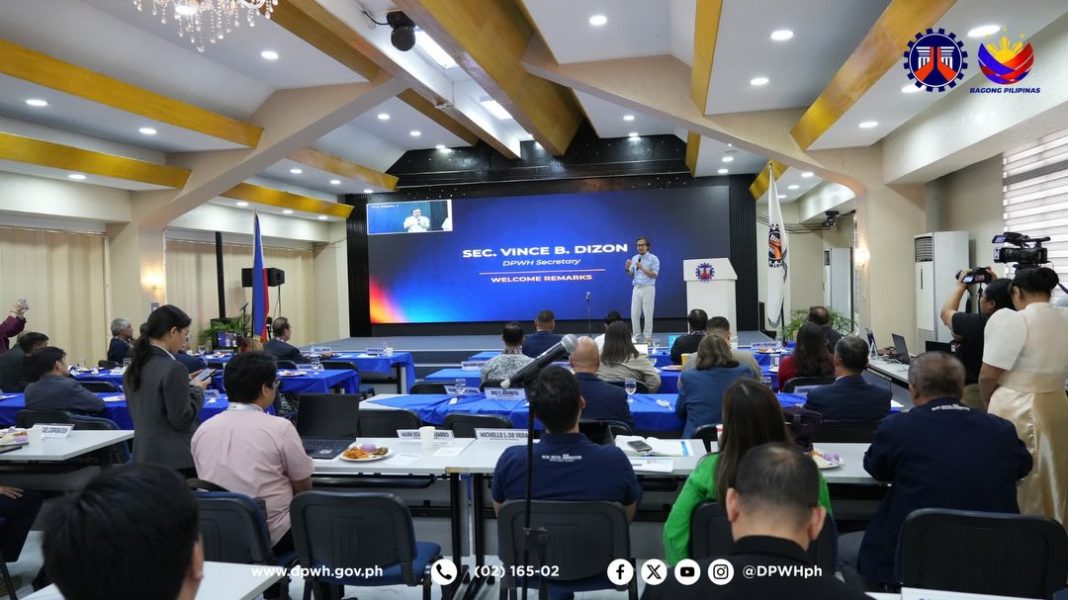
Following the directive of President Ferdinand R. Marcos Jr. to intensify disaster preparedness, Public Works and Highways Secretary Vince Dizon today reaffirmed the government’s commitment to an aggressive, equipment-driven strategy to combat severe flooding.
Through the expanded Oplan Kontra Baha (OKB), the Department of Public Works and Highways (DPWH) is prioritizing high-impact, immediate interventions in flood-prone areas. These efforts focus on restoring the natural capacity of the country’s water systems through continuous cleaning, dredging, and desilting of rivers, canals, and critical waterways.
During the Oplan Kontra Baha Summit held today, Secretary Dizon emphasized a shift toward practical, data-driven solutions that maximize government resources without necessarily requiring multi-billion-dollar price tags. “Before we initiate a project, we ensure that the intervention is truly effective. We can achieve significant results through strategic operations that don’t always require massive capital outlays,” said Secretary Dizon. “Right now, our focus within OKB is the strategic deployment of heavy equipment to clear our waterways and ensure they function at peak capacity.”
Beyond desilting, the Secretary outlined a comprehensive approach to water management intended to provide long-term relief to affected communities:
-
River Widening: Expanding bottlenecks in major river systems to handle higher water volumes.
-
Retention Ponds: Constructing dedicated areas to temporarily hold excess rainwater and prevent urban runoff.
-
Cut-off Channels: Reactivating and maintaining channels to divert floodwater away from populated areas.
Secretary Dizon also extended his gratitude to fellow government agencies and the private sector. Their cooperation in lending heavy machinery and technical expertise has been instrumental in expediting desilting operations ahead of the peak rainy season.
The DPWH remains vigilant and continues to coordinate with local government units (LGUs) to monitor high-risk zones and ensure that flood-control infrastructure is fully operational.

