


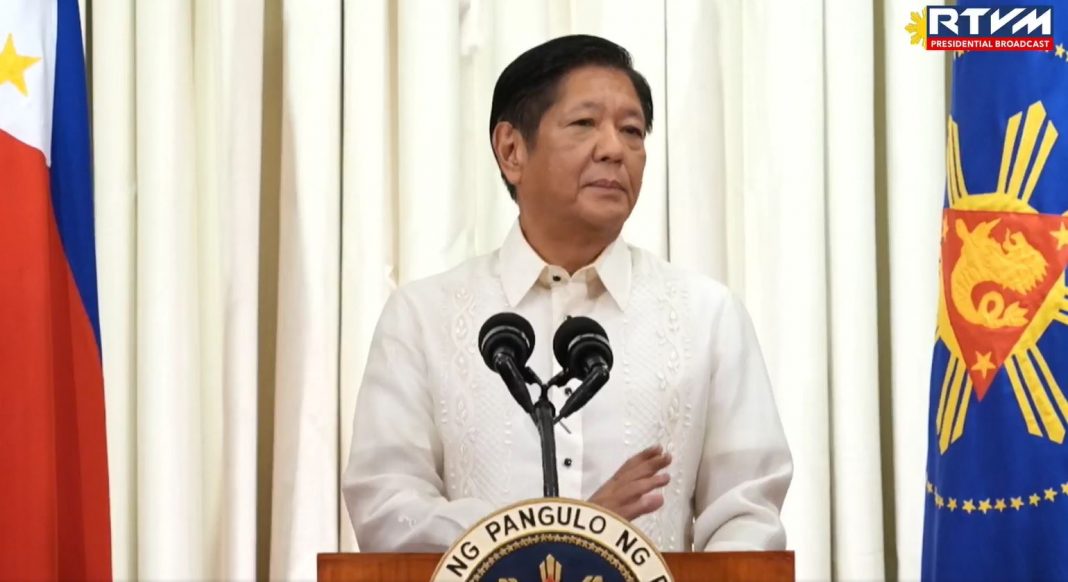
President Ferdinand R. Marcos Jr. has ordered a strategic reorganization of the Office of the President’s (OP) economic and investment initiatives to foster a more cohesive approach to national development.
By authority of the President, Acting Executive Secretary Ralph G. Recto signed Executive Order (EO) No. 108 on January 26, 2026. The order streamlines the administration’s economic monitoring systems and officially abolishes the Office of the Special Assistant to the President for Investment and Economic Affairs (OSAPIEA).
The reorganization aims to eliminate redundancies and strengthen the integration of the government’s economic policies. According to EO 108, the move is essential to “ensure a more holistic and cohesive approach to address the diverse economic challenges currently confronting the nation.”
Under the new directive, the powers and functions of the now-abolished OSAPIEA will be integrated into the Office of the Executive Secretary (OES), except for specific mandates already handled by other specialized government agencies.
The issuance of EO 108 introduces critical changes to the leadership of the nation’s primary economic committees:
| Committee / Council | New Chairperson | New Vice Chairperson |
| Economic Development Committee (EDCom) | Secretary of Finance | Secretary of Economy, Planning and Development |
| Semiconductor and Electronics Industry Advisory (SEIA) Council | Executive Secretary | — |
Previously, these roles were held by the Special Assistant to the President for Investment and Economic Affairs (SAPIEA). By shifting the leadership of the EDCom to the Department of Finance, the administration aims to align fiscal policy more closely with broader economic development goals.
The OSAPIEA was originally established in 2023 via EO 49 to serve as a central hub for investment coordination. However, the President’s latest move signals a shift toward institutionalizing these functions within the established cabinet framework to improve long-term monitoring and execution.
This reform follows the 2025 establishment of the SEIA Council (Administrative Order No. 31), emphasizing the administration’s continued focus on the semiconductor and electronics sectors as vital pillars of the Philippine economy.

