


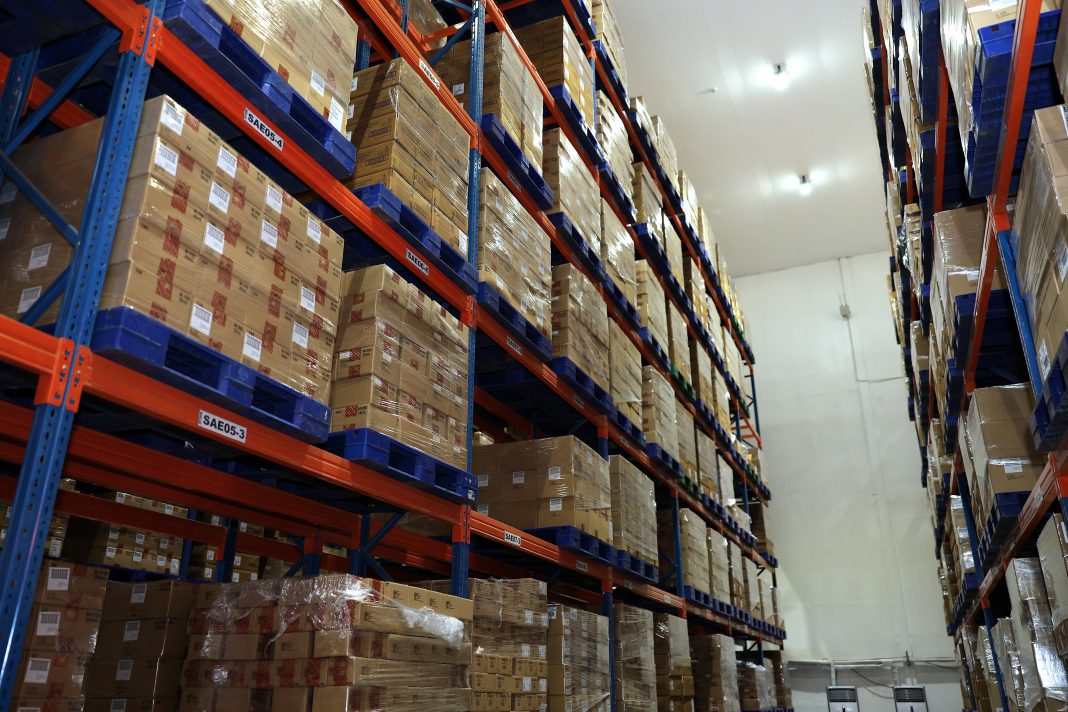
FAST Logistics Group is urging Philippine companies to adopt a forward stocking strategy that positions inventory closer to customers, as repeated typhoons and infrastructure disruptions continue to expose vulnerabilities in the country’s supply chains.
The country’s leading end-to-end logistics solutions provider said 2025 highlighted the urgency of building disruption-ready distribution networks.
The Philippines experienced more than 20 tropical cyclones during the year, according to state weather bureau PAGASA, with back-to-back Typhoons Tino and Uwan damaging infrastructure, restricting routes, and delaying shipments—particularly cargo moving from Metro Manila to other key markets in the Visayas and Mindanao.
Based on FAST’s operational experience, one day of port closure can result in three days of industry-wide delivery delays. Eight consecutive days of port closure during successive storms in the fourth quarter of 2025 led to delays stretching up to 24 days.
“The question for business leaders is not whether disruption will happen, but how prepared the network is when it does,” said FAST CEO for Logistics Manuel L. Onrejas Jr.
FAST defines Forward Stocking Strategy as a proactive, resilience-focused approach that pre-positions inventory in strategic warehouse locations near key cities and demand centers before disruptions occur. By placing goods closer to markets in advance, companies can replenish stores faster when routes, ports, or infrastructure are constrained.
The framework follows three steps: pre-positioning inventory from factories or central warehouses to forward stock locations; protecting goods through disaster preparedness controls; and rapidly deploying inventory to stores using Fixed Delivery Schedules.
Onrejas said the strategy is designed for the realities of an archipelagic country where supply chains depend on a delicate mix of land, sea, and air connectivity.
“When demand spikes in calamity-hit areas, the real constraint becomes inventory availability and replenishment speed,” he said. “Forward stocking gives businesses a way to respond immediately instead of waiting for the network to normalize.”
Drawing from FAST’s 2025 experience, he said consumer brands that had pre-positioned inventory in typhoon-hit areas maintained operational stability, while those relying on long-haul replenishment from central hubs struggled to keep shelves stocked.
Essential goods such as canned goods, instant noodles, detergents, and bar soaps are particularly critical during calamities, he noted.
Onrejas also cited infrastructure constraints that weaken supply chain reliability. The rehabilitation and retrofitting of the San Juanico Bridge temporarily affected RoRo operations and freight movements between Eastern Visayas and Luzon, as the bridge’s load capacity was upgraded from three tons to 15 tons.
Onrejas warned that lean inventory models often celebrated in developed economies can become “fragile” in an archipelagic country like the Philippines with complex inter-island networks. Instead, he said businesses should shift toward “smart inventory” by moving stocks closer to consumers ahead of disruption-heavy periods.
The strategy is particularly critical during the typhoon season from June to November, which overlaps with increased retail demand leading up to the holidays.
Onrejas said companies should implement forward stocking ahead of this period to ensure supply continuity.
“Consumers should never face empty shelves when they need essentials the most,” Onrejas said. “For businesses, stockouts mean lost sales. For communities, it means disruption to daily life.”
He said companies typically execute the strategy by partnering with a third-party logistics provider capable of managing warehousing and transport under clear service level agreements.
FAST’s nationwide warehouse and transport network—covering about 94 percent of Luzon, Visayas, and Mindanao—positions it as a key enabler of forward stocking.
Trusted by multinational companies and major conglomerates, FAST operates more than 160 warehouses and a fleet of over 3,100 vehicles, supported by multi-modal transport options across land, RoRo, air, and sea, as well as partnerships with truckers, shipping lines, and airlines.
As a 3PL company, FAST provides intelligent cold chain solutions, including systems-driven cold storage and refrigerated transport for perishable goods.
Its end-to-end capabilities allow clients to store inventory in strategic forward stock locations while maintaining integrated oversight through AI-powered Warehouse Management Systems and Transport Management Systems that provide real-time visibility down to pallet and SKU level.
The company also highlighted its last-leg delivery capabilities, enabling rapid dispatch from forward stock locations to retail outlets when disruptions occur.
“Resilience has to be designed into the network before the storm arrives,” Onrejas said. “Forward stocking is one of the most practical ways to do that.”
FAST Logistics Group is the leading end-to-end logistics and supply chain solutions provider in the Philippines. With over 50 years of industry leadership, we offer a comprehensive suite of services including transportation, warehousing, cross-docking, and toll manufacturing—supported by a robust and extensive network across the Philippines.

