


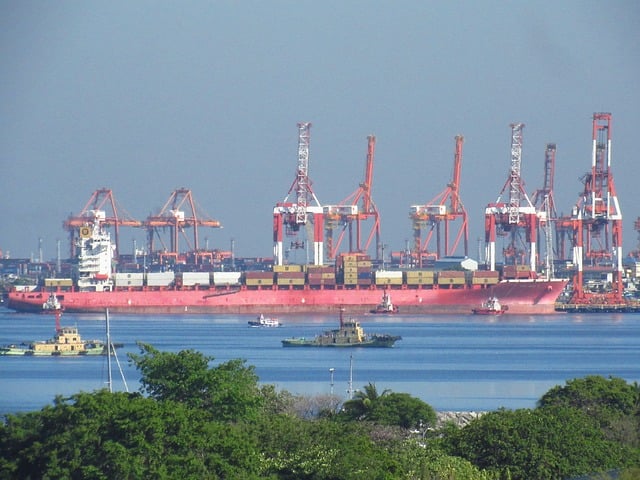
Shipping lines have pushed back against claims that they are the primary cause of port congestion, emphasizing that they merely serve as carriers in the supply chain.
“We are just carrier. We’re here to satisfy our clients, it’s important for the buyer or the beneficial cargo holder,” said Patrick Ronas, president of the Association of International Shipping Lines (AISL), in a chance interview during the Department of Trade and Industry’s Supply Chain and Logistics Group event in Makati.
Instead, he said, shipping lines have been made the scapegoat for recurring congestion issues. “… because of the shipping line, shipping line, shipping line, all shipping line,” he said.
Traders, including truckers and other port stakeholders, have raised concerns over the more than 100 percent yard utilization at the reefer facility of the Manila International Container Terminal (MICT), warning that this could signal broader terminal congestion.
Ronas, however, stopped short of assigning blame. He said that to decongest the terminal, consignees and customs brokers must expedite the pull-out of laden containers within the prescribed dwell time to free up yard space and improve container yard turnover.
In fact, he noted, “It’s not the empty containers that congest, if you check how many empties left the yard, it’s more than laden containers.” He stressed the need to strictly enforce time limits on how long consignees can keep their laden boxes inside the terminal yard.
He also cautioned against proposals to reduce the allowable storage period for empty containers from 90 days to 60 days, warning that such a move could disrupt equipment repositioning cycles, adversely affect shipping line operations, and expose exporters to equipment shortages.
Ronas added that extended holiday breaks, particularly during the Christmas season, contribute to yard buildup as cargo withdrawals slow down while many businesses are closed. In contrast, shipping lines typically observe only three non-operating holidays per year: Good Friday, Christmas Day, and New Year’s Eve.
He pointed out that every additional day of vessel delay due to berth or yard congestion, could cost shipping lines approximately $13,000 in operating expenses, underscoring the financial impact of port inefficiencies.
To help ease container volume at Manila ports, Ronas pointed to alternative gateways such as Subic and Batangas. However, these ports remain underutilized, as many importers prefer Manila due to its proximity to major customers and cheaper cost despite the higher yard density.
While he declined to cite an ideal yard utilization rate, Ronas emphasized that what matters most is maintaining a healthy balance between laden and empty containers to ensure uninterrupted cargo flow and efficient vessel turnaround.
He recalled instances when yard utilization reached 80 percent but remained manageable due to proper container mix and steady cargo evacuation.
Ronas also noted that during previous congestion in 2014–2015, empty containers were brought to off-dock container yards in Cavite and Bulacan to ease pressure on Manila terminals.
He further disputed claims that Manila ports have been in a constant state of congestion for the past 11 years. If that were truly the case, he argued, traders and shippers would have long shifted their cargo volumes elsewhere.
Finally, he expects the reefer yard utilization capacity to normalize in a month’s time as most shipments from China, the country’s number one source of imports, would have already been shipped ahead of the Chinese New Year celebration on February 17.

