


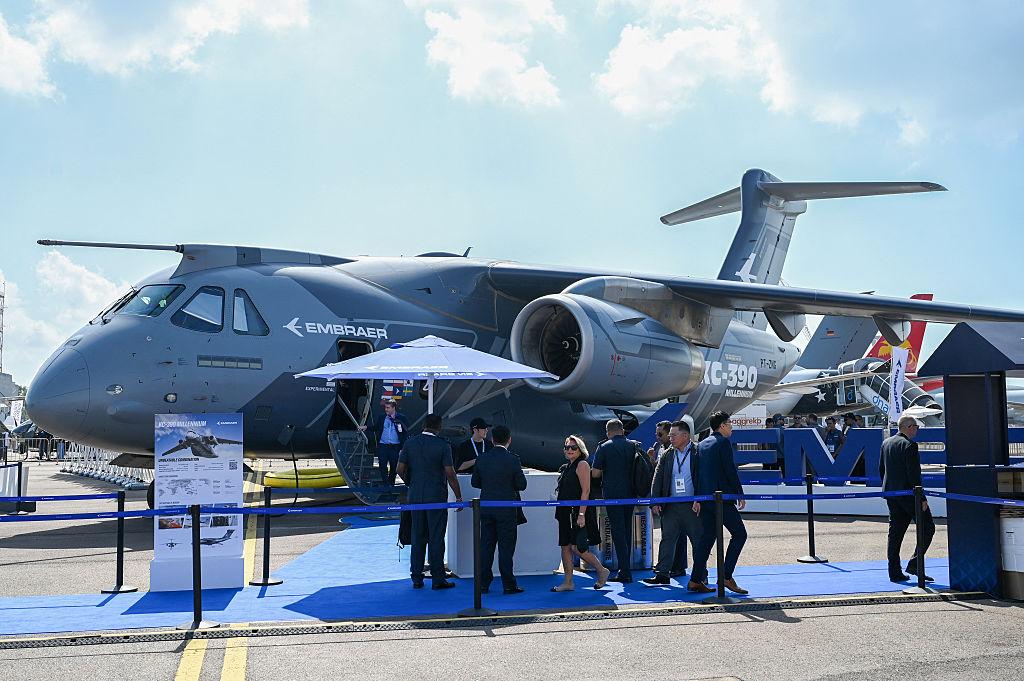
SINGAPORE — The Singapore Airshow closed Sunday with record attendance, but beyond the fighter jet displays and commercial aircraft marketing campaigns, much of the week’s most consequential discussion centered on something less visible: logistics.
The biennial event, held Feb. 3 to 8 at the Changi Exhibition Centre, marked its 10th edition and drew about 125,000 visitors, including more than 65,000 trade attendees from over 130 countries. More than 1,100 companies exhibited aircraft, defense systems and aerospace technologies, reflecting Asia-Pacific’s position as the fastest-growing aviation market.
While passenger aircraft and defense platforms dominated the flight line, executives across airlines, leasing firms and cargo operators focused on the supply chain constraints shaping aircraft availability and freight capacity.
Aircraft shortages, production delays and maintenance bottlenecks were recurring themes in closed-door meetings. Widebody aircraft remain in tight supply, affecting both long-haul passenger operations and dedicated freighter fleets. Several logistics executives said delivery backlogs at major manufacturers are forcing cargo operators to extend the life of older aircraft and compete for limited passenger-to-freighter conversion slots.
The scarcity of lift capacity has become a structural concern rather than a short-term disruption. As Asian economies expand and e-commerce volumes grow, demand for reliable air freight continues to rise. Singapore’s role as a regional sea-air and air-sea transshipment hub figured prominently in discussions about multi-modal routing strategies designed to manage risk, reduce transit time variability and bypass congested trade lanes.
China’s presence at the airshow underscored a broader shift with implications for logistics planning. State-owned aircraft manufacturer COMAC displayed its C919, signaling Beijing’s ambition to expand its aerospace footprint. Although the C919 is not a freighter and has yet to secure broad international certification, logistics analysts are watching China’s push to localize aircraft production and maintenance ecosystems. A more regionally concentrated aerospace supply chain could alter spare parts flows, MRO networks and aircraft availability across Asia.
Defense aviation also intersected with logistics strategy. The Chengdu J-10C performed in flying displays, while transport aircraft and sustainment services drew steady attention. Singapore announced plans to acquire used Lockheed Martin C-130H transport aircraft, reinforcing the importance of airlift capability in both military and humanitarian operations. For logistics providers, the emphasis on airlift capacity highlighted how commercial and defense supply chains increasingly overlap, particularly in contingency planning across the Indo-Pacific.
Digitalization emerged as another logistics undercurrent. Exhibitors highlighted predictive maintenance tools, aircraft health monitoring systems and data platforms aimed at improving fleet reliability. Airlines and cargo operators are investing in operational analytics to minimize downtime, manage fuel costs and reduce disruption exposure. The focus was less on new technology launches and more on incremental efficiency gains that can protect margins in a volatile operating environment.
The co-located Space Summit added another layer to the logistics discussion. Satellite communications and earth observation systems are becoming integral to cargo tracking, route optimization and disruption monitoring. Industry executives said resilient communications infrastructure is now viewed as a logistics necessity rather than an optional enhancement.
Notably absent were large public freighter orders or splashy cargo deals. Instead, participants described a more disciplined market where negotiations increasingly take place privately between airlines, lessors and conversion specialists. The absence of headline cargo announcements suggested an industry prioritizing stability and asset management over rapid expansion.
Singapore officials said the airshow generated significant economic activity for the city-state, benefiting aviation services, logistics providers and related sectors. For the broader aerospace industry, the 2026 edition delivered a clear operational message: growth in Asia remains strong, but capacity constraints and geopolitical shifts are reshaping how aircraft are financed, deployed and maintained.
On the flight line, the focus was on speed and performance. In meeting rooms and side discussions, the conversation was about cargo flows, fleet life cycles and supply chain resilience. The spectacle drew the crowds, but logistics framed the future.

