


The Philippines and the United States have agreed to expand bilateral collaboration to establish secure and standards-based critical minerals supply chains as well as drive private sector investments focusing on transport, logistics, energy, and semiconductors.
This developed following the Philippines-United States Bilateral Strategic Dialogue on Monday, February 16, in Manila where both sides decided to continue strengthening defense industrial base resiliences to advance regional and economic security and mutual prosperity.
To push these agreements, both sides agreed to hold the first Luzon Economic Corridor (LEC) Investment Forum in Manila this year. The forum will also include Japan and other partners in the LEC development to drive new investments and unleash additional private sector opportunities.
The Philippines and U.S. also greed to develop reliable energy infrastructure that supports economic activity in the LEC necessary to advance joint defense co-production capabilities in strategic sectors.
They have also identified these strategic sectors such as, manufacturing and data centers for emerging technology development. Both parties also agreed the need to ensure resilient energy supplies to enable humanitarian assistance, disaster risk reduction, and other critical operations that benefit the Filipino people.
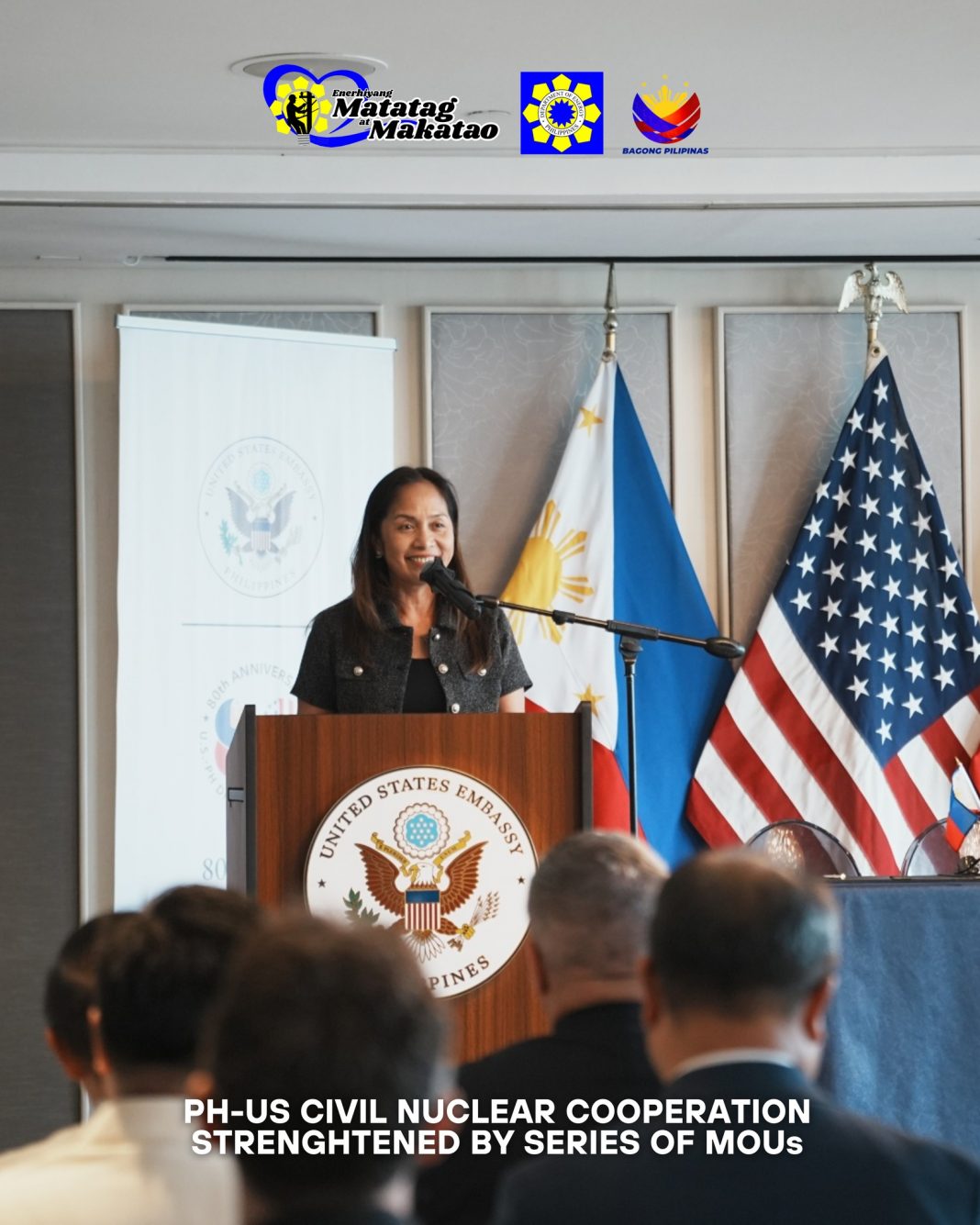
The Philippines will strengthen civil nuclear cooperation by continuing to work with off-takers including utilities and data centers and organizing a trade mission to the United States to connect leading U.S. nuclear technology companies with the Philippine private sector.
Additionally, through the Fulbright Program, the United States is sending experts to the Philippines to help develop nuclear-focused curricula and credentialing programs, building local capacity to construct and operate state-of-the-art nuclear reactors. The United States will also provide USD1.5 million through the Department of State’s Foundational Infrastructure for Responsible Use of Small Modular Reactor Technology (FIRST) program to build an SMR control room simulator in the Philippines, ensuring nuclear development in the region is consistent with the highest standards of nuclear safety, security, and nonproliferation.
To foster private sector-led investments in strategic sectors, such as transport, digital, energy, infrastructure, agribusiness, and health security in the Philippines, government entities between the two countries should deepen their cooperation.

