


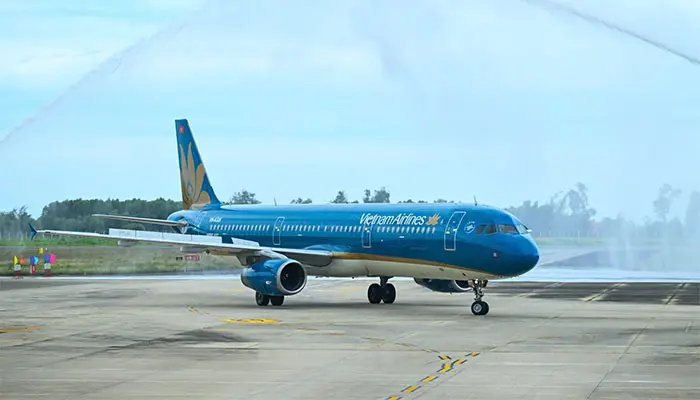
At the recent Singapore Air Show, the news for Vietnam’s intention for a $30 billion agreement to purchase 90 Boeing aircraft was made clear.
The agreement was finally inked early this month and marks a decisive step in a long-term effort to expand the country’s air transport capacity and raise its profile in regional and intercontinental aviation.
The fleet commitments by Vietnam Airlines, Sun PhuQuoc Airways and Vietjet come as demand for air travel continues to grow at one of the fastest rates in Asia. They also reflect a strategy to turn aviation into a central pillar of economic development, supporting tourism, trade and global connectivity.
For Vietnam Airlines, the order for 50 Boeing 737-8 aircraft is aimed at strengthening the domestic and regional network that carries the bulk of the country’s passenger traffic. The additional narrow-body capacity will allow the flag carrier to increase flight frequencies on major trunk routes, open new services within Asia and provide feeder traffic for future long-haul expansion. The deliveries, scheduled between 2030 and 2032, point to a fleet renewal and growth plan rather than an immediate increase in capacity.
The wide-body order by startup Sun PhuQuoc Airways signals a parallel ambition to build long-haul reach. A large fleet of Boeing 787-9 aircraft would allow nonstop services to the United States and Europe at a scale Vietnam has not previously achieved. Direct intercontinental flights are expected to cut travel time for overseas Vietnamese, attract higher-spending visitors and support exporters that rely on fast and reliable cargo links.
Much of Vietnam’s long-haul passenger and freight traffic currently moves through foreign hubs in the region. Expanding nonstop routes operated by Vietnamese airlines would allow more of that traffic, and its economic value, to be retained within the country.
Vietjet’s financing agreement for additional Boeing 737-8 aircraft underscores the continued importance of the low-cost sector in driving passenger growth. Budget carriers have played a central role in making air travel accessible to first-time flyers and in linking secondary cities to major economic centers. That volume is essential to sustain larger full-service and long-haul operations.
The aircraft purchases are closely aligned with Vietnam’s broader development priorities. Air connectivity is increasingly viewed in the same way as highways, seaports and industrial zones, as critical infrastructure that enables tourism expansion, attracts foreign investment and strengthens the country’s role in global manufacturing supply chains.
The scale of the planned fleet expansion also highlights the need for major infrastructure upgrades. The success of the strategy will depend on the completion of Long Thanh International Airport, capacity improvements at Noi Bai and Tan Son Nhat and the modernization of air traffic management to handle higher traffic volumes.
In the longer term, the additional aircraft are expected to change Vietnam’s position in Southeast Asian aviation. A larger fleet, a stronger low-cost segment and multiple long-haul operators would allow the country to compete more directly with established regional hubs for transfer passengers and international tourism.
Aviation analysts told Logistics.ph that while the agreements were signed during a period of trade negotiations with the United States and will help address Vietnam’s large trade surplus, their main impact will be felt in the next decade as the aircraft enter service.

