


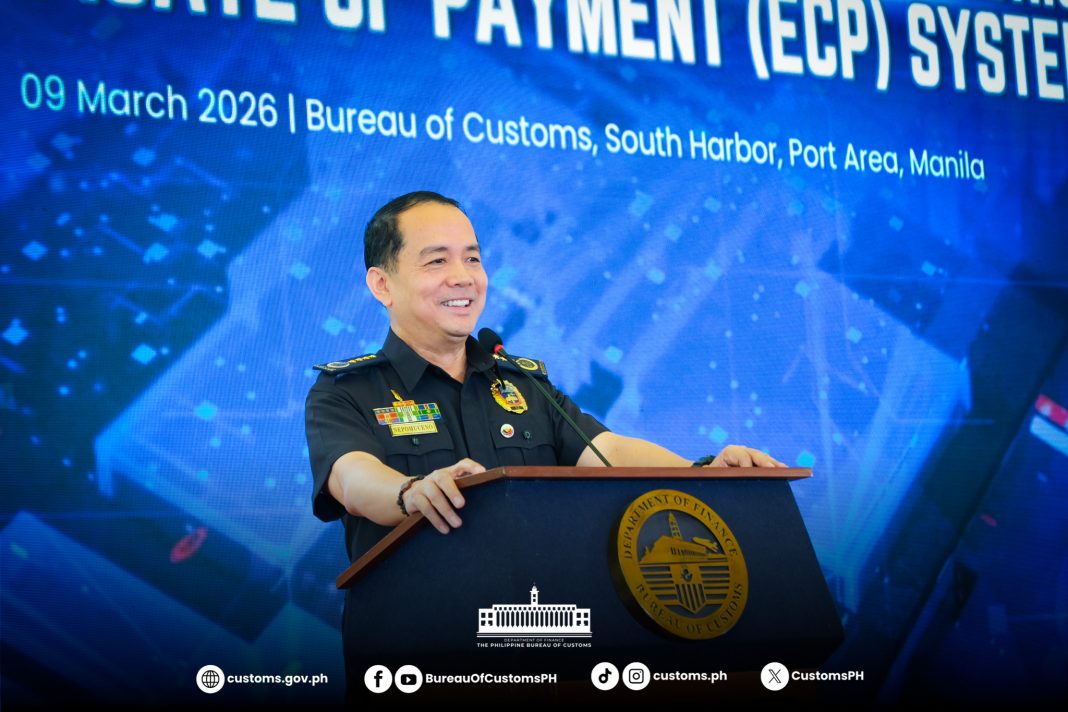
In a landmark move toward a fully digitalized government, the Bureau of Customs (BOC) formally launched its enhanced Electronic Certificate of Payment (e-CP) System on March 9, 2026. This initiative directly supports President Ferdinand R. Marcos Jr.’s directive to accelerate digital transformation and eliminate bureaucratic red tape through real-time, inter-agency automation.
The new system marks a radical shift from the previous e-CP process, which was hindered by manual validation and fragmented data sharing. By establishing a direct, secure link between the BOC and the Land Transportation Office (LTO), the platform ensures that motor vehicle information and tax payment data are transmitted instantly, facilitating seamless registration for importers and car owners alike.
The transition from a manual to an automated framework introduces several critical upgrades:
-
Real-Time Data Integration: Seamlessly links the BOC’s Electronic-to-Mobile (E2M) system with the LTO’s Land Transportation Management System (LTMS).
-
Automated Validation: Eliminates redundant manual checks by automatically verifying Single Administrative Document (SAD) details and payment records.
-
Closed-Loop Monitoring: Features a feedback mechanism that updates registered license plate details automatically, ensuring high data integrity and traceability.
-
Stakeholder Transparency: Importers and individual owners can now track the status of their e-CP applications in real-time.
During the keynote address, Customs Commissioner Ariel F. Nepomuceno highlighted the system’s role in fostering a “whole-of-government” approach to efficiency.
“The new e-CP System is a clear demonstration of the Bureau’s commitment to modernization,” said Commissioner Nepomuceno. “By eliminating redundant processes and ensuring real-time data exchange, we are making customs transactions faster, more secure, and more transparent for all stakeholders.”
Assistant Secretary Marcus V. Lacanilao of the LTO echoed these sentiments, noting that the scale of modern transactions requires moving beyond layers of manual validation. “Information can now move across systems efficiently, allowing agencies to rely on shared, verifiable records,” Lacanilao noted.
The launch was attended by key leaders from the Department of Finance (DOF) and the Department of Transportation (DOTr). Industry giants, including the Chamber of Automotive Manufacturers of the Philippines, Inc. (CAMPI) and the Association of Vehicle Importers and Distributors (AVID), expressed strong support, citing reduced transaction costs and improved predictability in the importation pipeline.
By bridging the gap between customs clearance and road registration, the BOC continues to lead the charge in regulatory efficiency and the facilitation of legitimate trade in the Philippines.

