


With the agri-food system under acute pressure from climate change, rising population and other risks, digitalization offers a powerful catalyst for transforming the sector to enhance its productivity, resilience, sustainability, and inclusivity, according to a new report.
The policy brief from the Economic Research Institute for ASEAN and East Asia (ERIA) underscored the importance of accelerating the digital transformation of the agri-food industry to build resilient, sustainable and equitable agri-food systems capable of meeting food security needs.
The report argues that digitalization in agriculture is not simply about modernizing production techniques but the reshaping of the entire value chain, from on-farm decision-making and climate-smart resource management to market linkages, financial inclusion, and policy formulation.
Digital technologies are indispensable for achieving food and nutrition security, especially for developing economies, it further said. Digital transformation can enhance productivity and efficiency, improve market access and inclusivity, advance sustainability and climate resilience, strengthen food security and nutrition, and enable data-driven policymaking.
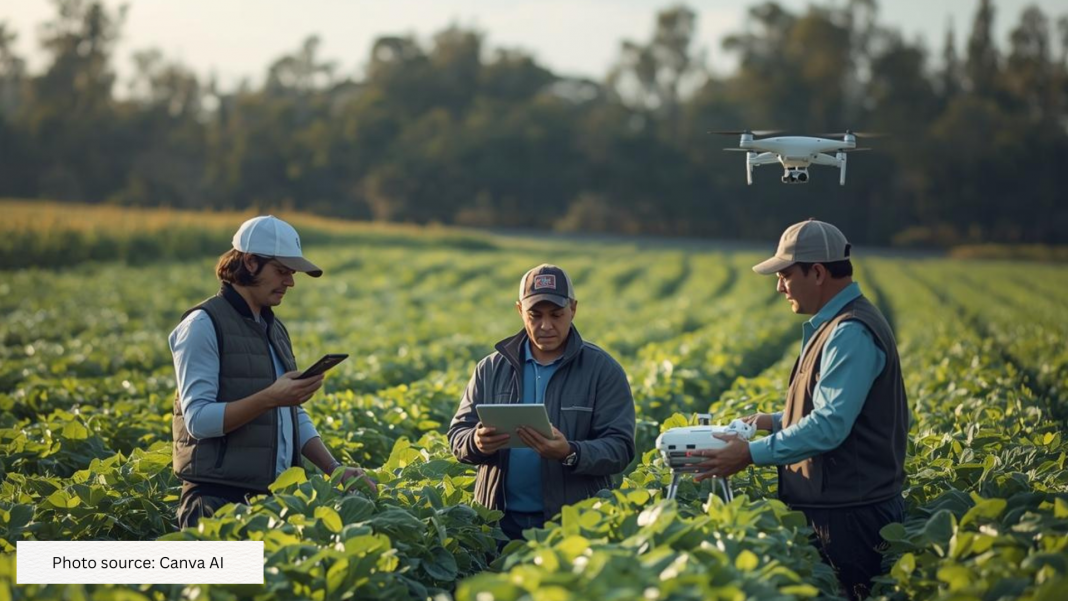
On enhancing productivity and efficiency, “digital tools empower farmers to make informed decisions on planting, fertilizer application, water management, and pest control,” the report said. “Precision agriculture technologies—such as soil sensors, drones, and satellite-based advisory systems—optimize resource use and reduce input costs.”
Market access is also improved when digital platforms are used to connect farmers with markets. “Mobile applications offering real-time price information, weather forecasts, and agronomic advice improve transparency and bargaining power.
Women farmers—who often face mobility constraints—benefit from digital tools that provide market access, financial services, and knowledge without requiring physical presence in marketplaces,” the paper said.
Meanwhile, digital capabilities are also linked to advancing environmental sustainability and climate resilience. For instance, satellite monitoring can track land degradation, water stress, and crop health, enabling targeted interventions. Digital supply chains improve traceability and accountability, helping to reduce food loss and waste. Real-time environmental data also supports climate-smart practices such as integrated pest management and conservation agriculture.
Digitalization is likewise crucial in strengthening food security, said the ERIA report released early this year. From optimizing production to reducing post-harvest losses, digital innovations strengthen food supply stability. Mobile platforms can also disseminate nutritional guidance and promote healthier consumption patterns. For the Philippines which faces recurrent climate shocks, digital tools provide early warning systems for food shortages and support more effective emergency responses.
Further, data is becoming a strategic resource for agriculture. High-quality, interoperable datasets allow policymakers to design better-targeted subsidies, insurance schemes, and climate adaptation strategies. They also improve forecasting and risk management.
And on how to achieve this digital transformation of the agri-food industry, the report recommends expanding the digital infrastructure for rural inclusion and for narrowing the digital divide as well as incentivizing digital innovation for sustainability.
Equally crucial, said the paper, is to empower smallholder farmers, women, and youth through capacity building such as building their digital literacy and technical skills; strengthening extension and financial services through the use of digital diagnostics, remote advisory services, and online training materials; supporting cooperatives and digital producer organizations; and addressing gender- and youth-specific barriers through tailored training, technology vouchers, entrepreneurship incubators, and inclusive financing instruments for women and young agripreneurs.
“Smallholder farmers—especially women and youth—must be at the center of digital capacity-building efforts to avoid widening digital divides,” said the paper.

