


The Department of Health (DOH) is set to establish a Supply Chain Management Bureau (SCMB), a unified body that will oversee the full logistics life cycle of health commodities in a more transparent and efficient system in the country.
Health Undersecretary Randy Escolango announced in a keynote speech, “Good Supply Chain for Better Health,” at the opening of the PASIA Logistics Summit 2026 that the SCMB is expected to be established within the year.
The DOH executive committee approved last month the conversion of the existing Supply Chain Management Service into a policymaking bureau. The proposal is now being prepared for submission to the Department of Budget and Management.
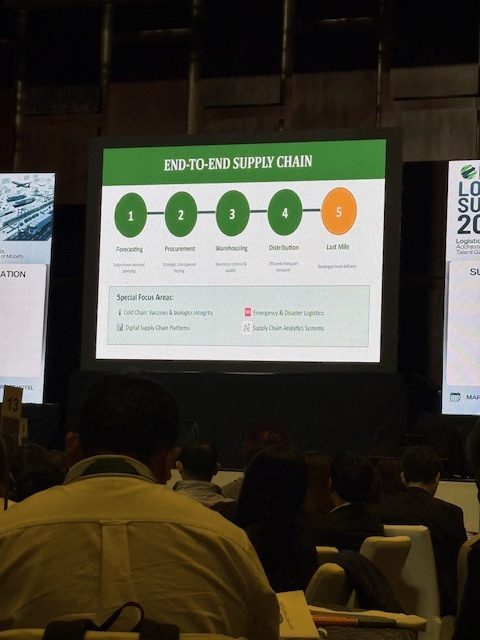
“The SCMB will manage the entire logistics life cycle of health commodities, from demand forecasting to procurement strategy, to warehousing and inventory control, to distribution networks across our islands, to last mile delivery,” he said.
Escolango said the new bureau will integrate the DOH supply chain, which is currently limited largely to warehousing and distribution.
It will also strengthen three priority areas: cold chain for vaccines and biologics, emergency logistics for disasters, response to disease outbreaks, digital supply chain platforms, and supply chain analytics systems.
Misnomer
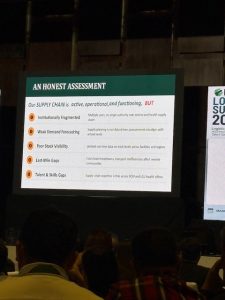
Escolango described the current DOH supply chain system as a misnomer, saying it focuses mainly on warehousing and distribution while planning, procurement, stockout management, and forecasting are handled separately—limiting visibility.
He said this fragmented setup has led to poor procurement strategies, weak demand forecasting, limited stock visibility, last-mile gaps, and skills shortages. These factors, he noted, contributed to the failure to procure flu vaccines last year.
The SCMB, he said, will serve as a strategic pillar of universal healthcare, ensuring “one supply chain, one bureau, one accountability.”
It will enable end-to-end operations, including data-driven demand planning, strategic and transparent procurement, inventory control and quality assurance, efficient distribution, and barangay-level delivery.
System
Escolango stressed that creating the bureau is only the first step, adding that its success will depend on the discipline of the systems that drive it.
Alongside the SCMB, the DOH will implement an integrated supply chain planning and execution (ISCPE) system to unify operations and better adapt to public health needs.
The ISCPE will shift the agency’s approach “from reacting to shortages to preventing them before they happen, from uncertainty to predictability and control,” he said.
The initiative aligns with the Universal Health Care Act, which mandates the integration and standardization of supply chain functions and aims to reduce household out-of-pocket health spending under its 2023–2028 roadmap.
Escolango emphasized that financial protection is meaningless without access to medicines, adding that availability begins with a strong supply chain.

