


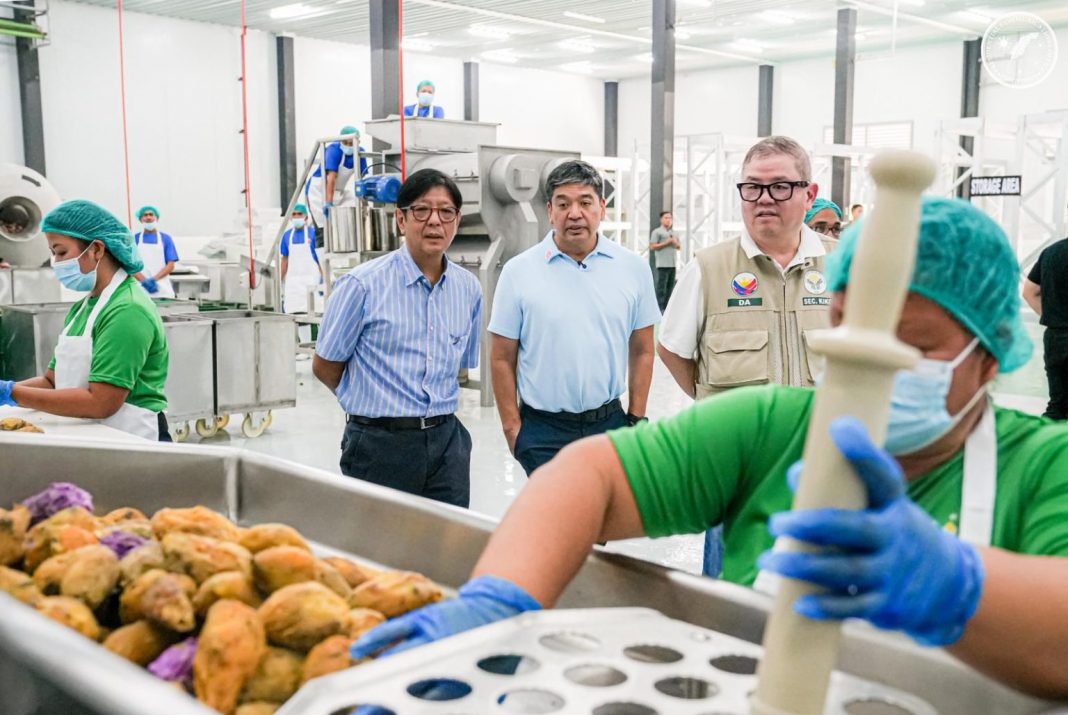
Reaffirming a national commitment to agricultural modernization, President Ferdinand R. Marcos Jr. personally inspected the Bicol Mega Cold Storage and Vegetable and Fruit Processing Facility on Monday.
The visit highlights the administration’s strategic shift toward empowering local farmers by improving the value chain and protecting them from volatile market pricing.
During his remarks, President Marcos emphasized that the PhP500 million facility is designed to break the cycle of dependency on large-scale traders. By providing state-of-the-art storage, the government aims to give farmers the power to dictate when and at what price they sell their produce.
“When we don’t have facilities like this, our products—especially vegetables and eggs—must be sold immediately before they spoil. Farmers are forced to accept whatever price a trader offers,” President Marcos stated. “With this cold storage, controlled not by big corporations but by local groups, you decide when to sell and whose products to accept.”
The Bicol Mega Cold Storage is a cornerstone of the region’s agricultural infrastructure, featuring:
-
Capacity: Six refrigerated warehouse rooms with an annual capacity exceeding 200,000 tons.
-
Technology: One blast freezer (2-ton capacity) and a dedicated solar power system to ensure energy efficiency and commodity safety.
-
Scope: Benefits over 200,000 farmers and cooperatives across the Bicol Region, Visayas, and Mindanao.
Beyond storage, the President toured the Vegetable and Fruit Processing Facility, a post-harvest hub equipped to transform raw produce into chilled, frozen, dried, canned, and puree products. This “value-added” approach ensures that the profit from processed goods stays within the community.
“We want the added value of these products to go to our farmers, not to large corporations,” the President added, noting that the facility is equipped with specialized machinery including washing vats, pressure cookers, and pulper finishers.
The Pili facility is part of a broader national strategy to eliminate food wastage. Between June 2022 and October 2025, the administration has successfully operationalized 24 cold storage facilities across the Philippines, creating a more resilient and sustainable food supply chain.
By organizing local cooperatives to manage these hubs, the government ensures that the “backbone of the nation”—the Filipino farmers—remains the primary beneficiary of agricultural innovation.

