The Department of Energy (DOE) has ordered distribution utilities (DUs), electric cooperatives (ECs), and local government units (LGUs) nationwide to fast-track all net metering applications, requiring full processing within 10 working days for DUs and ECs, and three working days for LGU approvals.
The move forms part of the government’s continuing efforts to help consumers manage electricity costs amid volatility in global energy markets driven by developments in the Middle East.
In line with President Ferdinand R. Marcos Jr.’s issuance of Executive Order (EO) No. 110, s. 2026 which declares a State of National Energy Emergency, the DOE is advancing practical and consumer-focused measures that will help cushion Filipino households and businesses from fuel driven cost pressures in the power sector.
By accelerating net metering approvals, the Department aims to enable qualified consumers to install rooftop solar systems sooner, begin reducing their dependence on grid-supplied electricity, and realize savings on their monthly power bills at the soonest possible time.
Prior to the issuance of EO No. 110, DUs and ECs had 20 working days to complete the processing of net metering applications, while the prescribed period for LGU approvals varied per permit. Now, DUs and ECs are tasked to complete the processing of applications, including technical rectifications, within a non-extendible period of 10 working days, while LGUs are required to act on all net metering-related permits within three working days.
The fast-tracked processing also forms part of the government’s broader whole-of-government initiative to remove unnecessary delays, simplify procedures, and make the benefits of rooftop solar more accessible to Filipino consumers. In January 2026, the DOE, the Department of the Interior and Local Government (DILG), and the Department of Public Works and Highways (DPWH) signed Joint Memorandum Circular No. 001, s. 2026, which already established a streamlined net metering approval process, adopting a “no additional requirements” policy for covered permits, and provided for deemed approval in cases of inaction within the prescribed periods.
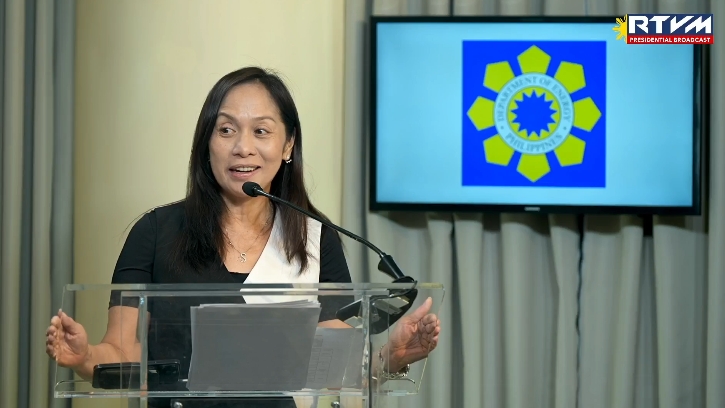
“Every unnecessary delay in net metering is a delay in savings for Filipino consumers,” said Energy Secretary Sharon S. Garin. “Under the directive of President Ferdinand R. Marcos Jr. through Executive Order No. 110, we are pushing faster, simpler, and more responsive approval processes so that more households and businesses can benefit from rooftop solar, lower their electricity bills, and strengthen their resilience against global energy price shocks.”
Net metering is a program under Republic Act No. 9513, or the Renewable Energy Act of 2008, which allows qualified consumers with renewable energy systems of up to 100 kilowatts (kW) to export excess electricity to the grid in exchange for credits on their monthly electricity bills. By cutting approval times and speeding up interconnection, the DOE seeks to help more households, commercial establishments, and other qualified end-users move more quickly from application to actual bill savings.
The Advisory takes effect immediately and shall remain in force for the duration of the declared State of National Energy Emergency, unless sooner revoked by the DOE.
The DOE will continue to coordinate closely with the DILG, DPWH, ERC, NEA, DUs, ECs, and local governments to ensure consistent nationwide implementation of the streamlined process. The Department emphasized that faster net metering approvals are not only a matter of administrative efficiency, but a concrete consumer measure that supports renewable energy adoption, strengthens energy resilience, and delivers more immediate economic relief to Filipino households and businesses.