


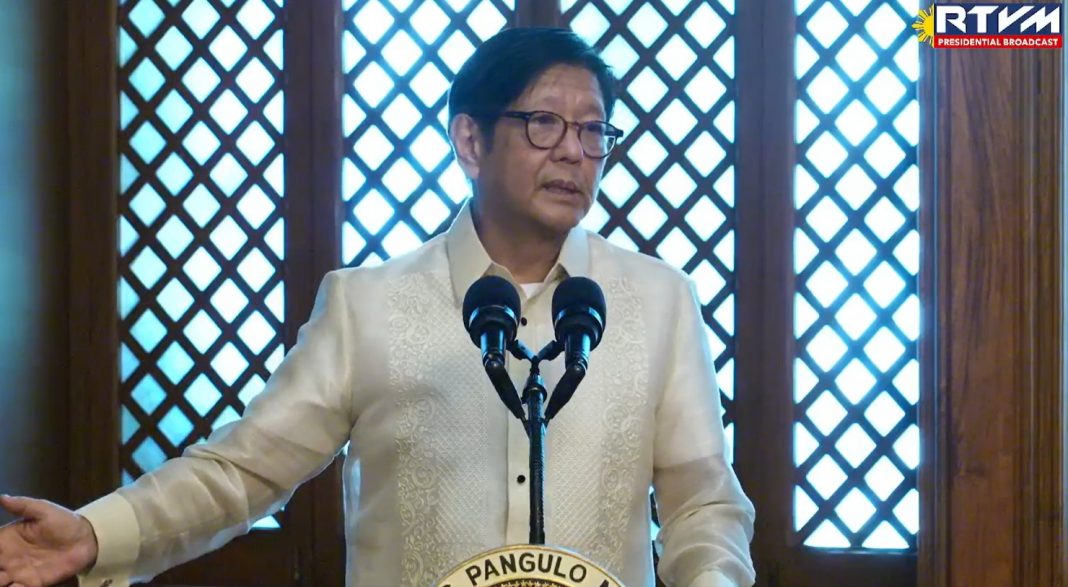
President Ferdinand R. Marcos Jr. reaffirmed the national government’s commitment to bridging the digital divide, pledging direct assistance to Local Government Units (LGUs) facing financial hurdles in their digitalization and connectivity efforts.
Speaking during the oathtaking ceremony of the Vice Mayors’ League of the Philippines (VMLP) national executive officers at Malacañang on Monday, the President acknowledged the fiscal constraints that often stall technological progress at the local level.
“I understand very well that there is a difficulty with funding for many local governments,” President Marcos stated. “So the national government is willing to help. It’s the national government’s responsibility to increase the coverage of the internet.”
To address these challenges, the Chief Executive outlined a multi-pronged strategy to bolster LGU capabilities:
-
Expert Deployment: The national government will deploy IT specialists from technical schools to help LGUs build and maintain digital platforms.
-
Public-Private Partnerships: Collaborative efforts with the private sector will be leveraged to provide technical assistance and infrastructure development.
-
Connecting Remote Areas: To improve connectivity in Geographically Isolated and Disadvantaged Areas (GIDA), the government is taking the lead by distributing digital tools in schools—a move intended to demonstrate demand and incentivize telecommunications companies to invest in these regions.
The President emphasized that digitalization is not merely a modern convenience but a necessity for efficient public service. By digitizing the issuance of certificates, licenses, and permits, the government aims to eliminate bureaucracy and enhance the ease of doing business.
President Marcos also highlighted the synergy between local digitalization and broader national initiatives, such as digital banking and the PhilSys National ID system.
Updating the league on the progress of the national identification program, the President revealed that approximately 90 million national IDs have already been issued.
“That will be the most important document that any Filipino will have,” the President added. “That national ID will give them access to all services and transactions of the government.”
The administration’s push for a “fully digitalized” Philippines remains a top priority, with the President calling on local leaders to collaborate closely with the national government to ensure no community is left behind in the digital age.

