


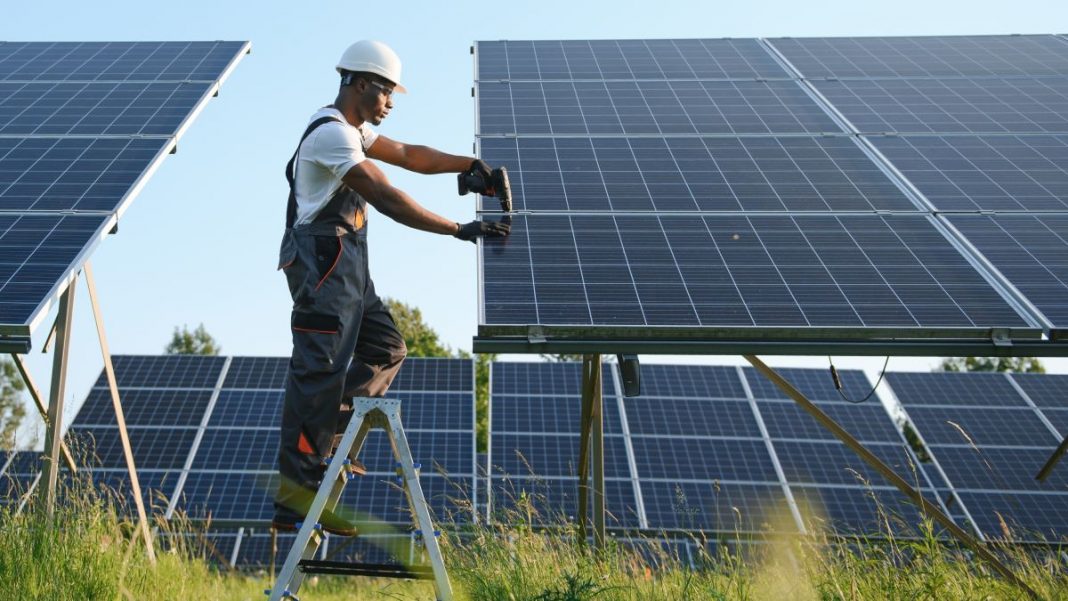
The subsidized deployment of solar rooftop systems for the most vulnerable consumers is the most effective measure the government can immediately implement to mitigate the burden of soaring fuel costs, according to an independent think tank.
This proposal is part of the energy measures outlined in a position paper submitted by the Center for Energy, Ecology, and Development (CEED) to legislators on Friday. The paper aims to address concerns raised before the Senate’s Proactive Response and Oversight for Timely and Effective Crisis Strategy (PROTECT) Committee, the House of Representatives, and other concerned agencies.
The call for solar rooftop subsidies came after Energy Secretary Sharon Garin said fuel prices are unlikely to normalize anytime soon, even if the US-Iran war were to end today amid hopes of negotiations.
“At a time of crisis, solar rooftops are an immediate and long-term reprieve for consumers,” said CEED Executive Director Gerry Arances.
CEED pointed out that the aggressive development of solar rooftop systems is a key and viable solution to ease costs for vulnerable communities, including those in off-grid areas and areas served by the Small Power Utilities Group (SPUG).
“With 500-watt solar PV equipment to solarize rooftops for at least one million vulnerable households, we could generate Php 373,140,000 worth of electricity savings per month. The allocation of public resources to bring such a solution to life must be a priority for the national government, on top of fast-tracking the implementation of pending solar projects with a combined 5,664.92 megawatts for generation,” said
SPUG areas refer to off-grid islands and remote locations not connected to the main transmission grid. There are roughly 239 SPUG areas that rely on diesel-powered generators to provide electricity, where operating costs can reach as high as P62 per kWh.
“Changes in fossil fuel costs in the global market manifest as highly volatile rates. Pass-through provisions in power agreements enable corporations to relieve themselves of ballooning fossil fuel costs across its value chain, while placing the financial responsibility on consumers. The same story plays out in the transport sector, with jeepney drivers and operators, fisherfolk, and other sectors relying on petroleum products for mobility shouldering higher fuel costs, value added tax, and excise taxes for fuel, while companies dictate costs in a deregulated oil market,” said Arances.
CEED further said that increases in coal and gas prices affecting electricity rates in the Meralco franchise area—particularly with Newcastle coal prices rising by 17 percent and JKM LNG prices by 91 percent following the start of the war—could lead to an estimated increase of PHP5.01 per kWh in blended generation rates, based on Meralco’s latest March 2026 rates.
Higher costs are also expected in off-grid and SPUG areas, which rely on diesel-fired power plants. As diesel prices rise, these plants risk fuel depletion much sooner than their initial projections of September 2026.
The think tank also expressed solidarity with transport groups, fisherfolk, and consumers, calling for both immediate relief and long-term measures to ease financial burdens.
“The national government must immediately suspend the inclusion of pass-through costs in our electricity bills. Power companies must absorb rising costs that are part of their business model–which is entirely reasonable considering the profit by the millions and billions they report every year. As for the transport sector, excise taxes and VAT on petroleum products must be suspended to ease costs for consumers and transport workers,” said Arances.

