


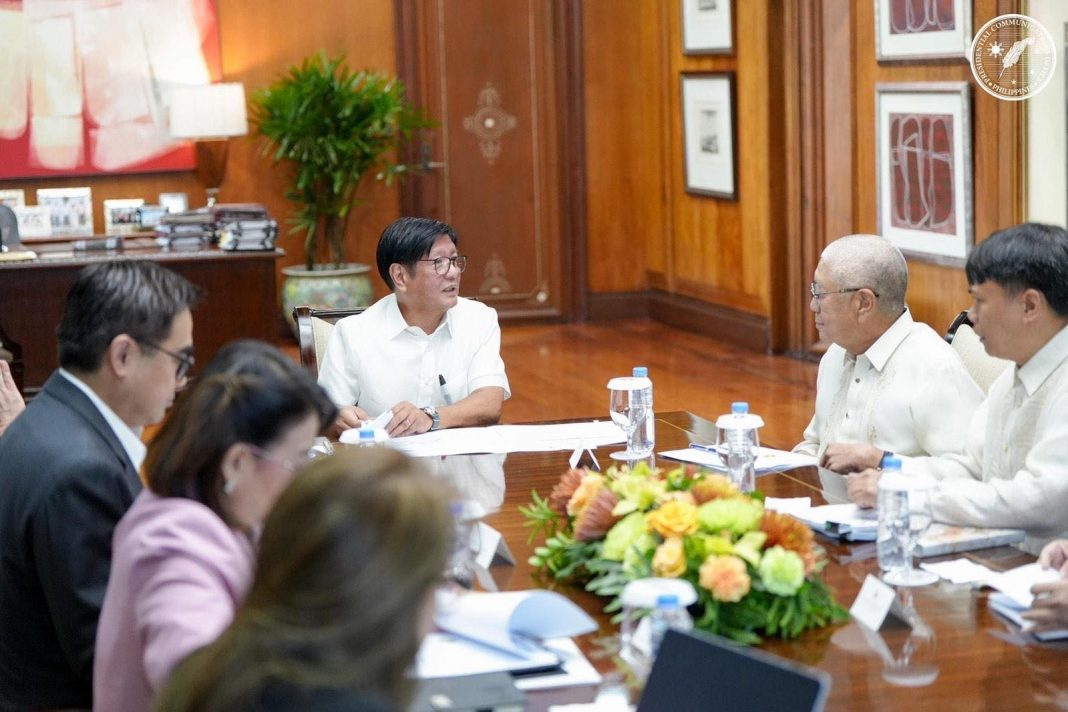
President Ferdinand R. Marcos Jr. met with Bangko Sentral ng Pilipinas (BSP) Governor Eli Remolona Jr. at Malacañang on Tuesday to review the central bank’s recent monetary policy adjustments and align on the nation’s economic trajectory through 2026.
During the briefing, Governor Remolona detailed the Monetary Board’s (MB) recent decision to ease interest rates, a move designed to support domestic demand and maintain economic momentum. Key adjustments include:
-
Target Reverse Repurchase (RRR) Rate: Reduced to 4.5% (down from 4.75% in October 2025).
-
Overnight Deposit Facility: Lowered to 4.0%.
-
Overnight Lending Facility: Lowered to 5.0%.
The Monetary Board indicated that while the current easing cycle has provided necessary support to the economy, the cycle is likely nearing its conclusion as the bank shifts its focus toward long-term stability.
The BSP projects modest economic growth through the first half of 2026. However, a significant rebound is anticipated in 2027, bolstered by the lagging positive effects of these earlier policy easing measures.
Complementing this outlook, the World Bank has expressed optimism regarding the Philippines’ recovery over the next two years. Their report highlights several critical “growth engines”:
-
Private Consumption: Expected to rise as low inflation and strong employment rates persist.
-
Investment Surge: Lower interest rates are anticipated to encourage both households and businesses to increase spending and capital investments.
-
Infrastructure & Reform: The resumption of public infrastructure projects and recent market liberalization reforms are expected to significantly enhance the business environment.
A key takeaway from the discussion was the necessity of regional development. Aligning with World Bank recommendations, the administration remains committed to ensuring that low-income and middle-income regions achieve faster growth rates than Metro Manila. This strategy aims to ensure that the recovery is felt across the entire archipelago, reducing poverty and promoting sustainable long-term development.
“Our goal is a resilient economy where growth is not just a statistic, but a lived reality for every Filipino, particularly in our developing provinces,” the briefing emphasized.

