


The Economy and Development (ED) Council has declared 2026 a rally point for accelerating the implementation of the Philippine Development Plan (PDP) 2023-2028 and restoring public confidence through visible and measurable improvements in people’s lives.
According to the Department of Economy, Planning, and Development (DEPDev), the move responds to persistent gaps between public expectations and on-the-ground outcomes, as well as fiscal constraints that require the government to focus on programs, activities, and projects that are expected to deliver the greatest impact for Filipino households.
During its January 26 meeting chaired by President Ferdinand R. Marcos Jr., the ED Council agreed to fast-track key programs in education, health, agriculture and food security, social protection, job creation, and infrastructure—areas where the public has been demanding for better, higher-quality government service.
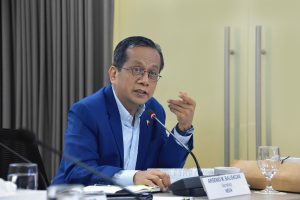
DEPDev Secretary and ED Council Vice Chair Arsenio M. Balisacan said the administration is shifting decisively toward stronger execution, transparency, and accountability to meet PDP commitments.
“Turning 2026 into a rally point means the entire government must deliver faster, more visible, and more meaningful results. Every peso must translate into better services and improved well-being for Filipinos,” Balisacan said.
“With less than three years left in the PDP’s implementation period, tighter prioritization and stronger coordination between planning and budgeting are essential so that the Filipino people feel the benefits of these transformative projects,” he added.
The 2026 General Appropriations Act (GAA) will serve as the main vehicle for this realignment, focusing resources on high-impact programs and strengthening value for money across sectors.
Sharpened Priorities Across Key Sectors
For education, to address high learning poverty and improve school readiness, the 2026 GAA allocates PHP85.4 billion for school facilities, including classrooms and technical-vocational laboratories in last-mile schools, and PHP8.9 billion for the Academic Recovery and Accessible Learning (ARAL) Program. Programs under CHED and TESDA continue to receive funding for scholarships and workforce upskilling.
For health, the government will upgrade primary care facilities, expand community health worker training, invest in specialty and training hospitals, and improve health literacy to lower out-of-pocket spending and expand access to quality care.
For social protection, a provision prohibiting political involvement, including displaying names of public officials in distributing financial assistance in the 2026 GAA will strengthen impartial program delivery, while the expanded integration of the National ID and Community-Based Monitoring System (CBMS) improves targeting and contributes to fraud prevention.
For agriculture and food security, to address high and volatile food prices, government investments will include smart agriculture, logistics and storage modernization, farmer support, strategic trade policies, and demand-side measures such as reducing food waste. Key allocations include PHP11.3 billion for buffer stocking, PHP10 billion for Rice for All and Kadiwa ng Pangulo, PHP9.5 billion for credit and insurance, and PHP33 billion for farm-to-market roads.
For job creation, the Trabaho Para sa Bayan Plan 2025-2034 provides a comprehensive roadmap for inclusive labor markets, quality jobs, improved productivity, and stronger industry competitiveness.
For infrastructure, priority projects include major railways (North-South Commuter Railway, Metro Manila Subway), NAIA rehabilitation, key road and bridge upgrades (Maharlika Highway, EDSA), expanded digital connectivity, and nationwide electrification initiatives.
Implementing Good Governance Through Transparency, Alignment, and Relevance
During the ED Council meeting, Balisacan emphasized that the delivery of public services must be complemented by efforts to modernize governance systems.
The Marcos Administration places good governance at the core of public sector reform, ensuring that programs are implemented with transparency, accountability, and integrity. Over the medium term, the government aims to strengthen service delivery by institutionalizing technology-enabled governance mechanisms across all stages of planning, budgeting, implementation, as well as monitoring and evaluation.
“Transparency and accountability must be embedded in core government processes. Technology can play a central role—through public dashboards that track the Philippine Development Plan and project performance, and through modernized monitoring and evaluation systems, particularly in infrastructure agencies,” he explained.
This governance thrust also extends to the management of public funds. DEPDev recommends the conduct of regular monitoring and continuous updating of public service and revenue performance indicators to enhance transparency in tax collection and spending. Ongoing initiatives include the adoption of risk-based audit modeling, regular public disclosure of revenue projections, and the use of Geographic Information Systems (GIS) and other digital tools in tax mapping to improve the accuracy and integrity of revenue administration.
The government is also prioritizing relevant and responsive programs by ensuring that intended development outcomes match project design, scope, scale, and financing. This focus on relevance guides both investment decisions and the formulation of the national budget, ensuring that public funds support programs that deliver measurable and tangible results.
To reinforce the link between planning and budgeting as well as strengthen transparency and accountability, the government will leverage the DEPDev’s Public Investment Program Online (PIPOL) System and the Department of Budget and Management’s Online Submission of Budget Proposals System (OSBPS) in preparing the FY 2027 National Budget.
“Integrating the PIPOL and OSBPS will reinforce the alignment of spending priorities and increase transparency in resource allocation—elements that are so critical to project and program responsiveness as well as completion and delivery,” said Balisacan.
ASEAN 2026 as a Strategic Delivery Deadline
Balisacan also emphasized that the Philippines’ ASEAN Summit chairship this 2026 presents a unique opportunity to showcase national progress and strengthen the country’s position as a top tourism and investment destination.
“To maximize this opportunity, we must demonstrate our capacity to host high-level events, treat the ASEAN chairship as a fixed delivery milestone, fast-track interagency coordination on travel facilitation and digital visitor services, ensure destination readiness in host and gateway areas, encourage multi-country ASEAN travel circuits, and showcase the Filipino brand of service excellence,” said the country’s chief economist.
Critical Legislative Reforms for Good Governance
To reinforce the recalibrated strategy, the ED Council also backed priority legislative reforms under the Legislative-Executive Development Advisory Council (LEDAC), including the Anti-Dynasty Bill and Party-List System Reform Act to strengthen accountability and representation.
Supporting these reforms and the government’s push for transparency, modernization, and inclusive growth, the ED Council likewise approved the National Digital Connectivity Plan (NDCP) 2028, the government’s first-ever plan to provide reliable and resilient digital connectivity nationwide. It utilizes a multimodal approach that integrates fiber, wireless, satellite, and submarine cable systems, anchored on robust public–private-sector collaboration.

