


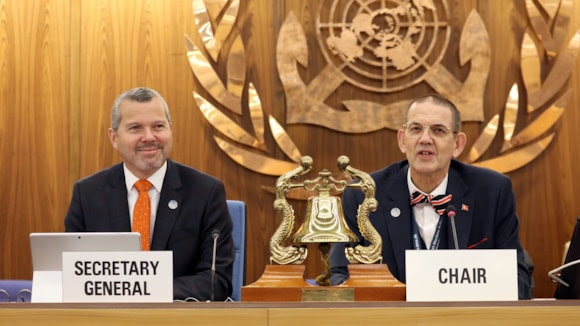
The International Maritime Organization (IMO) has reached a pivotal milestone in the global transition to sustainable shipping. At the conclusion of its 12th session (SDC 12), the Sub-Committee on Ship Design and Construction finalized a comprehensive workplan to establish a safety regulatory framework for ships utilizing new technologies and alternative fuels.
This strategic roadmap ensures that safety standards keep pace with the rapid innovation required to meet the IMO’s ambitious greenhouse gas (GHG) reduction targets. The draft plan will be submitted to the Maritime Safety Committee (MSC 111) for formal approval in May 2026.
The finalized workplan focuses on three critical pillars of the maritime energy transition: Nuclear Power, Wind-Assisted Propulsion, and Lithium-Ion Battery Systems.
“The completion of this workplan is a major achievement,” said IMO Secretary-General Arsenio Dominguez. “It ensures that safety considerations evolve in parallel with the rapid technological progress driven by the IMO’s Strategy on the Reduction of GHG Emissions from Ships.”
The IMO has identified several key milestones for the coming years:
-
2028: Adoption of amendments to allow batteries as a primary source of electrical power and lighting.
-
2029: Approval of interim safety guidelines for wind-propulsion and wind-assisted power.
-
2030: Adoption of a revised Nuclear Code and updated safety regulations under the SOLAS Convention.
To maintain momentum, the Sub-Committee established the SDC Correspondence Group on GHG Safety, tasked with analyzing technical data and drafting regulatory amendments ahead of the SDC 13 session in 2027.
In addition to decarbonization efforts, the Sub-Committee made significant progress on the URN Action Plan to mitigate the impact of commercial shipping on marine life.
Key developments include:
-
Extended Experience-Building Phase (EBP): The Sub-Committee has recommended extending the current EBP by two years, moving the completion date to 2028. This extension will allow the industry more time to identify and close implementation gaps in the Revised URN Guidelines.
-
Co-Optimization Guidance: For the first time, draft technical guidance has been agreed upon to help shipbuilders and owners balance energy efficiency with noise reduction. This “co-optimization” ensures that green ships are not only carbon-neutral but also quieter.
-
Landmark URN Study: The Sub-Committee approved terms of reference for an IMO-commissioned study to establish a global baseline for underwater noise emissions, providing the data necessary to set future reduction targets.

