


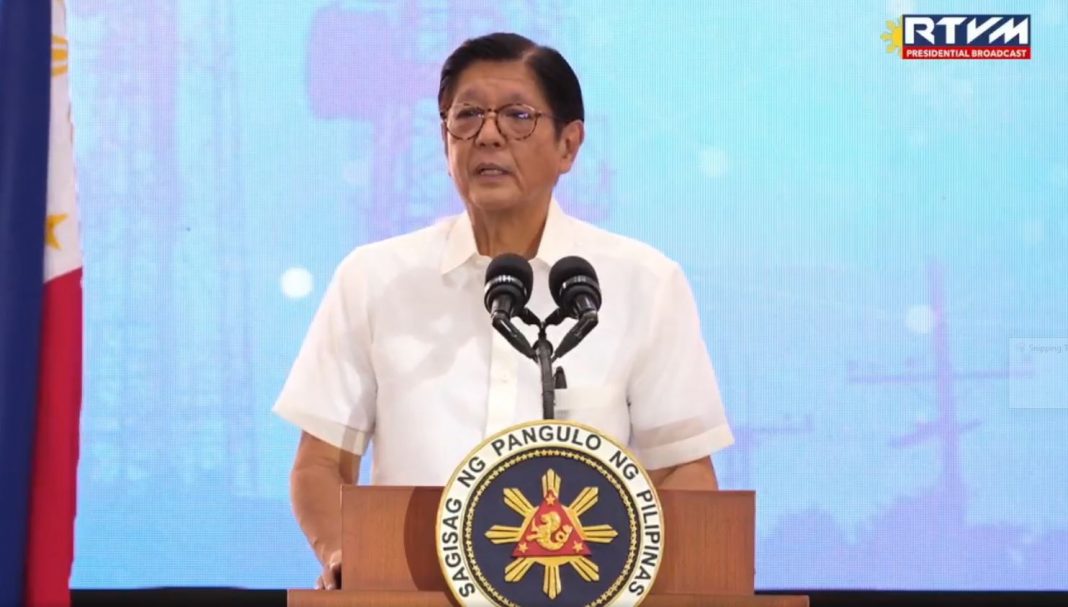
President Ferdinand R. Marcos Jr. reaffirmed the government’s commitment to bridging the digital divide, announcing a sweep of legislative and infrastructure milestones aimed at providing “faster, cheaper, and more inclusive” internet for all Filipinos.
Speaking at the Philippine Telecommunications Summit 2026, themed “Mas Mura at Mas Malawak na Internet para sa bawat Pilipino,” the President highlighted the administration’s shift toward aggressive policy reform and public-private synergy.
Central to the administration’s strategy is the enactment of the Konektadong Pinoy Act. The President noted that this landmark legislation has dismantled decades-old bureaucratic hurdles by:
-
Removing Congressional Franchise Requirements: Streamlining the process for providers to construct and operate data networks.
-
Mandating Infrastructure Sharing: Requiring co-location among providers to eliminate wasteful duplication and lower deployment costs.
-
Boosting Competition: Opening the market to wider participation to drive down prices for consumers. “The law ensures that every single peso spent delivers real value to our public,” President Marcos stated, emphasizing that increased competition is the key to affordability.
The President reported significant progress in the National Fiber Backbone Project, confirming the completion of Phases 1, 2, and 3. This infrastructure now serves as the nervous system of a more efficient government:
-
Phases 1-3 Impact: Connectivity has been extended to 1,050 government agencies, directly benefiting an estimated 27 million citizens during their public transactions.
-
Free Wi-Fi Access: Under the Free Public Internet Access Program, the government now maintains over 9,500 active hotspots across 5,057 public locations nationwide.
To ensure no Filipino is left behind, the President highlighted the Bayanihan SIM Card Project. This initiative has provided over 89,400 subsidized SIM cards with monthly data allocations to public school students, teachers, and indigent communities, ensuring that educational and economic opportunities remain accessible to the most vulnerable.
The Summit, organized by the Department of Information and Communications Technology (DICT), serves as a platform for securing multi-billion peso investment commitments from the private sector. President Marcos expressed his gratitude to telecommunications companies for their continued confidence in the Philippine economy.
“Together with the DICT, we are pushing for faster reforms so that our internet services become a utility that empowers, rather than a luxury that excludes,” the President concluded.

