


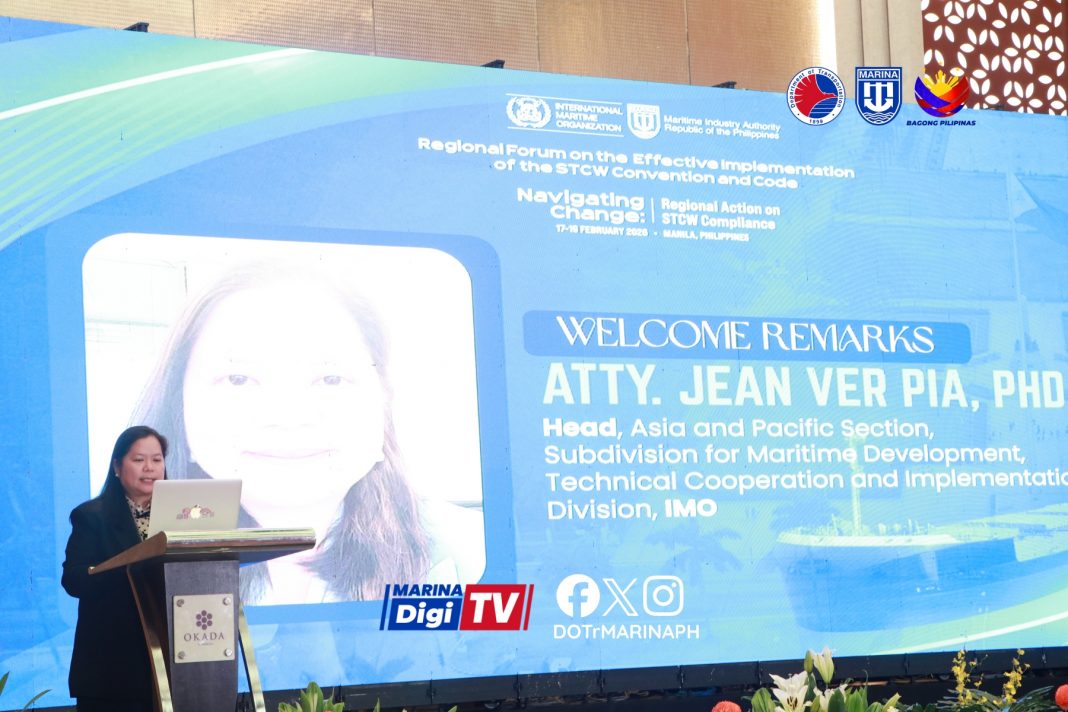
Key maritime stakeholders gathered in Manila for the opening of the Regional Forum on the Effective Implementation of the STCW Convention and its Code on February 17. The forum aims to redefine global standards for seafarer training, ensuring the maritime workforce is prepared for a rapidly evolving digital and “green” industry.
The forum opened with a high-level review of the International Convention on Standards of Training, Certification and Watchkeeping for Seafarers (STCW). Delegates emphasized that while technology moves fast, seafarer competence remains the “north star” for maritime safety and environmental protection.
The ongoing review of the Convention seeks to bridge the gap between legacy regulations and the modern demands of sustainable shipping, ensuring the framework remains a robust foundation for global trade.
A pivotal session focused on the “human element” of the energy transition. As the industry shifts toward alternative fuels—including methanol, ammonia, and hydrogen—experts argued that the transition is about more than just new engines. “The move toward greener shipping requires parallel adjustments in people, processes, technology, and governance,” noted session speakers.
Key priorities identified for maritime education included:
-
Structured Faculty Development: Training the trainers to master new fuel technologies.
-
Infrastructure Upgrades: Investing in modern simulators and specialized training facilities.
-
Cross-Sector Collaboration: Strengthening ties between regulators, shipowners, and educational institutions.
Furthering the technical discussion, panelists explored specific competency frameworks for handling hazardous alternative fuels. With decarbonization efforts accelerating, the forum underscored the urgency of creating standardized assessment methodologies.
Discussions focused on equipping seafarers with the specialized skills needed to manage the unique risks associated with ammonia and methanol, ensuring that safety protocols keep pace with operational realities and international regulations.
The first day concluded with a Welcome Dinner honoring VIPs, delegates, and moderators. The event served as a vital platform for strengthening professional networks, fostering the international cooperation necessary to successfully implement the STCW Code worldwide.

