


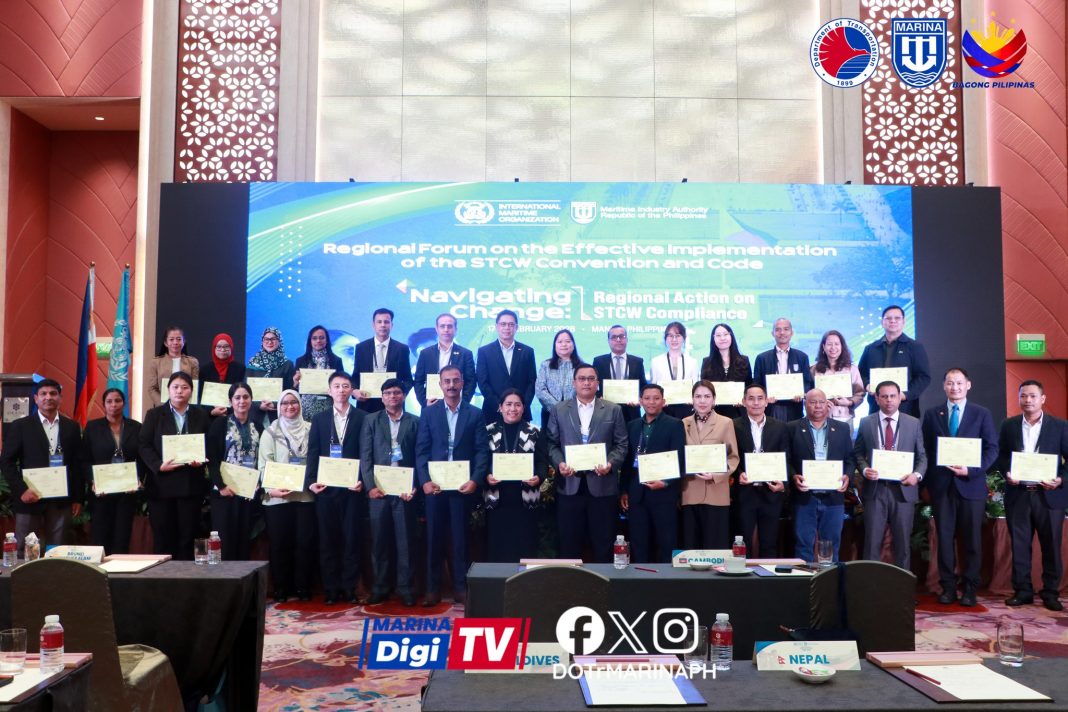
The Regional Forum on the Effective Implementation of the STCW Convention and its Code concluded yesterday, February 19, 2026, marking a pivotal moment for maritime safety and education in the Asia-Pacific region. Over three days, maritime leaders and delegates converged to address the evolving demands of 21st-century shipping, emphasizing that while technology advances, the “human element” remains the industry’s most critical asset.
The forum’s final day tackled the modern challenges of seafarer certification and training. Key sessions focused on:
-
Alternative Pathways: Panelists explored substituting traditional seagoing service with competency-based measures, ensuring that new training frameworks maintain rigorous safety and quality standards.
-
Behavioral Excellence: A dedicated session on non-technical skills highlighted that technology alone cannot prevent accidents. Delegates emphasized situational awareness, leadership, and decision-making as essential tools for the modern mariner.
-
Modernization vs. Tradition: Discussions centered on balancing rapid decarbonization and digitalization with the preservation of foundational seafaring skills, ensuring a “future-ready” workforce that remains grounded in safe seamanship.
The closing ceremony featured high-level calls to action from the International Maritime Organization (IMO) and regional authorities.
Atty. Jean Ver Pia, IMO Asia-Pacific Section Head, reaffirmed the organization’s dedication to capacity building: “I hope you leave not only with knowledge, but with renewed purpose… together, we can continue uplifting the standards that safeguard lives and advance the future of global seafaring.”
Samuel Batalla, Executive Director of the STCW Office (Maritime Industry Authority), summarized the forum’s three pillars for success: clear implementation, the centrality of the human element, and regional cooperation.
“Compliance is not merely about meeting requirements,” Batalla stated. “It is about ensuring that every certificate issued reflects genuine competence and that every policy decision strengthens trust in the global maritime system.
The forum concluded with a collective commitment from Asia-Pacific Member States to modernize maritime education and training (MET) systems. This collaboration aims to ensure that as the shipping industry transitions toward a greener and more automated future, the standards for training and certification remain the gold standard for global trade.

