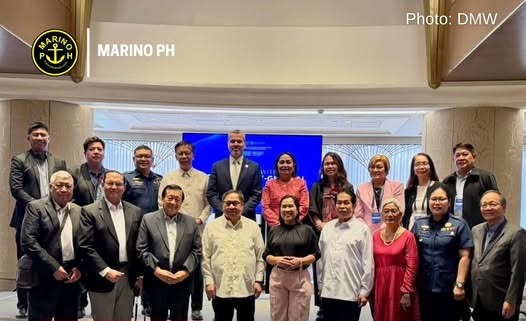
In a strategic move to fortify the protection of the world’s “mariners of choice,” senior Philippine maritime and labor officials held a high-level consultative meeting with the International Maritime Organization (IMO) on February 19, 2026.
The delegation, led by Department of Migrant Workers (DMW) Secretary Hans Leo J. Cacdac and Maritime Industry Authority (MARINA) Administrator Sonia B. Malaluan, met with IMO Secretary-General Arsenio Antonio Domínguez Velasco at the IMO Headquarters. The discussions focused on synchronizing Philippine labor safeguards with rapidly evolving international maritime standards.
As a premier supplier of the global maritime workforce, the Philippines reaffirmed its role in shaping a safer, fairer shipping industry. The dialogue centered on three critical pillars:
-
Regulatory Synergy: Aligning national policies with the latest IMO conventions to ensure seamless compliance.
-
Enhanced Safeguards: Strengthening mechanisms to shield seafarers from exploitation, abuse, and the physical risks posed by modern geopolitical tensions.
-
Decent Work Initiatives: Promoting “rights-based” governance that guarantees fair wages, mental health support, and dignified living conditions onboard. “The protection of our seafarers is not just a regulatory obligation; it is a national priority,” Secretary Cacdac stated, citing the directive of President Ferdinand R. Marcos Jr. to uphold the dignity of overseas Filipino workers (OFWs) amid a volatile global shipping landscape.
The Philippine delegation included high-ranking experts dedicated to sea-based OFW concerns, ensuring a holistic approach to maritime governance:
| Official | Role |
| Hans Leo J. Cacdac | Secretary, Department of Migrant Workers |
| Sonia B. Malaluan | Administrator, MARINA |
| Atty. Jerome T. Pampolina | Assistant Secretary for Sea-based OFW Concerns |
| Augusto B. San Diego III | Director, DMW |
The meeting concluded with a mutual commitment to ensure Filipino seafarers remain globally competitive and protected as the industry transitions toward greener technologies and automated systems. This collaboration signals a proactive stance against the unique challenges of 2026, including shifting trade routes and heightened maritime security risks.