


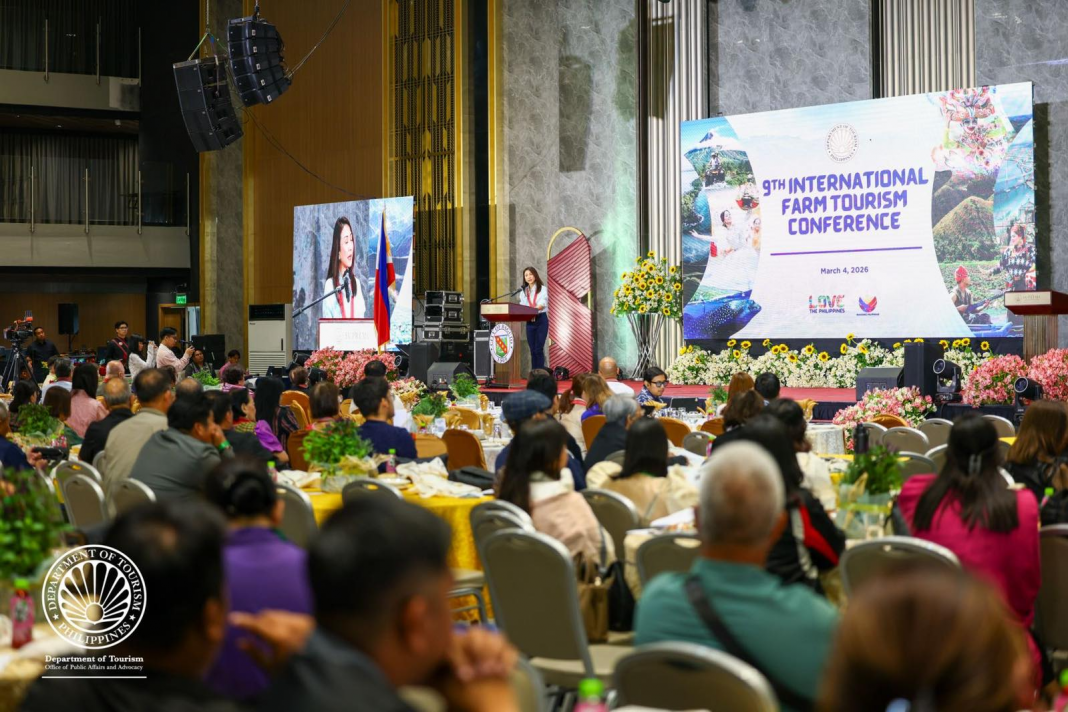
BAGUIO CITY — Farm operators, tourism champions, policymakers, and development partners from here and abroad have gathered in Baguio City on Wednesday (March 4) for the 9th International Farm Tourism Conference to turn the spotlight on how farm tourism can create more livelihood opportunities for rural communities and bring travelers closer to the food, culture, and landscapes that define the Filipino countryside.
Organized by the International School of Sustainable Tourism (ISST) led by its president, Dr. Mina Gabor, the conference aims to tackle best practices and chart the sector’s next phase of growth following the launch of the landmark Farm Tourism Strategic Action Plan (FTSAP) 2026–2031, the country’s roadmap for strengthening farm-based tourism nationwide.
The Department of Tourism (DOT) said the conference marks an important step in translating the national strategy into concrete action that directly benefits farmers, rural enterprises, and local communities.
FTSAP 2026–2031, developed by the DOT in partnership with the Department of Agriculture (DA) and the Department of Trade and Industry (DTI), aims to strengthen standards, infrastructure, enterprise development, and market integration for farm tourism destinations across the country.
Speaking before international delegates and farm tourism operators, Tourism Secretary Christina Garcia Frasco underscored how farm tourism connects agriculture, food, and travel, ensuring that tourism growth reaches rural communities.
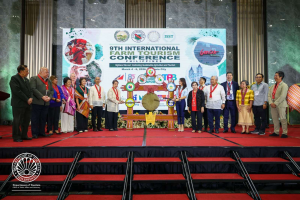
Department of Tourism Secretary Christina Garcia Frasco with International School of Sustainable Tourism President, Dr. Mina Gabor, and Baguio City Mayor Benjamin Magalong led the ceremonial sounding of the gong to usher in the start of the 9th International Farm Tourism Conference on Wednesday (March 4) in Baguio City. The three-day conference will gather farm tourism champions, policymakers, and development partners to advance the Philippines’ farm tourism agenda and strengthen rural livelihoods through sustainable tourism.
“Gastronomy begins with our farms, our fisheries, and the communities that produce the food that defines our national table. Farm tourism reinforces this pillar by strengthening agricultural supply chains, enabling direct sourcing, and ensuring that rural communities are embedded within the tourism value chain,” Secretary Frasco said.
The tourism chief noted that tourism continues to regain momentum as a pillar of the Philippine economy. According to the latest World Travel and Tourism Council Economic Impact Report, travel and tourism contributed USD 91.8 billion to the Philippine economy, equivalent to nearly 20 percent of GDP, and supported more than 11 million jobs nationwide.
“The challenge now is to ensure that this growth is widely shared. Farm tourism allows us to deepen tourism’s impact by embedding rural communities directly within the tourism economy,” she added.
The nexus between tourism and agriculture, DOT’s efforts for development
Secretary Frasco highlighted that 17.1 percent of inbound visitor spending in the Philippines goes to food and beverage services, demonstrating the strong connection between tourism and agriculture and reinforcing gastronomy tourism as a key pillar under the National Tourism Development Plan (NTDP) 2023–2028.
Baguio City Mayor Benjamin Magalong echoed the tourism chief’s remarks, noting that farm tourism is especially meaningful for the Cordilleras, where agriculture and culture are deeply intertwined.
“Farm and tourism go hand in hand and can be a powerful tool for building resilient communities,” Mayor Magalong said, adding that responsible agro-tourism initiatives can support farmers while protecting landscapes and strengthening climate resilience in the region.
Globally, agritourism is projected to reach USD 197 billion by 2032, driven by travelers seeking authentic food traditions, cultural immersion, and experiences rooted in local communities.
To strengthen the sector domestically, the DOT is aligning tourism development with agriculture through several initiatives, including its Memorandum of Agreement with the DA to coordinate farm-to-market roads, irrigation systems, post-harvest facilities, cold chain logistics, and product development linking farms directly with tourism establishments.
Infrastructure programs are likewise expanding access to rural destinations. Under the Tourism Champions Challenge, the DOT has awarded PHP 255 million in the first cycle and nearly PHP 400 million in the second cycle to local government units implementing transformative tourism projects, many of which strengthen rural and farm-based destinations.
Meanwhile, curated tourism circuits under the Philippine Experience Program now integrate farm landscapes, gastronomy, and cultural heritage across regions such as Iloilo, Pampanga, the Cordilleras, Bukidnon, Davao, and Sultan Kudarat.
Secretary Frasco also emphasized the importance of building human capital to sustain tourism growth. The DOT has trained over 412,000 individuals under the Filipino Brand of Service Excellence program and more than 127,000 through the Tourism Industry Skills Program, many of whom come from rural communities where agriculture and tourism intersect.
“Preparing destinations for growth requires more than promotion. It requires investing in people, strengthening local enterprises, and protecting the natural landscapes that sustain tourism,” the tourism chief said.
The Philippines has also been strengthening global recognition of its culinary heritage through international initiatives such as the Cebu Call to Action for gastronomy tourism, the hosting of Terra Madre Asia Pacific, and the country’s engagement with the Michelin Guide, elevating Filipino cuisine and the producers behind it on the global stage.
Looking ahead, the Philippines is slated to host the UN Tourism World Gastronomy Forum later this year, further positioning the country as a leading destination for food and farm-based tourism.
“The next measure of success is not simply growth, but depth—growth that strengthens rural livelihoods, preserves natural landscapes, and ensures prosperity reaches the communities that sustain tourism,” Secretary Frasco said.
“Farm tourism reminds us of something essential: the land must be cared for, the people who cultivate it must be valued, and progress must never come at the expense of either,” she quipped
The 9th International Farm Tourism Conference, bannered by the theme “Highland Harvest: Cultivating Sustainable Agriculture and Tourism,” will run from March 4 to 6, 2026 at the Hotel Supreme Mall and Events Center in Baguio City.
ISST Chair Jaime J. Bautista, Philippine Exporters Confederation President Dr. Sergio R. Ortiz-Luis Jr., and Albert Teo of Borneo Ecotours Malaysia also spoke during the opening ceremony.
Also present were DOT Undersecretary Ferdinand Jumapao, Assistant Secretaries Czarina Loyola, Ronald Conopio, Christine Cari, and DOT-CAR Regional Director Jovita Ganongan.

