


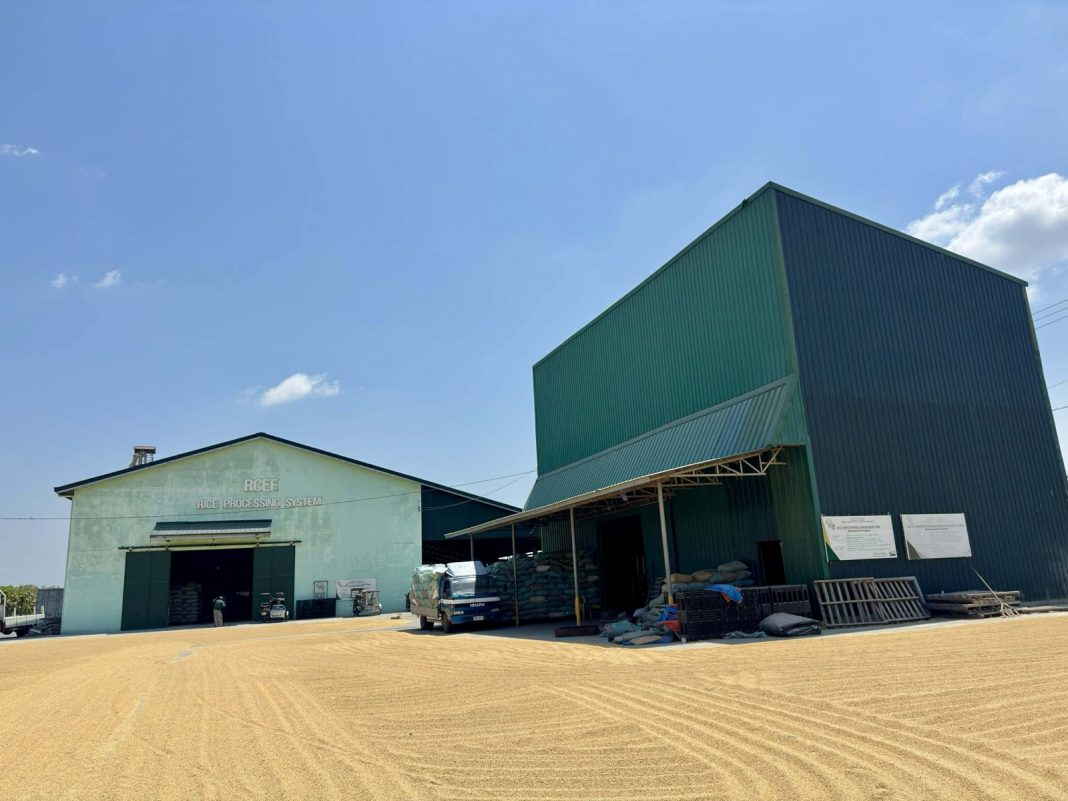
Under the administration of President Ferdinand R. Marcos, Jr., the Department of Agriculture-Philippine Center for Postharvest Development and Mechanization (DA-PHilMech) has established a total of 151 Rice Processing Systems (RPS) through the Rice Competitiveness Enhancement Fund (RCEF) Mechanization Program 2.0, with 132 operational and 19 yet to be completed before the year ends.
Meanwhile, farmer groups in Nueva Ecija have expressed their appreciation for the administration’s efforts to uplift their livelihoods by providing such state-of-the-art facilities, which can also help transform their lives and their farming communities.
“Napakaganda po ng programa ni PBBM sa mga magsasaka sa buong Pilipinas. Nakatutulong po talagang maibsan ang mga problema tulad sa mga gastusin (sa bukid) dahil karamihan po ng mga ito ay libre. Malaki po ang pagbabagong naranasan namin noong nagkaroon na po kami ng RPS. Binibili po namin ng mas mataas (ang palay) para mas kumita po ang aming miyembro at iyon po ay gagawin naming bigas at ibebenta namin sa iba’t ibang panig ng Pilipinas. Ganoon ang nangyayari sa RPS. Maganda po talaga ito sa amin na nagbigay ang gobyerno,” said Nora Angeles, General Manager of Bantug Agricultural MPC in Talavera, Nueva Ecija.
“Nakakatulong siya (RPS) dahil nagkakaroon kami ng karagdagang kita sa coop at nababawasan na rin ang aming pangamba na malulugi kami pagdating sa pagpapalay kasi nga nagigiling na namin siya bilang bigas. Nagpapasalamat po kami sa ating Pangulong Bongbong Marcos at pati na rin po sa DA-PHilMech sa pagkakaloob ng mga programa at proyekto sa aming kooperatiba na nakatutulong hindi lamang sa amin kundi pati na rin sa aming mga kabarangay at kapwa magsasaka,” said Marisol Ventura, Secretary of Caridad Sur MPC in Llanera, Nueva Ecija.
“Maraming maraming salamat po sa Pangulo at yung mga ibinigay niyang mga tulong sa mga kapwa kong magsasaka, at patuloy naming napapakinabangan yung mga ganitong programa,” said Eduardo Domingo, BOD of Cooperative Enterprise for True Economic Reform (CENTER) in Guimba, Nueva Ecija.
PHilMech Director IV Dionisio G. Alvinida, PhD, said the RPS allows farmers’ cooperatives and associations (FCAs) to enter the rice value chain. The facilities enable them to mill their own palay (unmilled rice) harvest and sell milled rice at various grades directly to wholesalers, retailers, and consumers.
He also emphasized that in times of crisis, such as this, low-input, high-output interventions like the RPS, especially in terms of energy like fuel, are crucial for safeguarding the interests of the farmers. He highlighted that the seven percent higher milling recovery of the RPS can provide farmers with increased income.
Each RPS has modern rice mills, dryers, and a storage warehouse for palay and milled rice. These initiatives help ensure steady supply and manage the food cost. Especially at this time, the government’s objective is to protect the Filipino families – farmers and households alike, and to ease the burden brought by the increase in fuel cost.
“With the complete mechanization interventions we have provided under RCEF—from land preparation to milling and storing our palay—around 1.2 million rice farmers across the country have already experienced its benefits,” said Director Alvindia.

