


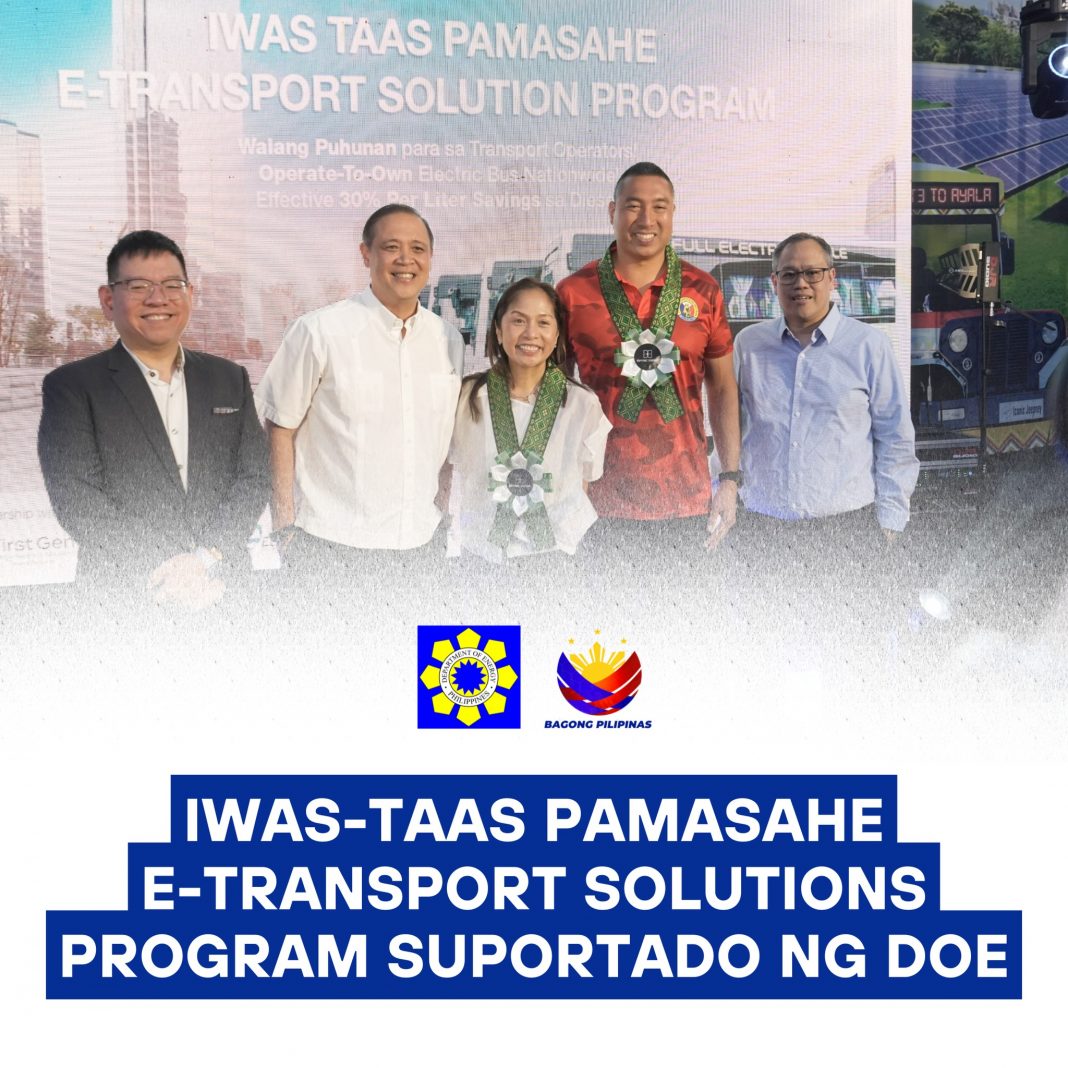
As global oil markets face continued uncertainty due to geopolitical tensions in the Middle East, the Department of Energy (DOE) has officially welcomed the “Iwas-Taas Pamasahi E-Transport Solution Program” via the rapid deployment of electric buses (e-buses).
This private-sector-led initiative aims to rapidly deploy electric buses (e-buses) across major routes to ensure public transport fares remain stable and affordable for the Filipino commuting public.
Under the leadership of Energy Secretary Sharon S. Garin, the DOE is intensifying its push for the electrification of the transport sector. The “Iwas-Taas Pamasahi” (Preventing Fare Hikes) program serves as a strategic buffer against the rising costs of imported petroleum. By shifting the reliance from fossil fuels to electricity, the program seeks to provide a more sustainable and cost-efficient alternative for transport operators and passengers alike.
“Our goal is to insulate the Filipino commuter from the volatility of the international oil market,” said Sec. Garin. “The DOE is committed to fostering an environment where clean energy isn’t just an environmental choice, but an economic necessity that protects the pockets of our citizens.”
The Philippines is currently experiencing a significant surge in the adoption of green technology. Recent data highlights the following milestones in the country’s transition:
-
Vehicle Integration: Over 60,000 Electric Vehicles (EVs) are now registered nationwide, signaling a shift in consumer and commercial confidence.
-
Infrastructure Expansion: The national charging footprint is expanding rapidly, with the DOE working closely with private partners to ensure that charging stations are accessible along primary and secondary transport corridors.
-
Regulatory Support: The government continues to streamline the implementation of the Electric Vehicle Industry Development Act (EVIDA), providing incentives for both manufacturers and operators.
The DOE’s endorsement of the program underscores a broader commitment to improving the quality of electric mobility in the country. To ensure a “smoother transition” to clean transport, the government is focusing on three key pillars:
-
Quality Assurance: Establishing rigorous standards for EV batteries and components to ensure passenger safety and vehicle longevity.
-
Network Density: Accelerating the installation of high-speed EV charging stations in strategic hubs.
-
Operator Support: Collaborating with nationwide transport cooperatives to ensure that the shift to e-buses is financially viable for drivers and operators.
By integrating the “Iwas-Taas Pamasahi” program into the national energy framework, the DOE aims to transform the daily commute into a cleaner, more predictable, and more affordable experience for every Filipino.

