


President Ferdinand R. Marcos Jr. is working in close coordination with the Department of Agriculture (DA) and the Department of Trade and Industry (DTI) to ensure the seamless implementation of a proposed PhP50 per kilogram price cap on imported well-milled rice.
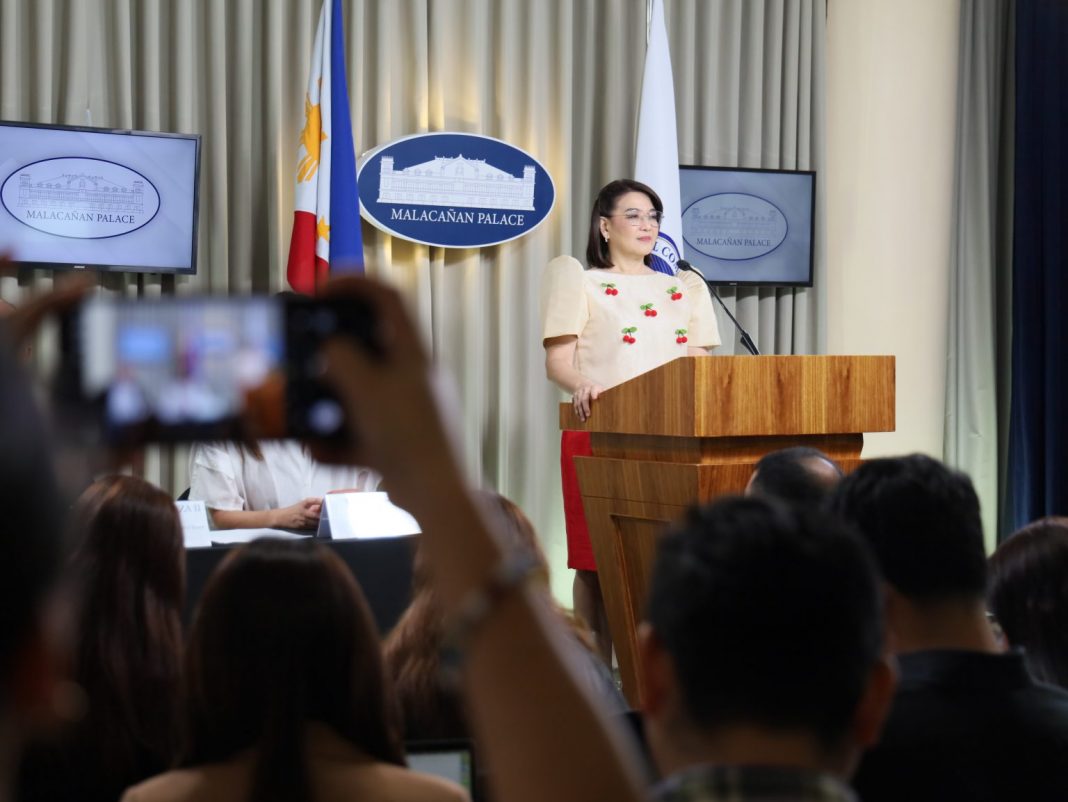
The recommendation for the price ceiling follows intensive deliberations by the Unified Package for Livelihoods, Industry, Food, and Transport (UPLIFT) Committee. During a Palace press briefing on Friday, Presidential Communications Office Undersecretary and Palace Press Officer Claire Castro confirmed that the formal proposal has been submitted for executive action.
“The recommendation has been submitted, and the President, alongside the administration, is coordinating closely with the DA and DTI to ensure the proper enforcement of this price cap,” Castro stated.
The initiative is part of a broader strategy by the Marcos administration to stabilize the cost of basic commodities. The President previously signaled his intent to issue an Executive Order to formalize the price ceiling and protect Filipino consumers from volatile market fluctuations.
While the current focus remains on imported well-milled rice, the administration is evaluating the possibility of extending similar subsidies or price interventions to other varieties, including locally produced rice. However, Castro clarified that discussions regarding local rice varieties are still in the exploratory phase.
To assist consumers in navigating price discrepancies, the Palace clarified the specific oversight roles of government agencies:
-
Department of Trade and Industry (DTI): Exercises jurisdiction over groceries and supermarkets.
-
Department of Agriculture (DA): Oversees price monitoring and compliance in public markets (palengke).
Undersecretary Castro explained that price variations between retail outlets are often a result of logistics and inventory cycles. Supermarkets typically maintain up to 60 days of stock, allowing for more stable pricing, whereas public market vendors restock daily and are more susceptible to immediate logistical cost increases.
The administration encourages the public to remain vigilant against price manipulation. Citizens are urged to report any instances of overpricing or unreasonable hikes in basic goods within public markets directly to the Department of Agriculture.
“If there are abuses in the sale of basic goods in our markets, we ask our citizens to inform the Department of Agriculture immediately,” Castro added.

