


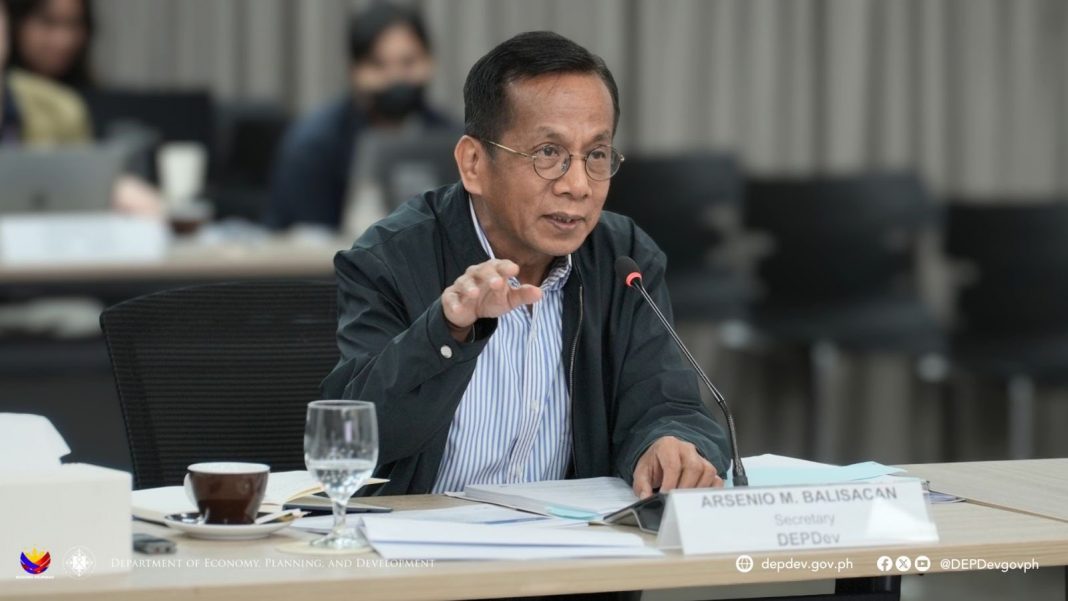
The government is ramping up measures to preserve jobs and strengthen social protection, job-skills matching, and reskilling initiatives for workers, particularly those affected by the ongoing conflict in the Middle East, the Department of Economy, Planning, and Development (DEPDev) said.
Data released by the Philippine Statistics Authority (PSA) on May 6 showed that the country’s unemployment rate stood at 5.0 percent in March 2026, higher than the 3.9 percent recorded in the same month last year but slightly lower than the 5.2 percent posted in February 2026. As a result, the year-to-date unemployment rate averaged 5.3 percent, slightly above the government’s 2026–2028 target range of 4.0 to 5.0 percent.
Despite global economic headwinds, the Philippines continued to fare relatively well compared with some regional peers. The country’s unemployment rate remained lower than China’s 5.4 percent and India’s 5.1 percent, although higher than Malaysia’s 2.9 percent and Vietnam’s 2.2 percent.
Meanwhile, underemployment improved to 12.3 percent in March 2026 from 13.4 percent a year earlier. The labor force also expanded by 1.7 million individuals, raising the labor force participation rate (LFPR) to 63.3 percent from 62.9 percent in March 2025.
DEPDev Secretary Arsenio M. Balisacan emphasized the government’s commitment to ensuring business and service continuity amid the economic impact of prolonged geopolitical tensions in the Middle East, which have contributed to rising fuel and production costs.
“We commit to tightening the delivery of targeted assistance, such as fuel subsidies and service contracting for transport workers, farmers, and fisherfolk to improve alignment and expedite implementation. We will leverage technologies such as e-wallets and other digital platforms, where applicable, to ensure efficient delivery channels,” Balisacan said.
To cushion the impact on vulnerable sectors, the government has introduced regulatory relief measures, including a temporary grace period of up to six months for loan payments and a one-year deferral for agricultural loans benefiting farm operators and small businesses.
Several financing and assistance programs have also been rolled out, including the Department of Labor and Employment’s (DOLE) Adjustment Measures Program, Landbank’s REAL Energy+ Lending Program, and financing support from the Department of Trade and Industry’s Small Business Corporation.
In support of overseas Filipino workers (OFWs) affected by the Middle East crisis, the government continues to implement the Unified Package for Livelihoods, Industry, Food, and Transport (UPLIFT) program. The initiative provides on-site welfare assistance, legal aid, and inter-agency coordination through the Department of Foreign Affairs’ Assistance-to-Nationals Program.
The government has also streamlined repatriation efforts through the Overseas Workers Welfare Administration (OWWA). As of April 28, a total of 8,139 OFWs had been repatriated. At the same time, the Department of Migrant Workers (DMW) reported the availability of 292,203 local jobs and 206,272 overseas job opportunities for displaced workers seeking re-employment.
“We remain committed to ensuring the safe return and recovery of OFWs affected by the Middle East crisis through coordinated support across relevant agencies. They continue to receive assistance through reintegration programs, including livelihood assistance, skills training, and financial aid,” Balisacan added.

