


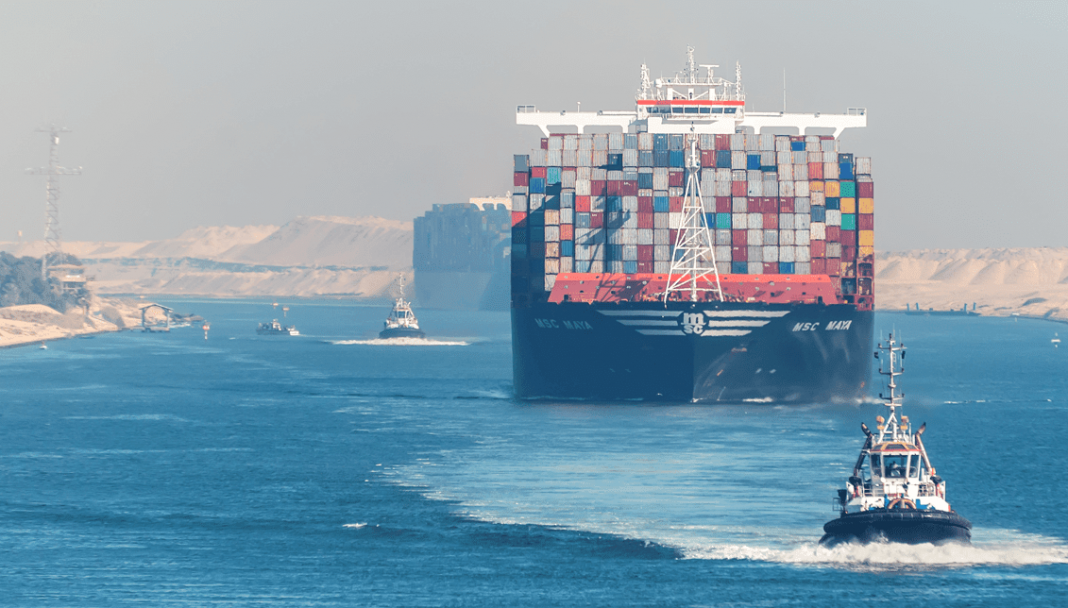
Global container freight rates have experienced another sharp increase, with the Drewry World Container Index (WCI) rising 9 percent this week to reach USD4,530 per 40-foot container.
The surge is primarily driven by significant rate hikes across both the Transpacific and Asia–Europe trade lanes, fueled by early peak season demand and persistent geopolitical uncertainties.
Spot rates on Transpacific routes continued their upward trajectory. Freight rates from Shanghai to New York jumped 11 percent to USD7,902 per 40ft container, while routes from Shanghai to Los Angeles climbed 10 percent to USD6,349 per 40ft container.
According to data from Drewry’s Container Capacity Insight, capacity remains exceptionally tight, with eight blank (canceled) sailings already announced for the upcoming week. In anticipation of sustained cargo volumes, ocean carriers are aggressively introducing General Rate Increases (GRIs) and Peak Season Surcharges (PSS) for July. Notably, carrier HMM has announced a PSS of USD3,000 per 40ft container, effective July 15. Drewry projects that Transpacific rates will continue to climb in the coming weeks.
The Asia–Europe trade route similarly saw widespread rate growth as carriers successfully implemented higher Freight All Kinds (FAK) rates and peak season surcharges. Spot rates from Shanghai to Genoa increased 10 percent to USD6,360 per 40ft container, and rates from Shanghai to Rotterdam rose 7 percent to USD4,682 per 40ft container.
In contrast to the Transpacific route, only one blank sailing has been announced on the Asia–Europe lane for the next week. Carriers are maintaining highly disciplined capacity management to capitalize on robust peak-season demand, and Drewry expects rates on these lanes to edge higher as well.
The East-West container market has shown remarkable resilience this year, heavily supported by an early influx of peak season volumes and elevated operational costs tied to geopolitical disruptions.
While the recent interim US–Iran agreement has allowed the Strait of Hormuz to reopen—facilitating a recovery in vessel traffic following the evacuation of stranded ships and the establishment of authorized transit corridors—the region remains highly volatile. Security risks spiked again following a recent attack on a containership near Oman, which prompted the suspension of official ship escort operations. Consequently, ongoing maritime security threats in the Middle East continue to inject deep uncertainty into the global supply chain, underpinning the current high-rate environment.

