


PULILAN, Bulacan —The Marcos administration is placing agriculture at the heart of its fight against child malnutrition, using the country’s P3-billion milk feeding program not only to nourish millions of learners but also to provide Filipino dairy farmers with a dependable market for their produce.
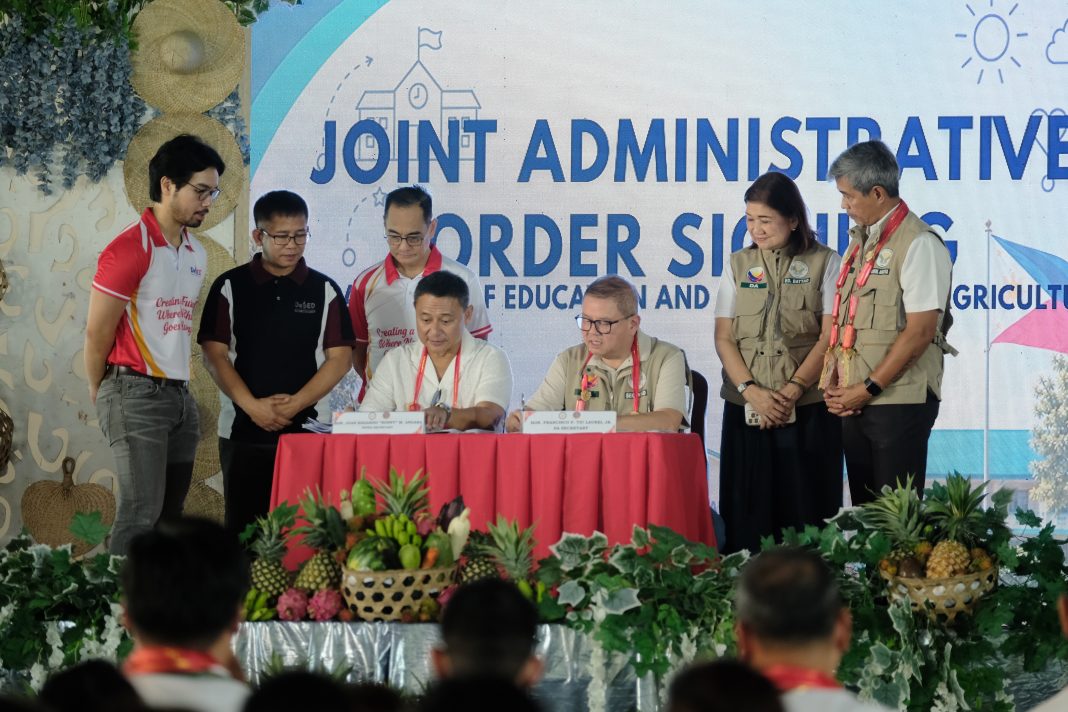
Agriculture Secretary Francisco P. Tiu Laurel Jr. on Monday pledged the Department of Agriculture’s full support for the nationwide School-Based Feeding Program as the government formally launched this year’s initiative through the signing of the Joint Administrative Order (JAO) on the Milk Feeding Program.
President Ferdinand R. Marcos Jr., together with Education Secretary Sonny Angara and officials from partner agencies, led the nationwide launch of the program in Pulilan, a town in Bulacan known for its annual Kneeling Carabao Festival honoring San Isidro Labrador, the patron saint of farmers.
The milk feeding initiative is expected to benefit some 4.5 million learners nationwide while providing a significant livelihood boost to thousands of stakeholders across the Philippine dairy industry.
Through the Sagip Saka Law, milk served in public schools will be sourced from local dairy farmers, cooperatives, and processors, creating a virtuous cycle that improves children’s nutrition while strengthening rural incomes and domestic food production.
The government has earmarked more than P3 billion to procure locally produced milk, directly benefiting 113 dairy farmer cooperatives and processors.
“Many Filipinos still remember Nutribun as a symbol of a generation’s fight against hunger and its pursuit of better nutrition. Today, we write the next chapter. This time, we nourish our children with fresh, locally produced milk that also creates opportunities for our farmers,” Tiu Laurel said.
“In the end, the measure of this program will not be the millions of glasses distributed, but the healthier children we nurture, the farming families whose lives improve, and the brighter future we build together,” he added.
The JAO institutionalizes collaboration among the Department of Agriculture, Department of Education, National Dairy Authority, Philippine Carabao Center, local government units, and other stakeholders to strengthen the nationwide feeding program and improve learners’ health, growth, and academic performance.
NDA Administrator Atty. Marcus Antonius T. Andaya said the program’s greatest strength lies in creating reliable demand for locally produced milk.
“Demand is the strongest incentive for farmers to invest. When they know there is a dependable market for their milk, they are more willing to expand production, improve herd quality, and upgrade their operations. This program lays the foundation for a stronger, more competitive local dairy industry,” Andaya said.
The milk feeding initiative aims to prove that good nutrition can also be good economic policy—building healthier learners, more resilient farming communities, and a stronger, more competitive Philippine dairy industry.
Beyond supplying fresh milk through the NDA, the DA is also supporting school gardening initiatives that promote healthier eating habits while reinforcing the connection between classrooms, farms, and local food systems.
“Ang programang ito ay para sa mas malusog na Batang Pilipino, mas maunlad na Local dairy industry at mas masaganang Bagong Pilipinas,”Tiu Laurel added.

