


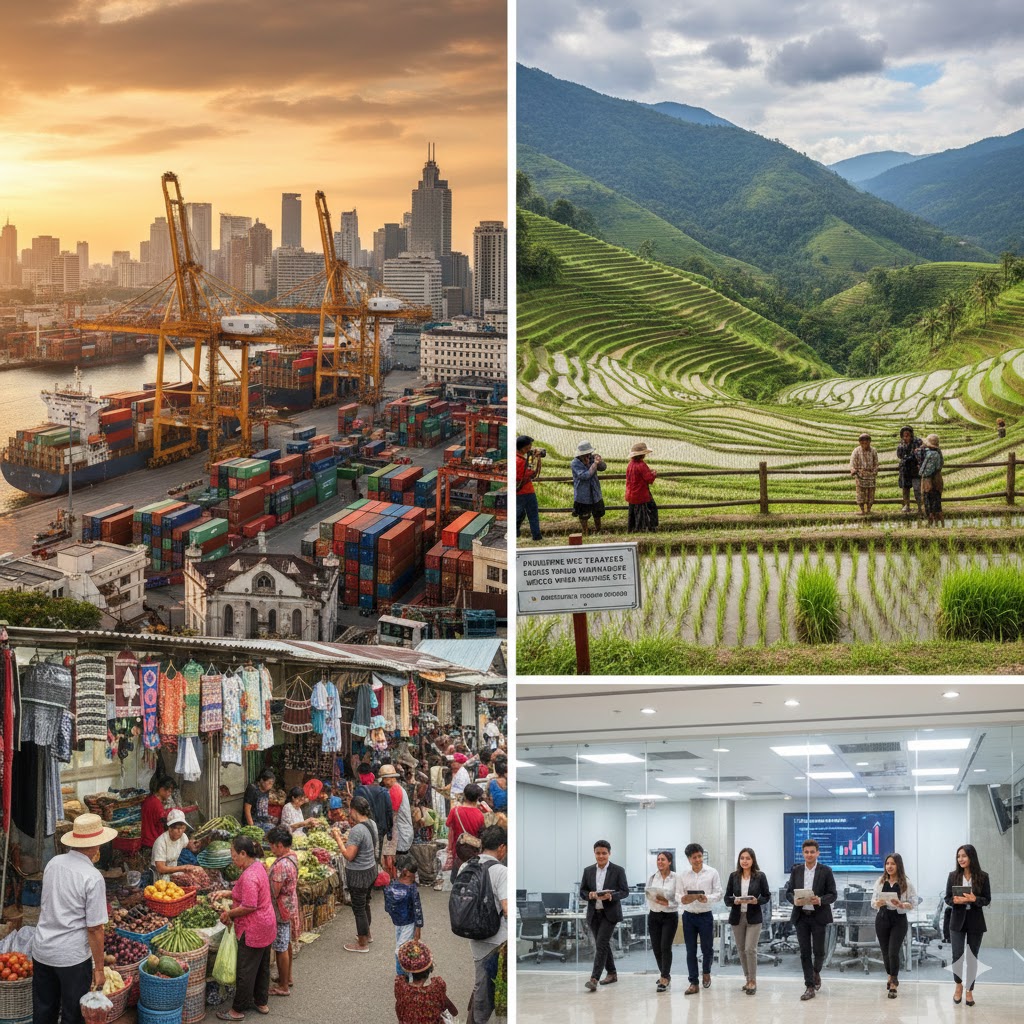
The Philippines continues to demonstrate steady economic growth despite global trade tensions and external uncertainties, according to the latest economic report of the ASEAN+3 Macroeconomic Research Office (AMRO).
Supported by strong domestic consumption, a stable labor market, and diversified export markets, the country’s economy remains resilient, with inflation easing below the Bangko Sentral ng Pilipinas (BSP) target range.
The Philippine economy is projected to grow at a rate above 5 percent in the coming years, with real GDP growth forecasted at 5.2 percent in 2025 and 5.3 percent in 2026.
While this is slightly below the pre-COVID trend, steady private consumption and firm domestic demand continue to drive expansion.
However, external uncertainties, including US tariff policies and flood control project controversies, may pose challenges to private investment and exports.
Inflation is expected to remain within the BSP’s target range of 2-4 percent, with CPI inflation projected at 1.7 percent in 2025 and 3.2 percent in 2026.
Softer supply-side pressures, such as moderating food and global commodity prices, alongside administrative measures like tariff cuts on rice, are contributing to this stability.
The BSP has entered an easing cycle, implementing seven rate cuts since August 2024, bringing the policy rate down to 4.75 percent.
Bank lending has accelerated, particularly in household loans, while the banking sector remains stable with adequate liquidity and capital buffers.
Fiscal consolidation is progressing, albeit slower than planned, with the fiscal deficit expected to narrow to 5.5 percent of GDP in 2025.
Moderate revenue growth and higher expenditures to support infrastructure and development priorities are key factors influencing the pace of consolidation.
While the near-term outlook remains stable, external uncertainties such as US protectionism, tighter immigration policies, and slower growth in key trading partners pose risks.
Structural challenges, including insufficient infrastructure development and limited manufacturing capacity, continue to constrain long-term growth potential.
To sustain economic stability and growth, the report highlights several policy recommendations:
Fiscal Policy: Balance fiscal consolidation with development priorities, particularly infrastructure and human investment.
Monetary Policy: Continue cautious rate adjustments while enhancing monetary policy transmission to support growth.
Financial Stability: Strengthen risk management for household loans, corporate vulnerabilities, and securities exposure.
Growth Strategy: Upgrade sectors with comparative advantages, improve the business environment, and prioritize digital and infrastructure connectivity.
Private Investment: Accelerate infrastructure development, reduce legislative barriers, and enhance access to long-term financing for firms.
The Philippines remains committed to refining its growth strategy and addressing structural challenges to ensure sustainable long-term economic development.
By prioritizing infrastructure, upskilling the workforce, and fostering private investment, the country aims to enhance its services and manufacturing sectors, driving higher value-added exports and bolstering its global competitiveness.

