


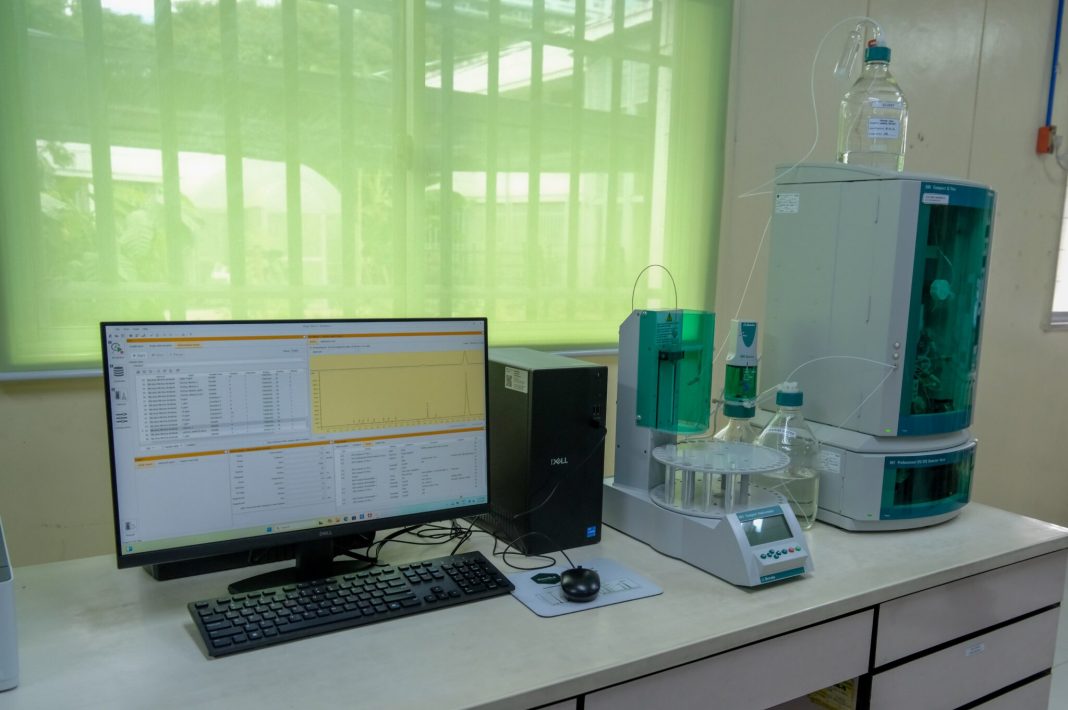
The Department of Agriculture is spending P55 million to upgrade food safety monitoring capability, equipping laboratories of the Bureau of Plant Industry nationwide to detect nitrate and nitrite contaminants in plant-based foods. The move signals a more data-driven approach to regulating produce safety, as authorities begin building baseline evidence for future national standards.
Agriculture Secretary Francisco P. Tiu Laurel Jr. said the investment supports a broader push by President Ferdinand Marcos Jr. to strengthen food safety and expand the country’s agricultural export potential. “This is part of our continuing effort to ensure food security, protect public health while preparing our capacity broaden access for Philippine plant products to markets abroad,” he said.
Under the program, the BPI has rolled out nitrate testing capabilities across five laboratories in Quezon City, Cebu, Baguio, Davao, and Cagayan de Oro. These facilities, operated by the Plant Product Safety Services Division, are now able to analyze key contaminants commonly found in vegetables, particularly leafy greens that are more prone to nitrate accumulation.
Initial recovery tests have been completed, with validation work ongoing to ensure accuracy and consistency of results. In the absence of Philippine regulatory benchmarks, authorities are currently using European Union standards as interim reference points, highlighting a gap in local food safety rules that the program aims to address.
The initiative goes beyond laboratory upgrades. Funding has also been allocated for ion chromatograph equipment, specialized chemicals, and technical training for personnel. Once fully operational, the system will support nationwide monitoring of high-risk crops, including vegetables and fruits, allowing regulators to track contamination levels more systematically.
From a business standpoint, the development could improve consumer confidence and support exporters that must meet stricter global standards. However, tighter monitoring may also raise compliance requirements for producers adjusting to more rigorous testing protocols.
Officials say the program lays the groundwork for science-based regulation, positioning the Philippines to strengthen both domestic food safety and international competitiveness.

