


Cebu Pacific, the Philippines’s leading airline, reported improved core profitability with core income before tax increasing to PHP1.3 billion from PHP325 million last year, but the quarter-end peso depreciation resulted in non-core foreign exchange losses of PHP1.8 billion, resulting in a net loss of PH400 million versus net income of PHP466 million in the prior year.
Nonetheless, CEB posted a 10 percent year-on-year increase in total revenue for the first quarter, driven by an increase in seat capacity and sustained passenger demand.
Total revenue for the quarter rose to PHP33.3 billion, supported by a 10 percent increase in seat capacity and sustained passenger demand across both domestic and international markets. CEB carried 7.5 million passengers, up 8 percent year-on-year, while maintaining a healthy seat load factor of 83.7 percent, reflecting effective capacity deployment and stable travel demand.
Passenger revenue increased 6 percent to PHP22.5 billion, while ancillary revenue rose 19 percent to PHP9 billion, driven by continued improvements in ancillary yields. The airline’s cargo business also expanded, with cargo revenue growing 8 percent year-on-year to PHP1.8 billion, supported by higher widebody capacity.
EBITDA rose 26 percent year-on-year to PHP8.4 billion, while operating income increased 54 percent to PHP3 billion. Cost discipline and improved operating efficiencies partially offset higher operating costs associated with fleet and capacity expansion.
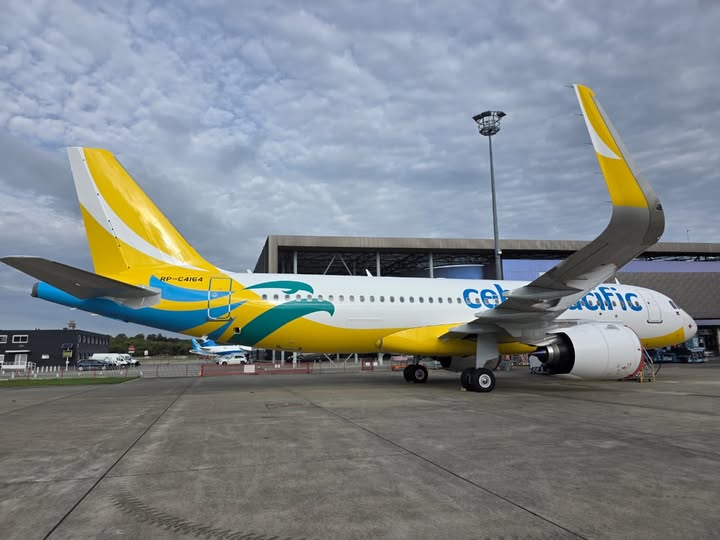
Cebu Pacific ended the quarter with 101 aircraft in its fleet and a strong liquidity position, closing March 2026 with over PHP23 billion in cash, providing ample flexibility to manage near-term volatility while supporting strategic initiatives.
“Our first‑quarter performance reflects the strength of our network and disciplined capacity deployment,” said Mike Szucs, Chief Executive Officer of Cebu Pacific. “As we navigate a more volatile operating environment amid higher fuel prices, we are taking a more cautious and measured approach focused on margin protection, prudent capacity deployment, and liquidity preservation. Our scale, fleet efficiency, and strong domestic network position us well to navigate near-term uncertainty while continuing to build long‑term value.”

