


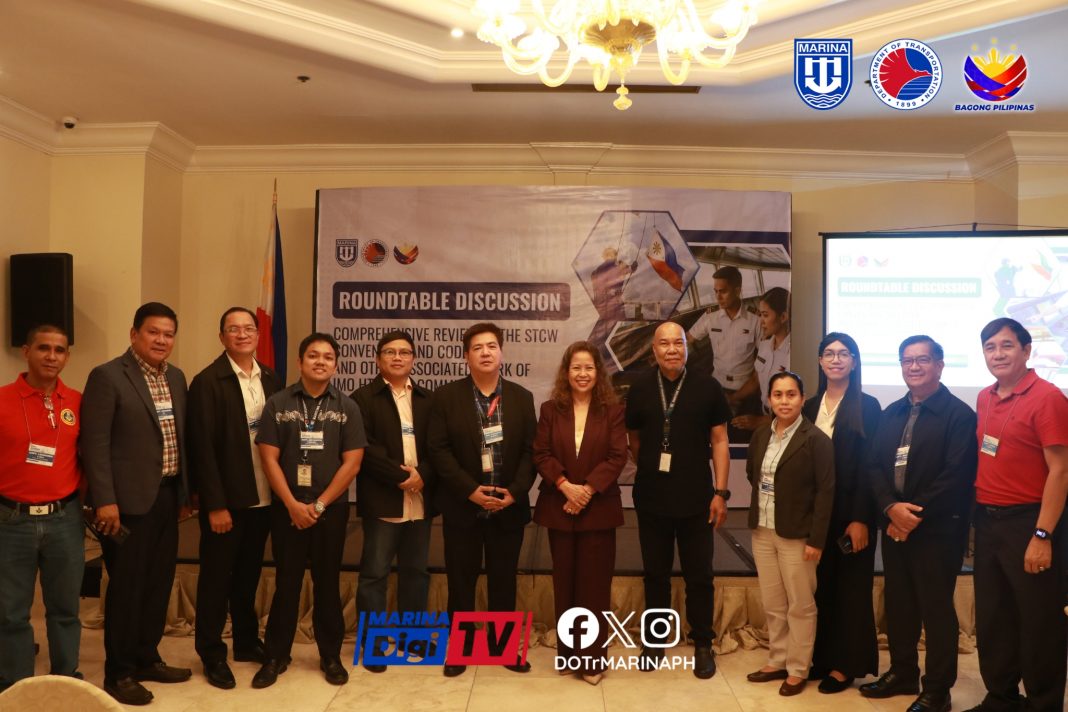
The Philippines, led by the Maritime Industry Authority (MARINA), has officially launched a strategic initiative to fortify its influence on the global stage of maritime regulation.
From May 13–15, 2026, government and industry leaders convened for a high-level roundtable discussion to formulate the nation’s official positions for the comprehensive review of the International Convention on Standards of Training, Certification and Watchkeeping for Seafarers (STCW) Convention and Code.
As the primary provider of the world’s maritime workforce, the Philippines is intensifying its participation within the International Maritime Organization (IMO) Sub-Committee on Human Element, Training and Watchkeeping (HTW). The three-day workshop, organized by the MARINA-STCW Office, ensures that Philippine contributions to the global review are technically robust, timely, and protective of national interests.
The roundtable brought together a diverse coalition of maritime experts, including:
-
Government Agencies: Department of Migrant Workers (DMW) and MARINA.
-
Industry Leaders: Crewing agencies, shipping companies, and maritime associations.
-
Education & Welfare: Maritime Higher Education Institutions (MHEIs), training centers, seafarer unions, and welfare groups.
Capt. Vicente C. Navarro, MARINA STCWO Deputy Executive Director, opened the event by emphasizing the Philippines’ pivotal role in “shaping the future of global maritime standards.” This sentiment was echoed by DMW Director Augusto San Diego, who stressed that the STCW framework must evolve alongside a rapidly changing industry to remain effective.
The discussions moved beyond traditional training, tackling the “triple transition” of the maritime sector: decarbonization, digitalization, and automation. Key outputs from the session include:
-
Future-Proofing: Proposals regarding alternative fuels and emerging maritime technologies.
-
Seafarer Welfare: Inputs for a scoping exercise on fatigue management, aimed at strengthening regulations on work and rest hours.
-
Practical Implementation: An assessment of how proposed amendments will impact the cumulative education and certification burden on Filipino seafarers.
The primary objective of this assembly is the development of formal submissions for HTW 13, scheduled for February 2027. The Philippines holds a unique leadership position for this upcoming session, which will be chaired by MARINA’s own Maritime Attaché, Atty. Sharon De Chavez-Aledo.
The Philippine delegation is specifically targeting amendments to Chapter IV (Radiocommunications) and consequential updates to Chapter I (General Provisions), ensuring they align with the roadmap established by the IMO.
MARINA maintains that strengthening technical contributions to the IMO is not merely a regulatory duty but a strategic necessity. By taking a lead role in the STCW review, the Philippines aims to safeguard the professional standards, welfare, and global competitiveness of the Filipino seafarer in an increasingly automated and green maritime economy.

