


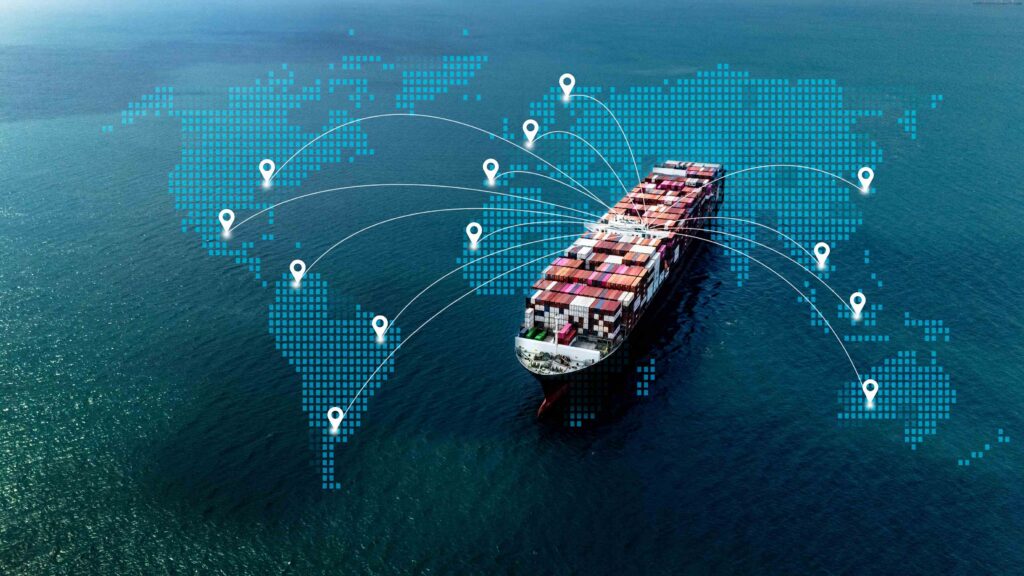
As businesses aggressively diversify supply chains and governments rapidly ink new regional trade pacts, the landscape of global commerce is shifting from a centralized model into a highly distributed network. According to recent industry analyses, this structural evolution is dramatically reshaping global shipping routes, cargo flows, and emerging trade corridors.
The International Chamber of Shipping (ICS) Maritime Barometer 2025–2026 highlights that geopolitical instability remains the leading concern among maritime leaders for the fourth consecutive year. This ongoing volatility has fractured decades-old trading partnerships, forcing the industry to adapt to an environment defined by rapid upheaval and strategic realignment.
Rather than a total retreat from globalization, international trade experts view current trends as a strategic re-alignment. With multilateral institutions struggling to build consensus, governments are bypassing broad global agreements in favor of targeted, bilateral, and regional partnerships. Recent examples include the landmark UK–India Free Trade Agreement, progressing EU–India negotiations, and accelerating Gulf–Asia partnerships.
“The global trading order is facing increasing pressure,” noted Marco Forgione, Director General of the Chartered Institute of Export & International Trade. “The weaponisation of supply chains, geopolitical events, and recent tariff programmes are fracturing many established trading partnerships. Governments still want to reap the benefits of international trade, but with more emphasis on trading with friendly nations rather than opening up to the entire world.”
This shift toward “friendshoring” is unlocking significant economic opportunities for emerging markets across Southeast Asia, the Gulf, and Latin America.
According to the World Bank’s recent Trade Watch report, global goods trade has shown resilience, expanding as global value chains adapt to policy turbulence through trade diversion.
Professor John Manners-Bell, Founder of the Foundation for Future Supply Chain and Chief Executive of Transport Intelligence, emphasizes that companies are simultaneously diversifying their footprint and building operational redundancy to mitigate risks stemming from natural disasters, geopolitical friction, and labor disputes.
Key strategies driving this transformation include:
-
The “China Plus One” Strategy: Maintaining operational presence in China while actively expanding production and sourcing into secondary markets, particularly Southeast Asia.
-
Nearshoring and Inventory Buffer: Sourcing components closer to home and holding inventory nearer to end consumers to bypass volatile transit corridors.
-
Prioritizing Resilience Over Low-Cost Efficiency: Recognizing that a supply chain failure during a disruptive event is far more costly than investing upfront in risk mitigation.
For the maritime sector, changing trade routes are proving to be just as impactful as shifts in total trade volume. The World Bank’s Global Supply Chain Stress Index underlines that ongoing disruptions are forcing a premium on network reliability.
Instead of contracting, diversified sourcing is frequently increasing shipping demand by introducing more complex supply chains, intermediate processing locations, and alternative regional transport routes.
“The wider region covering the Far East, Indian Subcontinent, Middle East and Africa is where most trade growth is concentrated, and it is likely to remain the highest-growth area for decades,” stated Lars Jensen, CEO of Vespucci Maritime.
Carriers are actively reshaping their fleet deployments to match these new realities:
-
Mega-Vessel Realignment: Deploying larger vessels on rapidly growing regional routes, such as Asia–West Africa services.
-
Secondary Port Boom: Secondary hubs in Southeast Asia are prospering due to a surge in intra-regional cargo flows.
-
Mediterranean Surge: In Europe, the accelerating trend toward nearshoring is propelling short sea shipping and benefiting Mediterranean ports.
The intersection of trade policy and national economic security is further complicating the maritime landscape. Governments are increasingly deploying export controls, sanctions regimes, and investment screening mechanisms—particularly in strategic sectors like steel, critical minerals, and technology, which are now being heavily valued for their defense contributions.
To thrive in this fluid environment, maritime leaders stress that adaptability is paramount. Maritime operators, port authorities, and logistics providers must proactively monitor compliance requirements while structuring operations to avoid over-exposure to any single geopolitical alignment.

