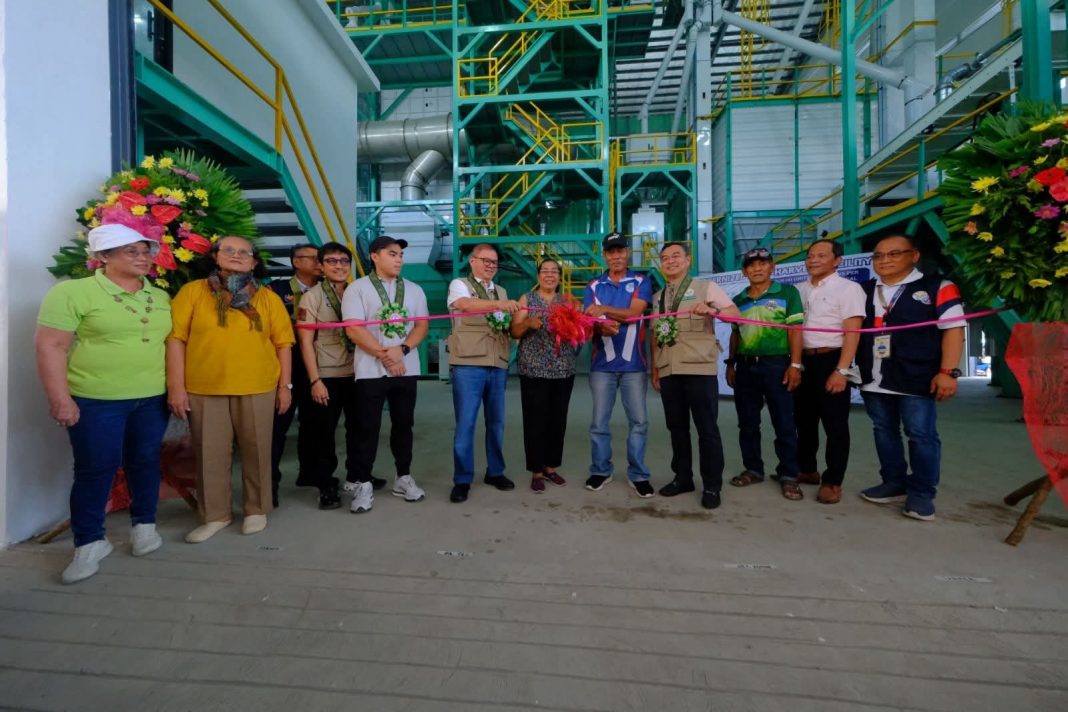
DUMANGAS, Iloilo —The National Food Authority (NFA) on Wednesday inaugurated a P355.4-million modernized post-harvest facility in this town as the food agency speeds up construction nationwide to strengthen the country’s rice buffer stock and reduce post-harvest losses in one of the Philippines’ key rice-producing regions.
The integrated grains facility features a modern warehouse equipped with a 10-ton-per-hour rice mill and a 240 -ton-per-day mechanical grain dryer, significantly expanding the NFA’s capacity to buy, dry, mill, and store palay.
Located in Barangay Monfort South, the project forms part of the government’s broader effort to modernize post-harvest infrastructure, improve grain quality, and strengthen food security by expanding state procurement capacity.
“This is an investment in food security as much as it is an investment in our farmers,” said Agriculture Secretary Francisco P. Tiu Laurel Jr., who also chairs the NFA Council.
“Modern post-harvest facilities allow the NFA to procure more palay, cut post-harvest losses, improve grain quality, and build stronger buffer stocks,” the DA chief said. “Every bag we save and every bag we procure strengthens the country’s ability to keep rice affordable and available, especially during supply disruptions.”
NFA Administrator Larry R. Lacson said the Dumangas facility represents a major upgrade in the agency’s procurement operations in Western Visayas.
“This isn’t just a new warehouse—it is a productivity and food security investment,” Lacson said. “Modern equipment allows us to buy more palay, reduce waste, and move grain into our buffer stocks faster. Farmers gain a dependable buyer, while consumers benefit from a stronger and more reliable rice supply.”
Dumangas is among Western Visayas’ largest rice-producing municipalities, serving as a strategic procurement hub for the NFA. Once operational, the facility is expected to benefit more than 1,000 additional farmers on top of the 804 rice farmers and 41 farmers’ organizations—representing about 2,000 members—already being served by the Dumangas Grains Center.
The complex will support rice-producing areas in Anilao, Banate, Barotac Nuevo, Dingle, Dueñas, Dumangas, Passi City and San Enrique, which collectively produce about 4.85 million bags of palay annually.
The investment is also expected to significantly boost the NFA’s buying capacity. From an average annual procurement of 281,728 bags in Dumangas over the past five years, the agency expects to purchase an additional 3,600 bags of palay daily, or about 324,000 bags over two cropping seasons, more than doubling its procurement volume in the area.
That would lift the NFA’s palay absorption rate in the covered production areas to between 10 percent and 12 percent, giving farmers a larger and more dependable institutional market while reinforcing the government’s buffer stocking program.
Beyond expanding storage capacity, the Dumangas project reflects a broader shift in food security policy. Rather than relying primarily on imports to stabilize supplies, the government is investing in post-harvest infrastructure that minimizes losses, improves procurement efficiency, and strengthens domestic rice reserves—making the food system more resilient before the next supply shock arrives.