


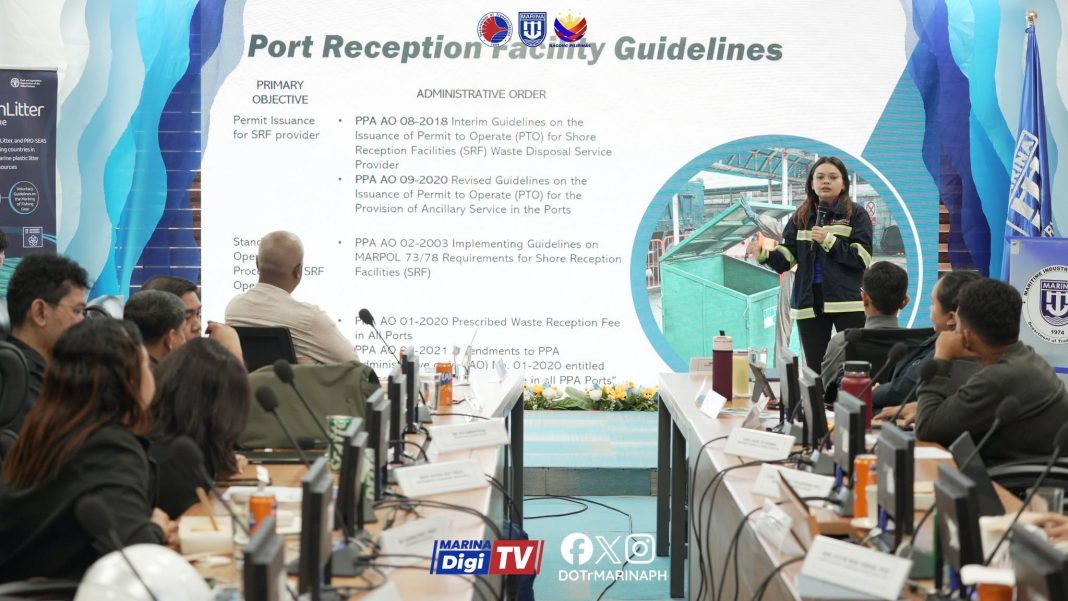
In a decisive move to protect Philippine waters from ship-generated waste and marine litter, the Maritime Industry Authority (MARINA) successfully conducted a comprehensive two-day capacity-building workshop focused on developing and implementing robust Port Waste Management Plans (PWMPs).
The strategic initiative, hosted at the MARINA Central Office, was organized in close partnership with the International Maritime Organization (IMO) under the framework of the IMO-FAO Regional Litter (RegLitter) Project. The event brought together 35 key representatives from various national government agencies (NGAs) and port authorities across the country.
The workshop directly addresses the critical need to safeguard the Philippines’ rich marine biodiversity by targeting the root causes of maritime pollution. By equipping port authorities with advanced planning skills, the initiative aims to significantly improve the availability and operational efficiency of port reception facilities.
Ultimately, this will minimize the improper disposal of waste from vessels and rigorously strengthen the country’s compliance with the International Convention for the Prevention of Pollution from Ships (MARPOL).
Throughout the two-day event, global maritime experts from the IMO led intensive sessions covering marine litter prevention, facility management, and the core components required to build a successful PWMP. Participants engaged in deep-dive discussions on data-driven waste assessment, standardized collection procedures, strategic implementation, and continuous monitoring mechanisms.
To anchor the theoretical frameworks in real-world application, attendees analyzed a detailed case study of a functioning Port Waste Management Plan currently deployed at a major port in Manila. This practical assessment provided the participants with scalable, localized insights that can be adapted and implemented in ports nationwide.
Through this collaborative effort, MARINA and its international partners reinforce their shared commitment to cleaner seas, sustainable port operations, and a greener future for the Philippine maritime industry.

