


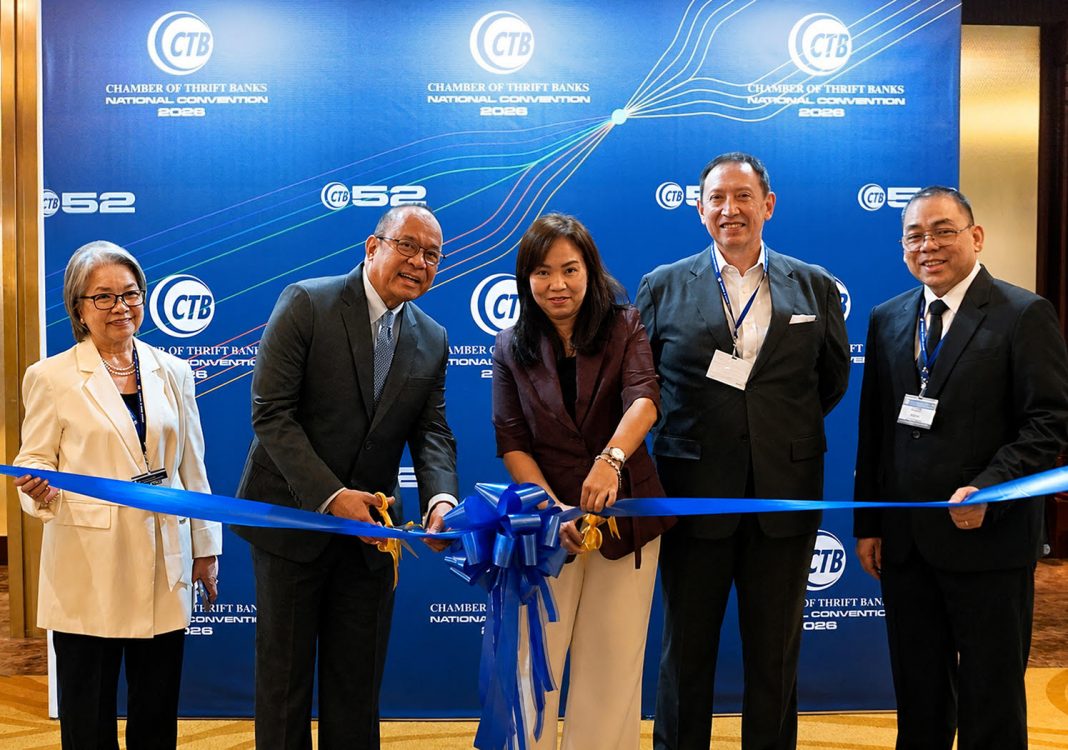
The Chamber of Thrift Banks (CTB) convened its 52nd Annual Convention at Dusit Thani Manila, calling on the country’s thrift banking sector to maintain customer relevance by merging traditional banking strengths with digital innovations and artificial intelligence (AI).
Grounded in the theme “CTB@52: Staying True to Customer Relevance – Through the Nexus of Traditional, Digital, and Artificial Intelligence,” the convention brought together banking executives, regulators, technology providers, and policymakers to chart a course for expanding financial access amid evolving consumer expectations.
The call to embrace advanced technology comes on the heels of impressive financial performance across the sector. As of December 31, 2025, thrift banks achieved significant year-on-year growth across key metrics:
-
Total Assets: Reached ₱1.38 trillion, up 25% year-over-year.
-
Core Lending: Grew 26% to ₱977.32 billion, driven by sustained financing for households and micro, small, and medium enterprises (MSMEs).
-
Deposit Liabilities: Increased 26% to ₱1.03 trillion.
-
Total Capital: Expanded 21% to ₱209.63 billion, with a Capital Adequacy Ratio of 17.17%—well above regulatory requirements.
CTB President Jaime Valentin L. Araneta, who is also President of Equicom Savings Bank, highlighted that these strong fundamentals uniquely position thrift banks to navigate the next phase of banking evolution.
“The industry’s performance over the past year shows that thrift banks are well-positioned to embrace the next stage of banking transformation,” said Araneta, noting the backdrop of a booming national digital economy where over half of monthly retail transactions occur digitally and platforms like InstaPay and PESONet processed ₱24.7 trillion in transactions last year.
Convention Chairman and City Savings Bank President Manuel G. Santiago, Jr. reinforced the sector’s long-standing resilience while outlining its future path.
“For more than five decades, thrift banks have weathered economic crises, financial disruptions, and changing customer expectations,” Santiago stated. “Today’s challenge is not choosing between physical branches and digital banking. It is creating a seamless customer experience by integrating traditional banking, digital channels, and artificial intelligence.”
Santiago emphasized that AI presents vital opportunities to automate routine operations, strengthen compliance and risk management, and empower banking staff to deliver higher-value, direct customer service.
The one-day event concluded with intensive sessions addressing the thrift banking outlook, fiscal priorities, banking technology, cybersecurity, deposit insurance, digital identity, anti-money laundering (AML) solutions, and practical applications of AI.

