


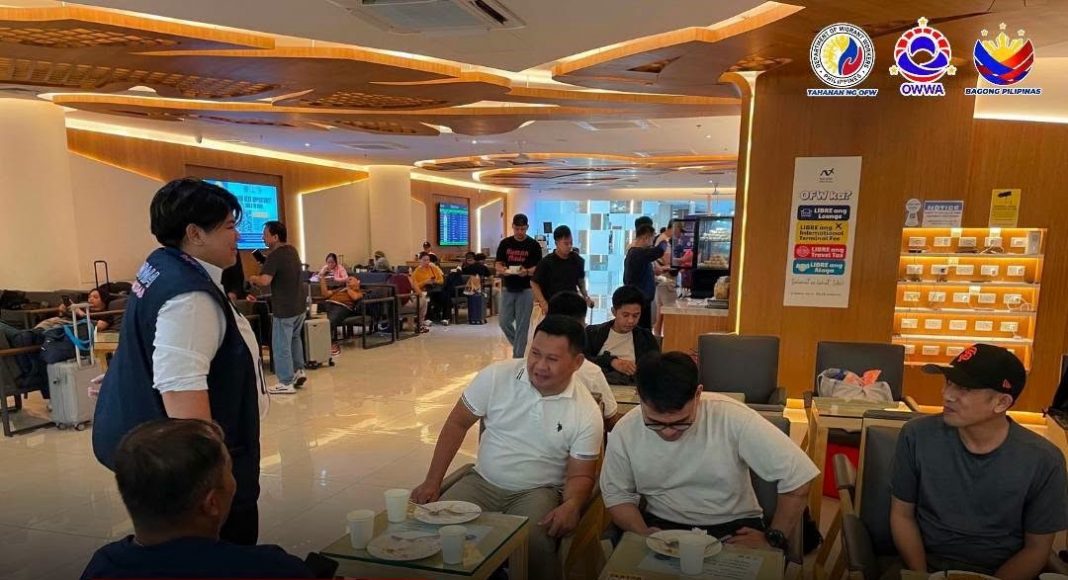
The Department of Migrant Workers (DMW) and the Overseas Workers Welfare Administration (OWWA) have issued a statement addressing recent feedback regarding the OFW Lounge at the Ninoy Aquino International Airport (NAIA) Terminal 3.
The DMW formally expressed its apologies for the added fatigue and frustration experienced during recent repatriation efforts, emphasizing that constructive feedback serves as a vital opportunity to review policies and enhance public service.
In direct response, OWWA Administrator Patricia Yvonne “PY” Caunan, along with OWWA management, personally inspected the NAIA Terminal 3 facility. The visit aimed to oversee ground operations, engage directly with frontline staff, and listen to returning overseas Filipino workers (OFWs) to ensure seamless and compassionate service delivery.
To ensure fair access and optimal operations across airport facilities, OWWA reaffirmed the following guidelines:
-
Eligibility: Returning OFWs arriving on international flights with confirmed domestic connecting flights within 24 hours of their actual arrival time are eligible to use the lounge.
-
Maximum Stay: A six-hour time limit per visit remains in effect to allow the maximum number of travelers to utilize the facility. The 24-hour window serves solely as an eligibility period, not a allowance for continuous stay.
-
Extensions: Stay extensions may be granted based on available seating and verified special circumstances, such as medical needs, senior citizens, persons with disabilities (PWDs), and others requiring additional assistance.
With an estimated 4,000 to 6,000 OFWs departing through NAIA daily, maintaining the six-hour limit is essential to manage high volume against limited physical capacity—currently set at 216 seats in Terminal 3 and 140 seats in Terminal 1.
To address overcrowding, OWWA utilizes an online, real-time OFW Lounge Management and Monitoring System. Display monitors installed outside lounge entrances provide live updates on seat availability, offering full transparency before entry.
In instances where facilities reach full capacity, staff will implement a structured queuing system. Waiting passengers will be informed of current occupancy rates, estimated wait times, and alternative assistance available.
Furthermore, OWWA frontline personnel have been re-oriented on policy enforcement rooted in empathy and respect. Duty officers are present at all times to address immediate concerns, while frontline teams undergo continuous training to uphold consistent, calm, and supportive service standards.
Looking toward long-term solutions, OWWA is actively coordinating with New NAIA Infra Corp. to explore infrastructure and operational improvements to meet rising demand.
OWWA calls on the public for mutual understanding and respect, urging everyone to avoid personal judgments toward both the OFWs sharing their experiences and the frontline personnel on duty.

