


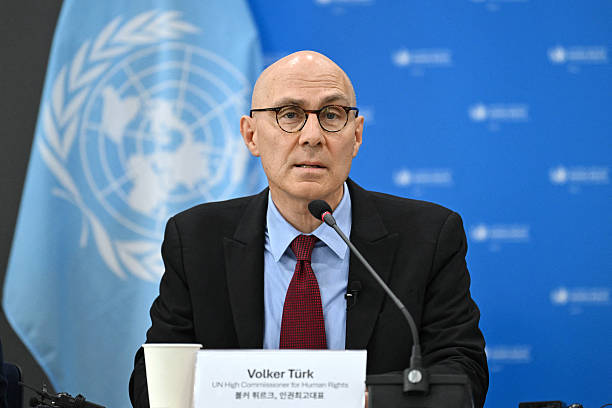
The Philippines has formally welcomed a call by United Nations High Commissioner for Human Rights Volker Türk for immediate, international action to address the mounting humanitarian crisis facing thousands of seafarers stranded in and around the Strait of Hormuz.
In a statement issued on 24 July 2026, High Commissioner Türk reported that at least 6,000 seafarers aboard approximately 400 vessels remain trapped in the region, with many others unaccounted for. Reports indicate that numerous seafarers have been abandoned by shipowners—left without essential supplies such as food, water, fuel, medical care, or communication channels to reach their families. Many remain unpaid and without arrangements for safe passage or repatriation.
At least 17 seafarers have been killed since the conflict escalated. The High Commissioner emphasized that civilian vessels are protected under international humanitarian law and that targeted attacks on them are strictly unacceptable.
“The protection and safe repatriation of stranded seafarers is both a human rights obligation and a humanitarian imperative,” said Ambassador Carlos D. Sorreta, Permanent Representative of the Philippines to the United Nations in Geneva. “The Philippines joins the High Commissioner’s call for immediate measures to safeguard their lives and dignity and to ensure that they receive essential supplies, consular assistance, safe passage, repatriation, and the wages owed to them.”
The Philippine government reiterated the necessity for all concerned States, shipowners, and maritime stakeholders to uphold seafarers’ human and labor rights, stressing the protection guaranteed to civilian crews under international humanitarian law.
The Philippines specifically noted the High Commissioner’s reference to two landmark global initiatives led by the country:
-
The Manila Declaration on Seafarers’ Human Rights, Safety and Well-Being: Adopted in Manila in September 2025, this landmark declaration calls for enhanced global cooperation among governments, industry leaders, and labor representatives to safeguard maritime workers.
-
UN Human Rights Council Resolution 56/18: Spearheaded by the Philippines and adopted by consensus in July 2024, the resolution reinforces international cooperation to combat human rights abuses affecting seafarers.
Protecting maritime workers remains a vital priority for the Philippines, whose nationals comprise roughly one-fourth of the global seafaring workforce. Filipino seafarers—alongside crew members from other developing nations—play an indispensable role in maintaining global shipping lanes, international trade, and essential supply chains.
Because seafarers routinely work far from their home countries, the Philippine Mission stressed that international cooperation and collective responsibility are essential to protecting civilian crews during armed conflicts and regional emergencies.

