


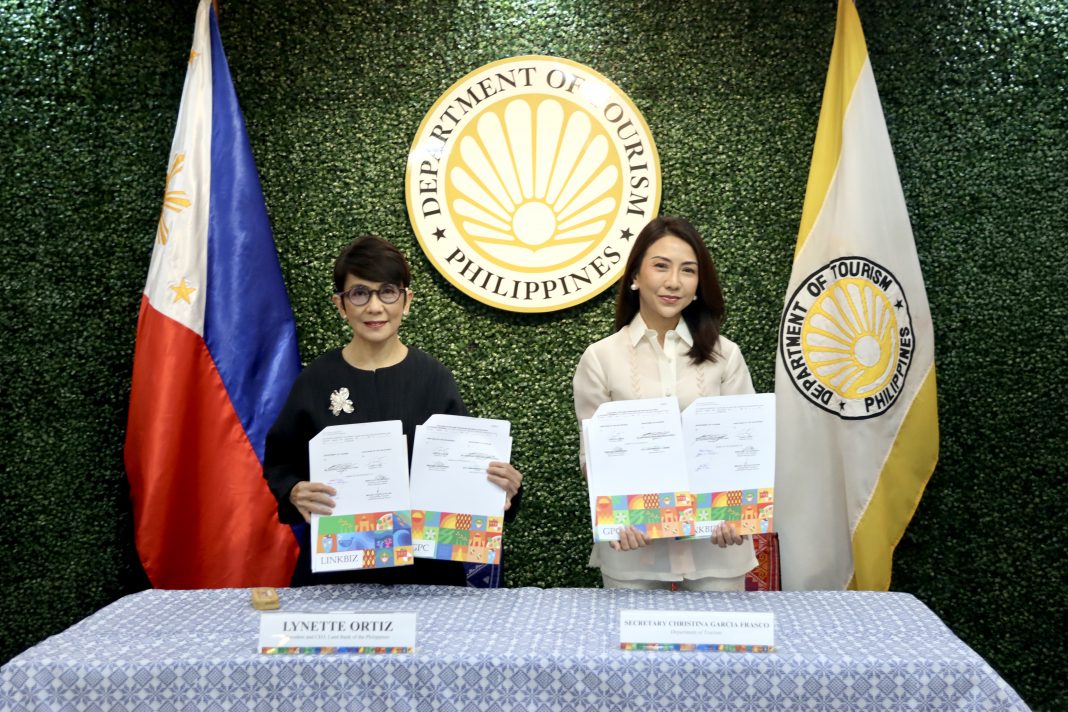
LANDBANK has strengthened its long-standing partnership with the Department of Tourism (DOT) to enhance the digital payment infrastructure and financial management of the country’s tourism sector, supporting greater transparency, efficiency, and ease of doing business.
The partnership was formalized through the signing of two Memoranda of Agreement (MOA) led by LANDBANK President and CEO Lynette V. Ortiz and Tourism Secretary Ma. Esperanza Christina C. Frasco on 13 January 2026 at the New DOT Building in Makati City.
Under the agreement, the DOT will adopt the LANDBANK Link.BizPortal, a digital payment system that allows commercial establishments and businesses nationwide to pay for accreditation, regulatory fees, penalties, and bidding documents online. The “plug-and-play” system is expected to streamline administrative processes and reduce manual interventions.
“By streamlining payments and accelerating procurement processes, we aim to support the DOT in focusing even more on its core mission – promoting our country, empowering tourism enterprises and workers, and welcoming the world to our shores,” said LANDBANK President Ortiz.
In addition, the DOT is enrolling in the Government Purchase Card (GPC) Program, with an initial rollout covering 16 Regional Directors nationwide. The GPC is designed to strengthen internal financial controls while expediting the procurement of goods and services essential to tourism operations.
“We are happy that LANDBANK has seen and supported the vision of the Department of Tourism. In many ways our work is very similar in that its main goal is community development—ensuring that our local communities benefit from access to economic opportunities,” said Secretary Frasco.
This latest collaboration reflects the Bank’s commitment to providing “phygital” solutions that support the government’s thrust toward innovation and digital transformation.
LANDBANK and the DOT remain committed to leveraging digital innovation to drive the sustainable growth of the Philippine tourism industry. By modernizing financial touchpoints, both institutions aim to create a more seamless and inclusive economic environment for tourism stakeholders and local communities nationwide.

